
Planting
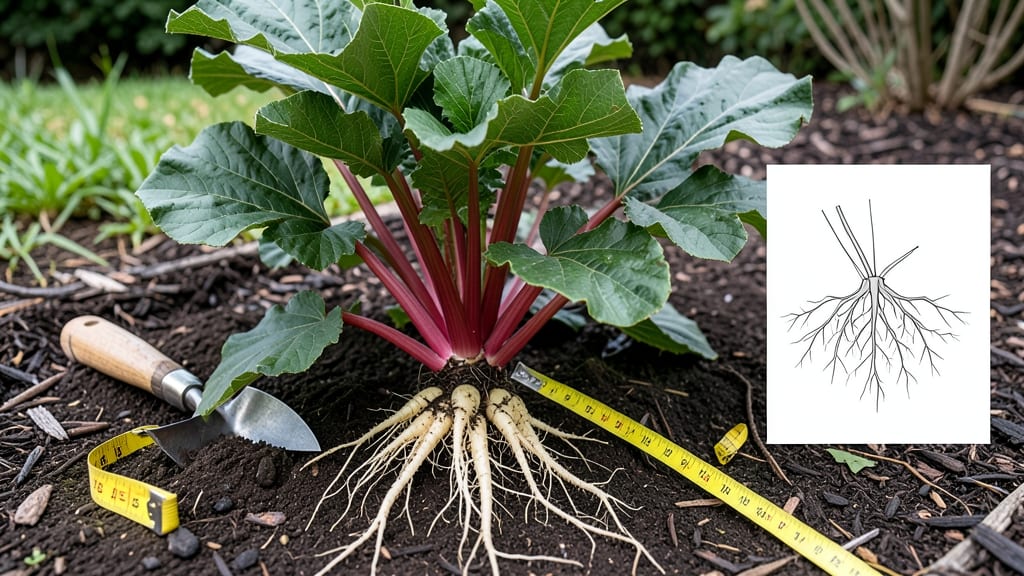
Rhubarb roots grow 12 to 18 inches deep into the soil, forming a thick, fibrous network that anchors the plant and stores nutrients for years to come.
If you’ve ever wondered why your rhubarb plants seem to struggle or how to properly divide them, understanding their root depth is the key—because digging too shallow (or too deep!) can mean the difference between a thriving harvest and a wasted garden bed.
These roots spread wider than they go down, which is why spacing plants 3 feet apart gives them room to establish without competing. Shallow roots mean poor nutrient uptake, while deep disturbances during transplanting can shock the plant for years.
Below, I’ll show you exactly how to plant, maintain, and divide rhubarb without damaging those critical roots—plus the signs your soil or care routine might be stunting their growth.

Rhubarb root depth explained: how deep do they grow?
Rhubarb roots are one of the most misunderstood parts of this hardy perennial. While most gardeners focus on the vibrant stalks, the real work happens underground.
The primary roots of a mature rhubarb plant can extend 12–18 inches deep, creating a robust network that anchors the plant and absorbs nutrients. This depth is crucial because shallow planting or accidental damage to these roots can stunt growth and reduce your harvest.
What makes rhubarb roots unique is their fibrous secondary root system that spreads horizontally, often reaching 2–3 feet outward from the crown. These secondary roots help stabilize the plant and access moisture from wider soil areas.
Understanding this structure helps explain why rhubarb thrives in well-drained soil with plenty of organic matter—it needs room to grow both down and out.
Here’s the science behind it: Rhubarb roots grow deeper in well-aerated, loamy soil with a pH between 5.5–6.5. Compacted or waterlogged soil restricts root penetration, forcing roots to grow shallow and making the plant more susceptible to stress.
In ideal conditions, the taproot system can reach deeper than 18 inches, especially in older plants that have established themselves for several years.
The depth of rhubarb roots also affects how you plant and divide them. When transplanting, you’ll want to bury the crown just 1–2 inches below soil level—any deeper risks suffocating the crown, while too shallow exposes it to temperature fluctuations.
This careful placement ensures the roots have space to expand without competing with nearby plants for nutrients.
Seasonal variations play a role too. In spring and fall, when temperatures are moderate, roots grow more aggressively. During summer dormancy, root growth slows, but they remain active in absorbing moisture.
This is why consistent watering—especially during dry spells—is critical for maintaining root health and supporting your rhubarb’s stalks above ground.
Now, let’s break down the key details in this summary-table to help you visualize how rhubarb roots grow and what it means for your garden:
| Root Type | Depth Range | Horizontal Spread | Key Function |
|---|---|---|---|
| Primary Taproot | 12–18 inches | 1–2 feet outward | Anchors plant, absorbs deep nutrients |
| Secondary Fibrous Roots | 6–12 inches deep | 2–3 feet outward | Stabilizes plant, absorbs moisture |
| Crown Roots | 0–6 inches deep | 1–2 feet outward | Supports stalk growth, sensitive to depth |
One common mistake gardeners make is assuming rhubarb roots are shallow, like those of annuals. In reality, their depth means you should avoid tilling deeply around established plants, as this can sever roots and stress the plant.
Instead, focus on mulching with compost to enrich the topsoil while protecting roots from temperature extremes.
If you’re planning to divide your rhubarb, timing is everything. The best time to dig is in early spring before new growth begins, when roots are still dormant but the soil is workable.
Use a sharp spade to slice through the roots cleanly, ensuring each division has a portion of the primary root system intact. This minimizes shock and gives each new plant the best chance to establish itself.
Pay attention to your rhubarb’s leaf and stalk health as an indicator of root depth issues. Yellowing leaves or stunted stalks often signal root stress, which could be due to compacted soil limiting root growth or overcrowding from roots competing for space.
In these cases, aerate the soil or transplant to a larger area to give the roots room to thrive.
Finally, remember that rhubarb is a perennial powerhouse with roots that can live for decades if cared for properly. By respecting their depth and growth habits, you’ll enjoy bountiful harvests year after year—without the guesswork. Happy digging!
When and how to dig rhubarb roots without damaging the plant
Dividing or transplanting rhubarb is a great way to expand your garden or rejuvenate older plants, but doing it wrong can shock your rhubarb crowns and reduce next year’s harvest. The key is timing, technique, and knowing how deep those rhubarb roots actually grow.
I’ve learned from years of trial and error—some plants bounced back, while others struggled for seasons after a rough transplant.
Rhubarb roots extend 12–18 inches deep, with most of the nutrient-absorbing roots concentrated in the top 6–12 inches. This means you’ll need to dig carefully to avoid severing these critical roots.
The best time to tackle this task is early spring, just as new shoots emerge but before the plant puts all its energy into foliage growth. This gives roots time to recover before the growing season peaks.
⚠️ Critical Digging Depth Warning
Rhubarb roots grow deeper than you think—12–18 inches—but 70% of feeder roots are in the top 6–12 inches. Digging too shallow (under 6 inches) risks leaving roots exposed, while digging too deep (below 18 inches) can damage the crown’s base. Use a spade or digging fork to loosen soil gradually, never forcefully yank roots.
Before you start, gather your tools: a sharp spade or digging fork, pruning shears, a bucket of water, and a garden hose. Work on a dry, cool day to reduce stress on the plant.
Start by cutting back old stalks to 2–3 inches above the soil—this helps redirect the plant’s energy toward root recovery rather than leaf production.
To dig, insert your spade 3–4 inches away from the crown and angle it downward at a 45-degree angle. Gently rock the spade to loosen the soil without cutting roots.
Repeat in a circular motion around the plant until you can lift it with minimal resistance. Never pull upward—this can tear roots and leave pieces behind. Instead, lift the entire root ball carefully, keeping soil intact around the roots.
If you’re dividing a mature rhubarb plant, look for natural separations where daughter crowns have formed. Use your pruning shears to cleanly sever these, ensuring each new division has 3–5 healthy stalks and a portion of the root system.
Replant divisions immediately in well-drained soil with a 2–3 inch layer of compost mixed in. Water thoroughly to settle the soil and reduce air pockets around the roots.
After transplanting, keep the soil consistently moist for the first 4–6 weeks to encourage root establishment. Avoid fertilizing during this period—focus on watering and mulching instead. By next spring, your rhubarb should be ready to rebound with vigorous growth, provided you handled those delicate roots with care.