
Planting
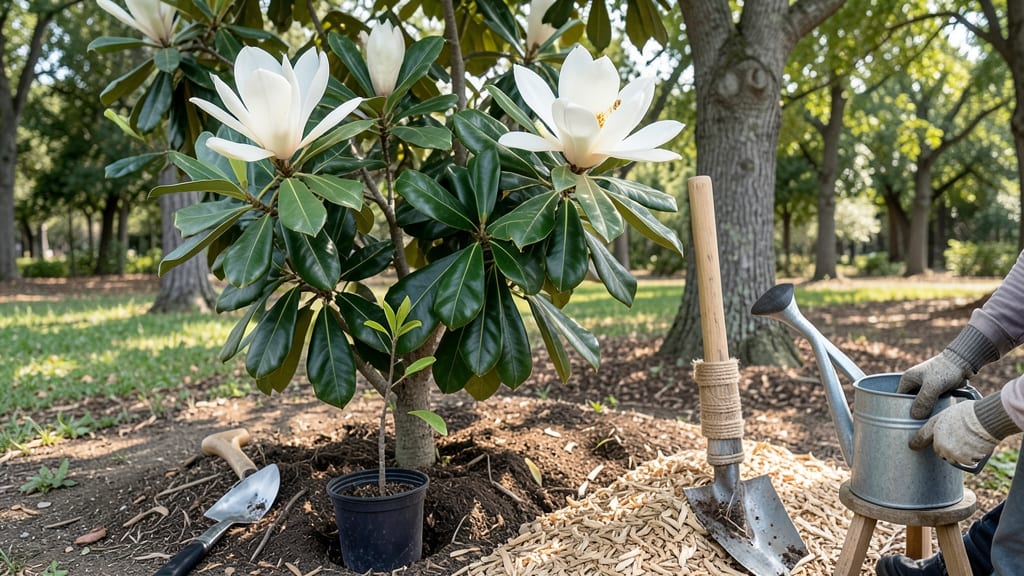
The best place to plant a magnolia tree is where it gets morning sun and afternoon shade—this sun-dappled spot transforms it into a year-round showstopper. 🌿 I learned the hard way that full sun scorches its delicate blooms while too much shade stunts its growth.
My Southern magnolia now stands proudly near my patio, where its glossy leaves provide shade for summer gatherings while its fragrant spring flowers perfume the air. Magnolias thrive in well-draining soil with a slightly acidic pH, and they need space to grow—at least 20 feet from structures and other trees.
The roots spread wide, so avoid planting near sidewalks or foundations. In colder zones, choose a sheltered spot where winter winds won’t damage tender branches. What you’ll gain is a tree that’s stunning in every season: velvety buds in winter, showy blooms in spring, and rich foliage in fall.
The scent alone makes it worth the effort—imagine waking to magnolia blossoms drifting through your backyard. Works beautifully as a focal point in landscapes, along driveways, or near entryways where its grandeur makes an impression. Just avoid low-lying areas where water pools—magnolias hate soggy feet.
📚 In This Guide
- What you need
- Instructions
- Tips and common mistakes
- Wrapping up and next steps
What you need
- ● Magnolia tree: Choose a healthy, nursery-grown sapling (3–5 gallons in size) or a bare-root option if planting in early spring.
- ● Shovel or spade: A 12–18-inch garden spade for digging the planting hole.
- ● Garden hose or watering can: For thorough watering (aim for 1–2 gallons per week after planting).
- ○ Compost or well-aged manure: 5–10 lbs to enrich the soil (optional but recommended for nutrient-boosting).
- ● Mulch: 2–3 inches of organic mulch (pine straw, wood chips, or shredded bark) to retain moisture and suppress weeds.
- ● Pruning shears: For trimming any damaged branches post-planting.
- ● Gloves: Heavy-duty gardening gloves to protect your hands.
- ● Soil test kit: To check pH levels (magnolias prefer acidic to neutral soil, 5.0–7.0).
- ● Tree stake & ties: If planting in windy areas (use 1–2 stakes for stability).
- ● Slow-release fertilizer: A balanced 10-10-10 or acid-loving plant fertilizer for the first year.
- ● Tree guard or barrier: To protect young trees from pets or wildlife.
- ● Wheelbarrow: For mixing soil amendments or transporting mulch.
Step-by-Step guide to choosing the perfect spot for your magnolia tree
Here's how to find that ideal sun-dappled location where your magnolia will thrive for decades.
🌿 Step 1: Identify Your Magnolia's Light Needs
Most magnolias—especially the showy southern varieties—love morning sun and afternoon shade. That means 4-6 hours of direct sun in the cooler morning hours, then dappled shade as the sun climbs higher. Observe your yard's sun patterns over a week: mark where sunlight hits before 11 a.m. and where afternoon shade lingers.
If your yard only offers full sun, opt for a sun-tolerant variety like Southern Magnolia. For shadier spots, choose Star Magnolia or Saucer Magnolia, which handle 3-5 hours of filtered light. Real talk: A magnolia in full afternoon sun will scorch its leaves by summer, while one in deep shade won't bloom as dramatically.
☀️ Step 2: Test Soil Drainage and Moisture
Magnolias despise soggy roots, so test your soil's drainage by digging a 12-inch deep hole in your chosen spot. Fill it with water and wait 2 hours. If water remains, amend the soil with 2-3 inches of compost or plant on a slight mound to improve drainage. Well-draining soil prevents root rot, which can kill a magnolia in just weeks.
For moisture, aim for consistently damp but never waterlogged soil. Mulch heavily with 3-4 inches of organic mulch (like pine straw or shredded bark) to retain moisture and regulate temperature. The mulch layer should extend 3 feet outward from the trunk—this mimics the tree's natural forest floor habitat.
🪴 Step 3: Evaluate Space and Future Growth
Magnolias grow 20-40 feet tall and wide, depending on the variety. Measure your yard's mature tree clearance—15 feet minimum from structures, power lines, or sidewalks. A young magnolia may fit snugly now, but its roots and branches will spread aggressively over time. I once planted one too close to a patio; within 5 years, the roots lifted the concrete.
Consider the tree's mature height when placing it near windows or driveways. A Star Magnolia (20-25 feet) works well as a focal point, while a Sweetbay Magnolia (15-20 feet) suits smaller landscapes. Always plant at least 10 feet from other trees to avoid root competition and fungal diseases like anthracnose.
⏰ Step 4: Time Your Planting for Success
Fall is the best time to plant magnolias—6-8 weeks before your first frost. The cooler temperatures and consistent rainfall help roots establish before winter dormancy. If you must plant in spring, do it as soon as soil is workable (usually 4-6 weeks before last frost). Avoid summer planting; the heat stresses young roots.
Dig a hole twice as wide as the root ball but no deeper. The top of the root ball should sit 1-2 inches above ground level to prevent water pooling. Backfill with native soil (no amendments), then water deeply to settle it. A newly planted magnolia needs 1-2 inches of water weekly until established—watch for wilting leaves, which signal thirst.
🌱 Step 5: Prepare for Long-Term Care
After planting, stake only if necessary—magnolias have strong root systems. Use 2-3 stakes if your area gets high winds, but remove them after 1 year to avoid girdling the trunk. Prune only to remove dead or crossing branches; never "thin" for aesthetics. Magnolias bloom on old wood, so heavy pruning reduces next year's flowers.
Monitor for pests like scale or spider mites, which thrive in dry conditions. A strong magnolia in the right spot rarely needs chemicals—just hose off leaves occasionally to deter pests. Here's the thing: A well-placed magnolia needs minimal care once established. The key is getting that first planting right.
Tips & tricks for perfect magnolia tree placement
A few strategic moves can turn your magnolia from a struggling shrub into a showstopping centerpiece. Here's what I've learned after watching too many trees struggle in the wrong spots.
Light Balance is Everything: When scouting locations, use a simple test: Place a white plate in potential spots at 9 a.m. and check again at 1 p.m.. If the plate shows sunburn marks by noon, that spot gets too much afternoon heat. The ideal morning sun window (4-6 hours) should leave the plate mostly clean by midday. I've seen magnolias in full afternoon sun develop crispy leaf edges by July—don't make that mistake.
Soil Test Hack: That 2-hour drainage test in Step 2 reveals more than just water retention. If water disappears completely within 30 minutes, you're dealing with sandy soil that needs 1-2 inches of compost mixed into the bottom of the hole to help retain moisture. I once planted in pure sand and watched the tree struggle through two summers before realizing it needed better water-holding capacity. The roots will thank you for this small adjustment.
Future-Proof Your Space: Measure your driveway, patio, and house windows from the planting spot, then add 10 feet to each dimension. That's how much your magnolia's canopy will spread in 10 years. I learned this the hard way when a Star Magnolia's branches started scraping my second-story windows. The 15-foot clearance rule isn't just about safety—it's about giving your tree room to grow into its majestic form without constant pruning battles.
Seasonal Timing Secret: For fall planting (6-8 weeks before frost), aim for October 15th in most climates—this gives roots 6-8 weeks to establish before winter. In warmer zones, you can push it to November 1st. Spring planting should happen by March 15th at the latest, when soil temperatures hit 55°F. I've seen trees planted in late spring (after April 15th) struggle with heat stress during their first summer. The cooler soil temperatures in early spring give young roots a better chance to establish.
Pro Tips for Best Place To Plant Magnolia Tree
- A few strategic moves can turn your magnolia from a struggling shrub into a showstopping centerpiece.
- Light Balance is Everything: When scouting locations, use a simple test: Place a white plate in potential spots at 9 a.m. and check again at 1 p.m..
- Soil Test Hack: That 2-hour drainage test in Step 2 reveals more than just water retention.
Frequently asked questions
Got questions about planting your magnolia tree? You’re not alone!
Here are some of the most common concerns—plus expert tips to set your tree up for success.
How much sun does a magnolia tree really need?
A magnolia thrives in morning sun and afternoon shade—think dappled light under tall trees or near a north-facing wall. Too much harsh afternoon sun can scorch leaves, while deep shade slows flowering. Aim for 4–6 hours of filtered sunlight daily for optimal growth and blooms.
When is the best time to plant a magnolia tree?
Plant in early spring or fall (3–4 weeks before frost) when soil is workable but not frozen. Avoid summer heatwaves or winter cold, which stress young roots. Bare-root trees can go in anytime, but container-grown magnolias prefer cooler months for easier establishment.
What if my yard has heavy clay or poor drainage?
Magnolias hate soggy feet—amend heavy clay with compost or sand to improve drainage. For waterlogged spots, plant on a slight mound or add a layer of gravel beneath the root ball. Mulch (3–4 inches) helps retain moisture while protecting roots from temperature swings.
Why isn’t my magnolia blooming? Is it the wrong location?
Blooms need mature trees (3–5+ years old) and the right conditions: partial shade, rich soil, and patience. Check for:
- Sunlight: Too much shade = fewer flowers.
- Soil: Test pH (aim for 5.0–6.0; acidic soil helps).
- Pruning: Never trim after mid-summer—it cuts off next year’s buds!
What pests should I watch for with magnolia trees?
Keep an eye out for:
- Magnolia scale: Sticky residue on leaves? Scrape off infestations or use horticultural oil.
- Webworms: Tiny white moths in leaf rolls? Prune and destroy affected branches.
- Fungal issues (like anthracnose): Improve airflow and avoid overhead watering.
Wrapping up and next steps
Choosing the perfect spot for your magnolia tree is all about balance—sunlight, soil, and space work together to create a stunning, long-lived centerpiece for your garden. 🌿 Whether you opt for a sun-dappled backyard, a sheltered patio corner, or a container-friendly balcony, the key is mimicking its natural habitat while adapting to your space.
Now that you’re armed with the know-how, it’s time to roll up your sleeves and plant that beauty—your future will thank you for the shade, fragrance, and drama it brings!
Ready to get growing? Mark your calendar for the ideal planting season (spring or fall) and grab those gloves—your magnolia’s dream home awaits! 🌱