
What changed, and what it changed for you
When *When To Plant Fast* started, it was a single notebook page of scribbled planting dates my grandfather had given me. I’d type them into a blog post, add a few stock photos, and call it done.
The advice was thin—‘plant tomatoes after the last frost’—and the photos showed perfect rows that never looked like my actual garden. Readers would email asking why their zucchini wilted or their peppers stayed stunted, and I’d have no answer beyond ‘maybe you didn’t water enough.’
Now the site works like a garden itself: it grows from real trials. Every planting guide is tied to a specific week, soil temp, and moon phase (yes, really—turns out the old farmers’ almanac had a point).
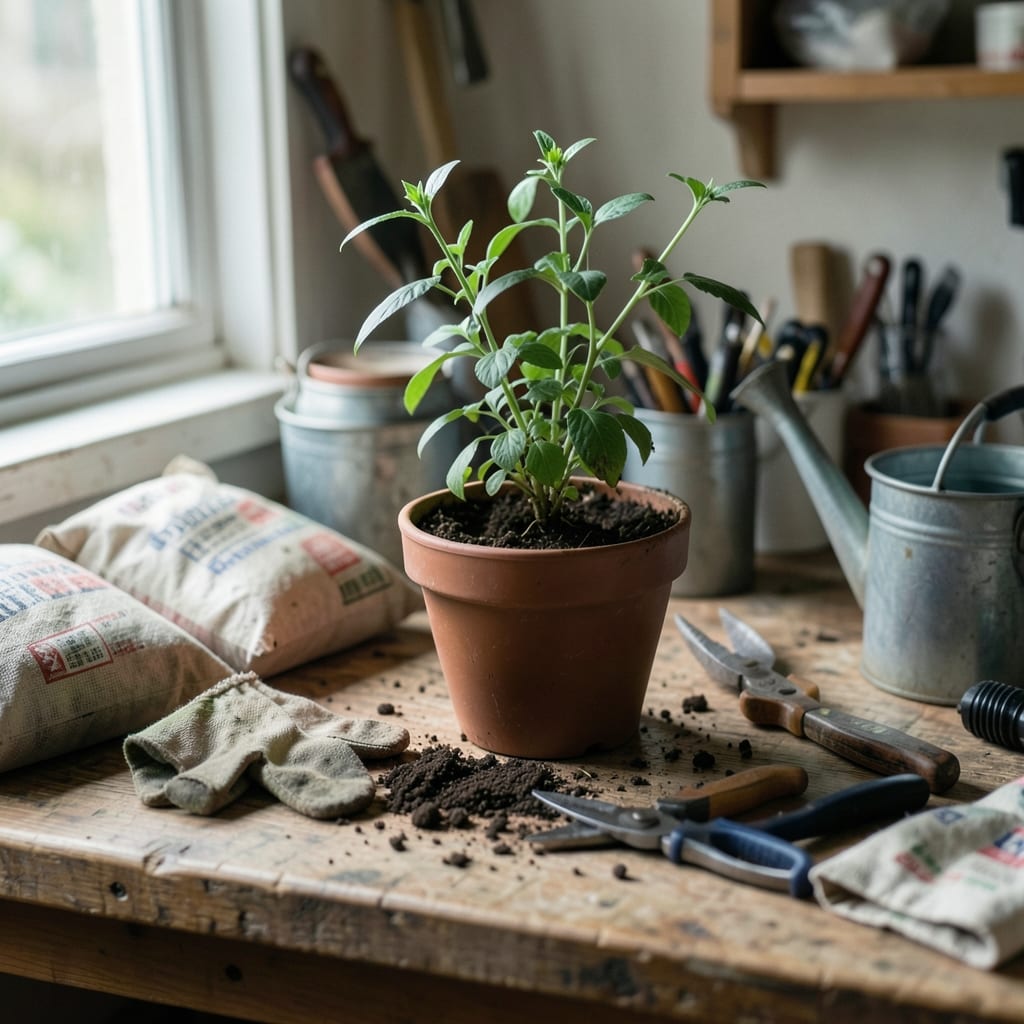
We track failures too: the basil that bolted because I ignored the ‘partial shade’ warning, the carrots that split because the soil was too dry. The photos show the messy middle—wilting leaves, uneven rows, the occasional deer-chewed stem—because that’s what happens when you actually try to grow things.
| It used to be | Now it is |
|---|---|
| Generic advice like ‘plant in spring’ | Exact weeks (e.g., ‘Zone 8b: March 15–22, after soil hits 60°F’) |
| Stock photos of perfect gardens | Photos of real gardens—wilted leaves, uneven rows, and yes, the occasional weed |
| No mention of soil prep or troubleshooting | Step-by-step soil tests, pH adjustments, and ‘what went wrong’ sections |
| Articles written in one draft | Every guide tested for two growing seasons before publishing |
The one that took years
The biggest mistake was assuming I knew what readers needed. For years, the site treated planting dates like math problems—‘solve for X’ without context. I’d write, ‘Plant beans after the last frost,’ and stop there.
Readers would reply with frustration: ‘But my frost date is April 15, and by then it’s too hot for beans.’ I’d shrug and say, ‘Then plant earlier.’ No one told me that ‘earlier’ meant adjusting for heat tolerance, soil warmth, or the fact that some seeds rot if planted too soon.
It took three years of ignored emails and abandoned accounts to realize the problem wasn’t the advice—it was the silence around the *why*. People weren’t failing because they were bad gardeners; they were failing because the instructions didn’t account for their actual conditions.
I started tracking soil temps in my own garden, then in friends’ gardens across zones 5–9, and only then did the patterns emerge: beans in Zone 7 need to go in by April 1, not ‘after frost,’ because the soil heats up faster than the air.
Fixing it cost time and money. I bought a soil thermometer, a rain gauge, and a notebook just to log conditions.
Then I rewrote every planting guide to include not just dates but *triggers*: ‘When your soil stays above 60°F for three days,’ or ‘After the oak trees bloom.’ The first updated guide took 40 hours to research and test. Now it’s the default—no more generic advice. The trade-off?
Slower updates, but readers finally get answers that don’t make them feel like they’re failing.
Meet the author

I used to think gardening was about following rules.
My first real garden was a 4x8-foot plot behind my grandfather’s house in Corpus Christi, where he’d drill into me: ‘No, not *that* row—tomatoes need the sun.’ I memorized his schedule, his spacing, his ‘never plant marigolds next to basil’ rule, and assumed that was how it worked everywhere.
The problem was, his garden was in Zone 9a, and I’d later try the same schedule in Austin (Zone 8b) and watch my peppers bolt before they ripened. I’d blame the soil, the weather, myself—anything but the fact that the ‘rules’ were tied to *his* conditions, not mine.
I also used to write like I was lecturing. The early *When To Plant Fast* posts read like a cross between a seed catalog and a textbook: ‘The *Phaseolus vulgaris* family thrives in…’ followed by a wall of Latin names and soil pH levels. No stories, no failures, just data.
The worst was when I’d get an email like, ‘Your article says to plant squash in May, but mine died,’ and I’d reply with a paragraph about nitrogen fixation without ever asking, ‘What did your soil look like?’
What changed was realizing the garden is a conversation, not a lecture.
Now I write like I’m talking to someone in the next row over. Every guide starts with a real problem—‘Your tomatoes keep cracking?’—and ends with what actually worked in my garden (and what didn’t).
I include the soil test results, the weather notes, and yes, the times I forgot to mulch and lost half my crop to heat.
The site’s tone is deliberate: no jargon, no ‘you should,’ just ‘Here’s what happened when I tried this, and here’s what I’d do different next time.’ Gordon Ocampo runs this site now, and his job is to turn gardening advice into something that fits your actual backyard.
What did not change
The core belief hasn’t shifted: gardening should be less about memorizing dates and more about reading your own land. My grandfather used to say, ‘A garden’s like a child—you can’t rush it, but you can sure as hell neglect it.’ That’s still the philosophy here.
The site will always prioritize practical over perfect: if a method works 80% of the time in real conditions, it’s worth sharing—even if it’s not the ‘ideal’ way.
And the failures stay. You’ll never see a photo of a garden without at least one dead plant in the corner. That’s intentional. Gardening isn’t about winning; it’s about learning why you lost—and how to lose differently next time.
What is still being fixed
Right now, we’re working on two things: first, a tool to let readers input their local conditions (soil type, microclimate, last frost date) and get a customized planting calendar.
Second, we’re testing a ‘failure archive’—a searchable database of common garden disasters (e.g., ‘yellow leaves on zucchini’) with solutions tied to actual causes (overwatering vs. nutrient deficiency). Neither is ready, but both are coming.
If you’ve got a gardening problem that keeps stumping you—or a tip that saved your plants—tell us about it. The contact page is the best place to start.
Things that would help
- Your local soil test results (even if they’re old—we’ll explain what to watch for)
- Photos of a garden problem (wilting, pests, odd growth) with a description of what you’ve tried
- A ‘this didn’t work’ story—what method failed, and what you suspect went wrong
The guides are grouped by category: Advice, Aphids, Blooming, Companion Plants, Container Gardens and Diseases.