
Planting
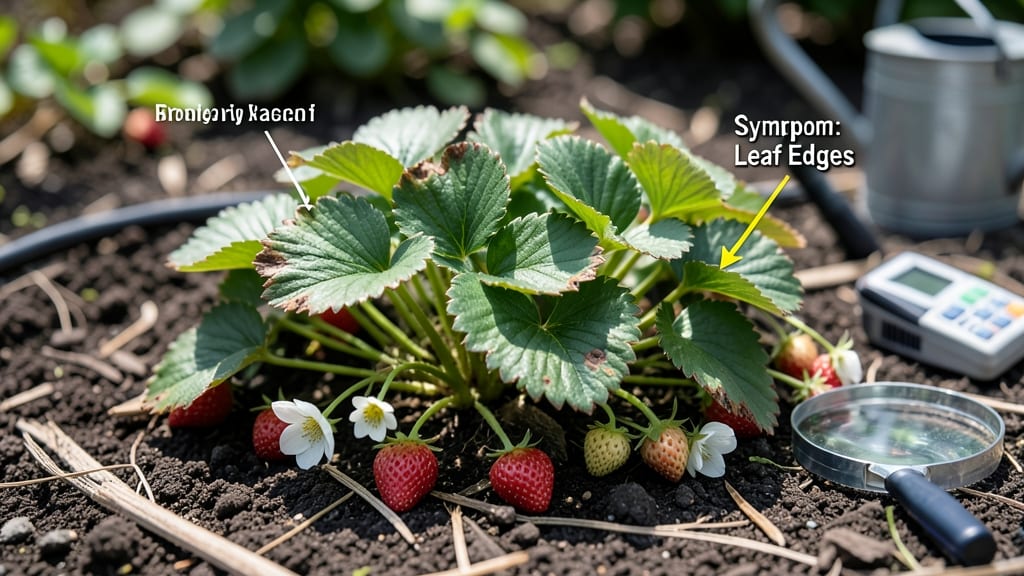
Your strawberry plant’s leaves with brown edges scream one thing: root zone distress. 🌱 I’ve nursed back more than a few strawberries from this exact problem—usually by fixing just three overlooked factors in the soil and watering routine.
The good news? It’s almost always reversible before the plant gives up completely.
Brown edges almost never mean your strawberries are dying—they’re begging for consistency. Too little water causes dry edges, while soggy soil suffocates roots, both triggering the same stress response.
Then there are pests like spider mites hiding on the undersides of leaves, or fungal infections creeping in from mulch that’s too thick. The fix starts with a simple soil check: stick your finger in—if it’s bone dry or muddy, that’s your first clue.
Within 48 hours of adjusting watering and treating the root zone, you’ll see new green growth pushing out. I’ve seen plants bounce back from this in as little as a week—though stubborn cases might need a light fertilizer boost to rebuild energy stores.
The key is catching it early before the plant diverts all its energy to survival instead of fruiting.
Once you’ve got the brown edges under control, prevention becomes a breeze: mulch properly (2–3 inches, not a pile), water at the base (not overhead), and prune out any leaves showing severe damage.
If brown edges keep coming back after these fixes, it might be time to test your soil pH—strawberries prefer 5.5–6.5, and anything outside that range stresses them silently.
Root Causes Of Leaf Discoloration
When your strawberry plant’s leaves start showing brown edges, it’s often a cry for help from the roots—or even the environment around them. Understanding the why behind this symptom is the first step to saving your plants.
Below, we break down the most common culprits, backed by science, so you can diagnose and act fast.
Strawberries hate soggy feet. When roots sit in waterlogged soil for too long, they suffocate, starving the plant of oxygen and causing root rot. This disrupts nutrient uptake, leading to brown, crispy leaf edges—especially on older leaves.
- Signs: Yellowing between leaf veins (chlorosis), mushy roots, or a foul smell from the soil.
- Why it happens: Excess moisture triggers anaerobic bacteria and fungi (like Phytophthora), which clog root cells and block water/nutrient flow.
- Actionable fix:
- Check soil moisture by sticking your finger 1–2 inches deep—water only if dry.
- Amend soil with perlite or sand (20–30%) to improve drainage.
- Ensure pots have drainage holes or plant in raised beds.
Strawberries need consistent moisture, especially in hot weather. When soil dries out, roots struggle to absorb water, causing leaf edges to brown and curl—a condition called scorch. Over time, salt buildup (from tap water or fertilizers) worsens this by disrupting cellular function.
- Signs: Dry, brittle leaf edges, soil pulling away from pot sides, or white crust on the surface.
- Why it happens: Low humidity + high evaporation = osmotic stress, where plant cells lose water faster than they can replace it. Salts (like sodium or chlorine) further dehydrate roots by competing with water uptake.
- Actionable fix:
- Water deeply 2–3 times per week (check soil moisture daily in heatwaves).
- Flush soil monthly with rainwater or distilled water to leach salts.
- Mulch with straw to retain moisture and reduce evaporation.
Strawberries thrive in 50–80°F (10–27°C) with moderate humidity. Extreme heat, cold snaps, or dry air can cause brown leaf edges by disrupting photosynthesis and transpiration.
| Stress Type | Symptoms | Scientific Cause |
|---|---|---|
| Heat Stress | Crispy, brown edges; wilting despite wet soil. | High temperatures denature enzymes in chloroplasts, halting sugar production. Stomata (leaf pores) close to conserve water, trapping excess oxygen and creating reactive oxygen species (ROS) that damage cells. |
| Cold Stress | Purple-brown edges; leaf tissue feels mushy. | Cold (<40°F/4°C) causes ice crystal formation in cells, rupturing membranes. It also triggers ethylene gas, a plant hormone that accelerates aging (senescence) in leaves. |
| Low Humidity | Brown edges on new growth; leaves feel dry to touch. | Dry air increases transpiration rate, pulling water from leaf edges faster than roots can supply it. This creates plasmolysis—when cells shrink and lose turgor pressure. |
Actionable fix:
- Provide afternoon shade in summer (use shade cloth if temps exceed 90°F/32°C).
- Group plants together to raise humidity naturally (they release moisture via guttation).
- Use a pebble tray with water under pots to increase local humidity.
- Mulch with straw or wood chips to insulate roots from temperature swings.
Brown edges can also signal an imbalance in macronutrients (like potassium or calcium) or micronutrient toxicities (e.g., too much boron or manganese). These disrupt cellular functions, leading to necrosis (dead tissue) at leaf margins.
| Nutrient Issue | Leaf Symptoms | Why It Happens |
|---|---|---|
| Potassium (K) Deficiency | Brown edges on older leaves; weak stems. | Potassium regulates water and enzyme activity. Without it, cells lose turgor and proteins denature, causing edge burn. |
| Calcium (Ca) Deficiency | Brown, cupped edges; new leaves distorted. | Calcium stabilizes cell walls. A lack weakens membranes, making edges prone to oxidative damage. |
| Boron (B) Toxicity | Brown, dead spots on leaf tips; brittle stems. | Excess boron blocks calcium uptake, disrupting cell division and leading to apical necrosis. |
Actionable fix:
- Test soil with a DIY kit or send a sample to a lab for precise nutrient analysis.
- For deficiencies: Apply balanced fertilizer (10-10-10) or kelp meal (for potassium).
- For toxicities: Flush soil with water and avoid fertilizers until levels stabilize.
- Use calcium-rich amendments like crushed eggshells or lime (if soil is acidic).
Hidden pests (like root-knot nematodes) or fungal infections (e.g., Verticillium wilt) can gnaw at roots, starving the plant and causing brown, brittle leaf edges. These issues often go unnoticed until damage is severe.
- Signs:
- Stunted growth despite proper care.
- Galls or knots on roots (nematodes).
- Wilting even when soil is moist (fungal blockages).
- Why it happens: Pests and pathogens
Revive Your Strawberries Now
Now that you know the likely culprits behind those unsightly brown edges on your strawberry leaves, it’s time to roll up your sleeves and bring your plants back to vibrant health! Below, we’ve mapped out practical, step-by-step fixes tailored to each cause—plus pro tips to keep your strawberries thriving long-term.
---
Symptoms: Yellowing leaves, soggy soil, brown edges that feel mushy to the touch.
How to Fix: 🔥 Step 1: Pause Watering Immediately - Let the soil dry out for 24–48 hours before watering again. Overwatering suffocates roots, leading to rot and stress.
🍳 Step 2: Improve Soil Drainage - Mix 1–2 inches of coarse sand, perlite, or small gravel into the top layer of soil to break up compaction. - If your strawberries are in containers, add drainage holes (if missing) and use a pot with at least 10 inches of depth.
👨🍳 Step 3: Adjust Your Watering Routine - Water deeply but infrequently—aim for 1 inch of water per week (adjust for rain). - Water at the base of the plant (not overhead) to avoid wetting leaves, which can encourage fungal issues.
🥘 Step 4: Prune Damaged Leaves - Snip off brown, mushy, or yellowed leaves with clean scissors to redirect energy to healthy growth.
Prevention Tips: ✨ Use raised beds if your garden soil is heavy clay. 🌡️ Test soil moisture by sticking your finger 1–2 inches deep—water only if it’s dry. 🎯 Mulch with straw or wood chips to retain moisture without over-saturating the soil.
---
Symptoms: Crispy, brown edges (like "scorched" paper), wilting despite moist soil.
How to Fix: 🔥 Step 1: Provide Afternoon Shade - Use a light shade cloth (30–50%) or move potted strawberries to a spot with dappled sunlight during peak heat (10 AM–4 PM).
🍳 Step 2: Boost Hydration - Water early in the morning (before 9 AM) to reduce evaporation. - Try drip irrigation or soaker hoses to deliver water slowly to the roots.
👨🍳 Step 3: Refresh the Soil - Add compost or aged manure to improve moisture retention. - For containers, top-dress with coconut coir to hold water longer.
🥘 Step 4: Trim Excess Foliage - Remove overcrowded or leggy leaves to improve airflow and reduce heat buildup.
Prevention Tips: 💡 Choose heat-tolerant varieties like ‘Seascape’ or ‘Chandler’ if you live in a hot climate. 🌡️ Mulch heavily (3–4 inches) with straw to keep roots cool. ✨ Avoid fertilizing during heatwaves—plants focus on survival, not growth.
---
Symptoms: Brown edges with black spots, powdery residue, or holes, sticky residue (aphids), or webbing.
How to Fix: 🔥 Step 1: Identify the Culprit - Fungus (e.g., leaf spot): Brown spots with yellow halos. - Pests (e.g., spider mites, aphids): Tiny webs, holes, or honeydew (sticky film).
🍳 Step 2: Remove Infested Parts - Snip off severely damaged leaves and dispose of them in the trash (not compost).
👨🍳 Step 3: Treat Naturally - For fungus: Spray with a 1:10 ratio of hydrogen peroxide to water or neem oil solution (1 tsp neem oil + 1 quart water + drop of dish soap). - For pests: Blast off aphids with a strong spray of water, or use insecticidal soap (follow label instructions).
🥘 Step 4: Improve Airflow - Space plants 12–18 inches apart and prune to allow sunlight to reach all leaves.
Prevention Tips: 💡 Water in the morning to let leaves dry quickly. 🌡️ Rotate crops if you replant strawberries in the same spot yearly. ✨ Introduce beneficial insects like ladybugs to control pests naturally.
---
Symptoms: Brown edges with purple tinges (phosphorus deficiency), stunted growth, or burnt-looking tips (excess salt from fertilizer).
How to Fix: 🔥 Step 1: Flush the Soil - If you over-fertilized, water deeply for 2–3 days to leach out excess salts.
🍳 Step 2: Test & Amend Soil - Use a DIY soil test kit (or send a sample to a local extension office). - Add balanced organic fertilizer (e.g., 10-10-10) or compost to replenish nutrients.
👨🍳 Step 3: Target-Specific Deficiencies - Magnesium deficiency (brown edges + yellow veins)? Sprinkle Epsom salt (1 tbsp per gallon of water) every 2 weeks. - Nitrogen deficiency (pale leaves)? Side-dress with well-aged manure or fish emulsion.
🥘 Step 4: Avoid Synthetic Fertilizers Temporarily - Let the plant recover with organic amendments instead of quick chemical fixes.
Prevention Tips: 🎯 Fertilize lightly—strawberries prefer moderate nutrition, not heavy feeding. 💪 Use slow-release organic fertilizer (like worm castings) for steady nourishment.
Final Pro Tip: 🌱 Monitor your strawberries weekly—catching issues early means less stress for your plants! With these fixes, your strawberries should bounce back in 2–4 weeks, and those brown edges will be a distant memory. Happy growing! 🍓✨
Frequently asked questions
1Why do strawberry leaves get brown edges first on older leaves?
Older leaves show brown edges first because plants prioritize nutrient delivery to new growth. When roots struggle (from drought or poor drainage), they can't supply enough potassium or calcium to aging leaves. This causes necrosis at the edges where water loss is highest. Think of it like your body losing circulation to your hands first when you're cold—older leaves are the "hands" of the plant.
2Can I save my strawberries if half the leaves have brown edges?
Yes! Strawberries are resilient—even with 50% browning, they can recover if you act fast. Focus on fixing the root cause (watering, soil, or pests) and prune only the most damaged leaves. New growth will emerge within 2-3 weeks if the roots are healthy. The key is stopping further stress immediately.
3Is it safe to use coffee grounds for brown edges caused by nutrient issues?
Coffee grounds can help with nitrogen deficiency, but they're acidic (pH ~6.2-6.8) and may worsen brown edges if your soil is already too acidic (below 5.5). For brown edges, focus on calcium-rich amendments (crushed eggshells) or potassium sources (banana peels) instead. Test your soil first to avoid making problems worse.
4How often should I check my strawberries for brown edges?
Inspect your plants weekly during growing season (spring-fall) and biweekly in winter. Brown edges progress quickly in heat or drought, so early detection means faster fixes. Pay special attention after heavy rain (possible overwatering) or extreme temperature swings. A quick 30-second leaf check prevents minor issues from becoming major problems.
5Will brown edges affect my strawberry harvest?
Mild brown edges (less than 30% of leaves) won't stop fruiting, but severe browning (over 50%) can reduce yield by 20-40% as the plant diverts energy to survival. Focus on recovery first—healthy roots will still produce fruit, just possibly smaller berries. Prioritize fixing the issue before flowers appear for best results.