
Planting
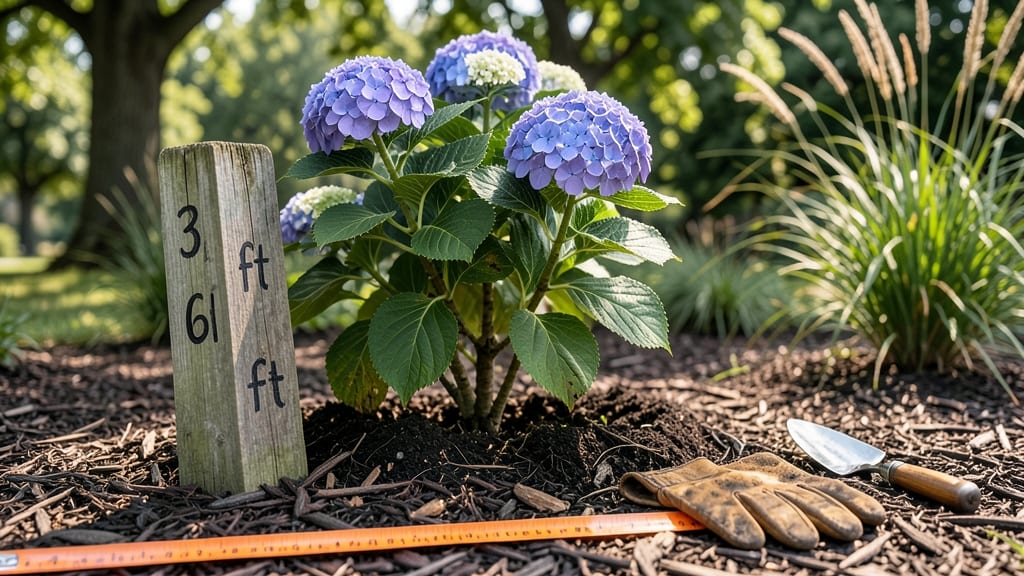
Proper spacing for hydrangeas determines whether your 🌸 shrubs thrive or fight for every drop of water and nutrient.
Struggling to get your hydrangeas to bloom as beautifully as you’ve seen in garden magazines? The secret often lies in how far apart you plant them—too close, and they compete for nutrients; too far, and they lose their lush, full appearance.
Hydrangeas need room to breathe, especially in USDA Zone 6a where spring planting (April–May) sets the stage for years of vibrant blooms. Without the right distance, airflow suffers, disease risks climb, and those showstopping clusters of flowers shrink to a fraction of their potential.
In this guide, I’ll break down the exact spacing each variety needs—from mophead giants to compact oakleaf types—and how to tweak it for containers, small gardens, or crowded beds. You’ll also learn how to spot (and fix) the most common spacing mistakes before they stifle your plants.
Optimal hydrangea spacing by variety: bigleaf, panicle, and oakleaf differences
Hydrangeas are showstoppers in any garden, but their blooming potential depends heavily on proper spacing. Each variety—bigleaf, panicle, and oakleaf—has unique growth habits that dictate how far apart they should be planted.
Getting this right ensures healthy airflow, maximum sunlight exposure, and vibrant blooms every season.
I’ve learned the hard way that cramming hydrangeas too close leads to stunted growth and fewer flowers. Meanwhile, spacing them too far apart wastes garden space and dilutes their visual impact.
The key is balancing their mature size, sunlight needs, and bloom density for a full, lush look without competition.
Below, I’ve broken down the ideal spacing for each hydrangea type, along with tips to adjust for your garden’s unique conditions. Whether you’re planting in a sunny border or a shady woodland garden, these guidelines will help you create a hydrangea display that rivals the pros.
| Variety | Mature Size | Optimal Spacing | Sunlight Needs | Bloom Density |
|---|---|---|---|---|
| Bigleaf (e.g., 'Endless Summer') | 3-5 ft tall, 3-4 ft wide | 4-5 ft apart | Partial shade (4-6 hrs sun) | High (large, rounded blooms) |
| Panicle (e.g., 'Limelight') | 6-8 ft tall, 5-6 ft wide | 6-8 ft apart | Full sun to partial shade | Medium (cone-shaped blooms) |
| Oakleaf (e.g., 'Pincushion') | 4-6 ft tall, 4-5 ft wide | 5-6 ft apart | Full sun to partial shade | Medium (small, clustered blooms) |
| Dwarf Varieties (e.g., 'Little Lime') | 2-3 ft tall, 2-3 ft wide | 3-4 ft apart | Partial shade | High (compact, dense blooms) |
Bigleaf hydrangeas, like the popular 'Endless Summer,' thrive with 4-5 feet of space. Their large, rounded blooms need room to develop fully, and their partial shade preference means they’ll appreciate neighbors that don’t steal sunlight. I’ve found that planting them 5 feet apart in a north-facing border keeps them lush and prevents fungal issues from poor airflow.
Panicle hydrangeas, such as 'Limelight,' are the tallest of the bunch and need 6-8 feet of space to avoid crowding. These varieties often grow 8 feet tall, so they’re perfect for backyard focal points or privacy screens. If you’re planting them in a row, space them 8 feet apart to ensure their cone-shaped blooms aren’t overshadowed by neighbors.
Oakleaf hydrangeas, like 'Pincushion,' strike a balance with 5-6 feet of spacing. Their unique foliage and smaller blooms make them versatile for mixed borders or woodland gardens. I’ve noticed they handle full sun better than bigleaf types, so they’re great for southern exposures where other hydrangeas might struggle.
For container gardening, dwarf varieties like 'Little Lime' are my go-to. These compact hydrangeas only need 3-4 feet of space and can be planted 3-4 plants per 18-inch pot. Just ensure the container has drainage holes and use a well-draining potting mix to prevent root rot.
One mistake I’ve seen gardeners make is planting hydrangeas too close together to fill space quickly. This leads to competing roots, fewer blooms, and even pest issues
How to adjust hydrangea spacing for different garden conditions
Not every garden has the perfect 6-foot spacing for hydrangeas, but that doesn’t mean you can’t grow stunning blooms. Whether you’re working with a small patio, windy yard, or high-traffic area, adjusting spacing can make all the difference.
The key is balancing airflow, root competition, and visual impact while keeping your plants healthy.
For example, container gardening requires tighter spacing than in-ground planting, while windy locations may need wider spacing to prevent damage. Let’s explore how to adapt spacing for your unique garden setup without sacrificing those showstopping blooms you love.
If you’re planting hydrangeas in containers, choose varieties like Little Lime or Annabelle, which thrive in 15-20 gallon pots spaced 2-3 feet apart. For windy coastal gardens, opt for panicle hydrangeas like Limelight, which handle exposure better, and space them 6-7 feet apart.
In high-traffic areas, like near patios or walkways, create a 3-foot buffer between plants and pathways. This prevents soil compaction while keeping your hydrangeas accessible for pruning and enjoyment. For small urban gardens, consider vertical training on trellises or walls to save space without sacrificing blooms.
Remember, hydrangeas are flexible—they’ll adapt to spacing changes over time. Just monitor their growth rate and bloom density in the first year. If you notice stunted growth or fewer flowers, it’s time to adjust spacing or prune to open up the center.