
Planting
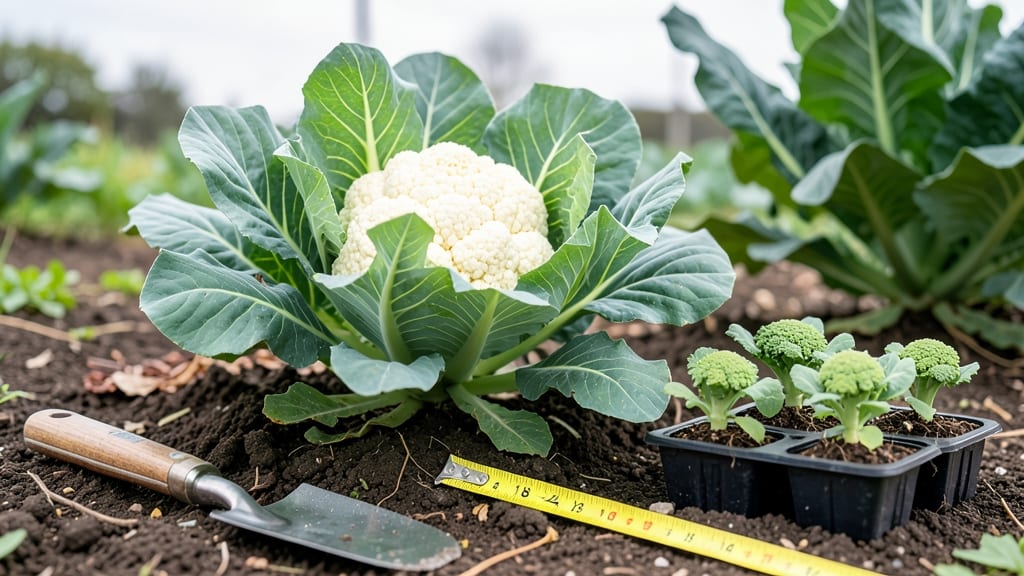
To plant cauliflower with the right spacing, how far apart should cauliflower be planted for optimal growth? Aim for 18 to 24 inches between plants—this prevents overcrowding and ensures strong heads.
Struggling with cauliflower plants that crowd each other or leave too much empty space? Proper spacing is the secret to maximizing yield, airflow, and disease prevention—here’s exactly how to do it right.
Cauliflower thrives when given room to stretch and breathe, but too much space wastes garden real estate. The ideal distance balances growth needs with efficient use of your plot, whether you’re planting in rows or containers.
Below, I’ll break down the exact spacing for different varieties, soil types, and growing methods—plus how to adjust if your garden is small or your climate is tricky.
Optimal cauliflower spacing by planting method: in-ground vs containers
Getting your cauliflower spacing right is the key to healthy plants and bountiful harvests. Too close, and you risk disease and stunted growth; too far, and you waste precious garden space.
The ideal plant-to-plant distance depends on your growing method, whether you're planting in traditional garden beds, raised beds, or containers. Let’s break it down so you can maximize your yield without the guesswork.
For most cauliflower varieties, the general rule is 18-24 inches apart in rows spaced 24-36 inches apart. But this changes based on your setup. In-ground planting gives you flexibility, while containers demand tighter spacing.
Understanding these differences ensures your plants get the airflow and sunlight they need to thrive. Let’s dive into the specifics for each method.
| Planting Method | Plant-to-Plant Distance | Row Spacing | Notes |
|---|---|---|---|
| In-Ground Beds | 18-24 inches | 24-36 inches | Ideal for standard varieties like Romanesco or Snowball. Use wider rows for larger varieties. |
| Raised Beds | 16-18 inches | 20-24 inches | Tighter spacing works because raised beds improve drainage and soil warmth. Perfect for dwarf varieties. |
| Containers (5+ gallon) | 12-16 inches | N/A (single plant per container) | Use dwarf varieties like Purple of Sicily. Ensure containers have drainage holes and deep soil. |
| Containers (1-3 gallon) | 8-12 inches | N/A (2-3 plants per container) | Only for mini varieties. Monitor watering closely—containers dry out faster. |
When planting cauliflower in-ground, aim for 18-24 inches between plants and 24-36 inches between rows. This spacing gives plants room to spread their leaves and access sunlight without competing.
For raised beds, you can reduce the spacing slightly to 16-18 inches because the improved soil conditions help plants grow faster and healthier.
Container growing is where spacing gets creative. In a 5-gallon container, plant just one cauliflower with 12-16 inches of space to its neighbors if you’re using multiple containers.
Smaller 1-3 gallon containers can fit 2-3 dwarf plants with 8-12 inches between them. Remember, containers dry out quickly, so choose dwarf varieties that thrive in limited space.
Proper row spacing is just as important as plant-to-plant distance. In traditional garden beds, 24-36 inches between rows allows you to walk between them for maintenance without disturbing the plants. In raised beds, you can narrow this to 20-24 inches because the bed’s height makes access easier.
This also helps with air circulation, reducing the risk of fungal diseases like downy mildew.
If you’re growing multiple cauliflower varieties, adjust spacing based on their mature size. For example, standard varieties like Snowball Y Improved need the full 18-24 inches, while dwarf varieties like Purple of Sicily can handle 12-16 inches.
Always check the seed packet for variety-specific recommendations—some hybrids are bred for tighter spacing.
One common mistake is overcrowding to fit more plants into a small space. While it might seem efficient, crowded cauliflower plants compete for nutrients and water, leading to smaller heads and increased disease risk.
Another pitfall is planting too far apart, which wastes space and reduces your harvest. Sticking to the recommended spacing guidelines ensures your plants grow strong and healthy.
For transplanting seedlings, dig holes slightly larger than the root ball and space them according to your chosen method. Gently firm the soil around the roots to eliminate air pockets, then water thoroughly.
Mulch around the base with straw or shredded leaves to retain moisture and suppress weeds. This simple step can make a big difference in your plants’ early growth.
Whether you’re a seasoned gardener or just starting, mastering cauliflower spacing will set you up for success. By following these guidelines, you’ll enjoy healthier plants, fewer pests, and a bountiful harvest of beautiful, compact heads. Happy planting!
Why 18-24 inches is the perfect distance for cauliflower plants
Cauliflower plants need just the right amount of space to thrive, and 18-24 inches apart is the gold standard for a reason. This spacing isn’t arbitrary—it’s rooted in plant biology, disease prevention, and sunlight optimization.
When cauliflower heads get too crowded, they compete for nutrients, leading to smaller, misshapen heads or even bolting. But spacing them too far apart wastes garden space and reduces your harvest potential.
Think of your garden like a bustling city: plants need room to breathe and access to sunlight. Cauliflower is no exception—its broad leaves and dense heads require ample airflow to prevent fungal diseases like clubroot or downy mildew.
The 18-24 inch rule strikes the perfect balance, ensuring each plant gets 6-8 hours of sunlight daily while minimizing competition for water and nutrients.
⚠️ Common Mistakes to Avoid
Overcrowding: Planting closer than 12 inches leads to stunted growth, poor head formation, and disease outbreaks from poor airflow. Solution: Stick to 18-24 inches for standard varieties.
Underestimating mature size: Dwarf varieties still need 12-18 inches, while giant types (like Romanesco) may require up to 24-30 inches. Solution: Check seed packets for variety-specific spacing.
Ignoring soil fertility: Poor soil forces plants to compete harder for nutrients, making spacing even more critical. Solution: Amend soil with compost or aged manure before planting.
Proper spacing also plays a critical role in head formation. Cauliflower heads develop best when plants aren’t stressed by competition. The 18-24 inch spacing allows roots to spread without root-bound competition, ensuring steady nutrient uptake.
This consistency is key to growing large, tight, and uniform heads—the kind you’ll proudly serve at your next dinner party.
Another often-overlooked benefit? Easier harvesting and maintenance. With the right spacing, you can weed, water, and inspect plants without trampling neighboring foliage. This reduces soil compaction and disease spread from foot traffic.
Plus, well-spaced plants make it easier to spot pests early, like cabbage worms or aphids, before they become a problem.
If you’re growing cauliflower in containers or raised beds, the same principles apply. Just ensure your container is at least 12 inches deep and 18 inches in diameter per plant. For succession planting, stagger your spacing slightly to maximize bed efficiency while still allowing airflow.
Remember, 18-24 inches isn’t a rigid rule—it’s a guideline. Adjust based on your climate, soil quality, and variety. In cooler, wetter climates, you might space plants closer (18 inches) to reduce fungal risks.
In hot, dry areas, give them extra room (24 inches) to access moisture. The key is observing your plants and adapting as they grow. 🌱