
Planting
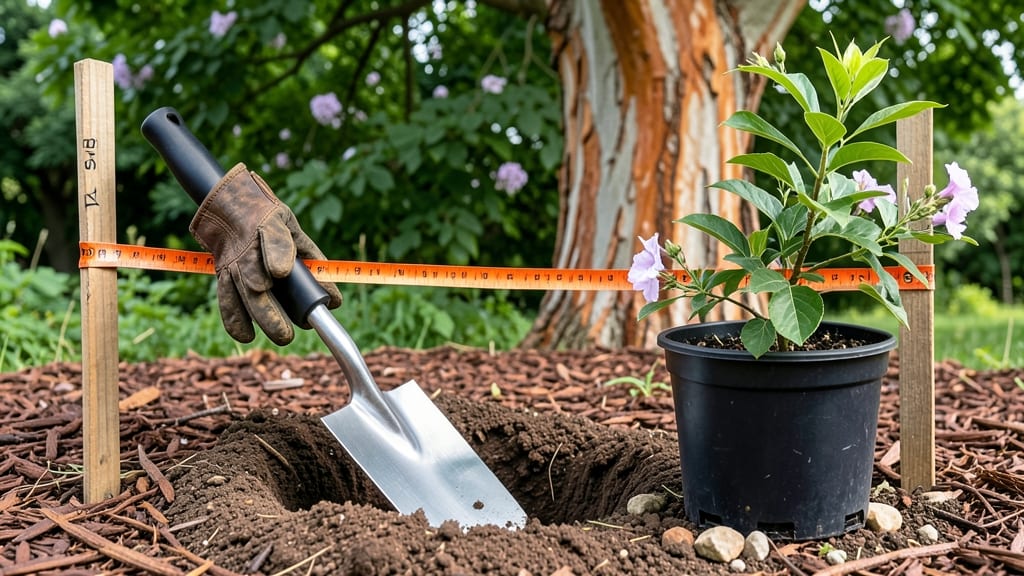
To determine how far apart crepe myrtles should be planted, space them 6 to 15 feet apart—dwarf varieties need 6–8 feet, medium types 8–12 feet, and large mature trees 12–15 feet—while considering their mature canopy spread and sunlight requirements.
Crepe myrtles thrive when given room to grow, and their spacing directly impacts both their health and your landscape's beauty. 🌿 The key is matching the tree's mature size to its surroundings—dwarf varieties like 'Acoma' stay compact, while large types such as 'Natchez' can reach 30 feet tall with canopies spanning 15 feet.
Proper spacing ensures adequate airflow, reducing fungal diseases and encouraging vibrant blooms. I always recommend sketching a layout before planting, especially in smaller yards where overcrowding can lead to competition for nutrients and water.
Another critical factor is sunlight exposure. Crepe myrtles love full sun, so spacing them too closely can create shaded areas where weeds thrive and moisture lingers, inviting pests. For hedges, plant them in a staggered pattern every 6–8 feet, while specimen trees should get their full allotment of space.
If you're planting near other shrubs or perennials, opt for sun-loving companions like lavender or ornamental grasses that won't compete for resources.
💡 In This Article
- Crepe Myrtle Spacing Science: Growth Habits and Sunlight Needs
- Planting Layout Tips for Crepe Myrtle Landscapes
Crepe myrtle spacing science: growth habits and sunlight needs
Crepe myrtles grow through a process called apical dominance, where the central leader shoot suppresses lateral branches until the tree reaches its mature height. This is why spacing must account for both the tree's eventual height and the width of its canopy—often 2/3 of the mature height.
For example, the 'Natchez' variety can grow 30 feet tall with a 15-foot-wide canopy, requiring 12–15 feet of space to prevent branch rubbing and disease. 🌿 The science here is simple: crowded trees compete for sunlight, water, and nutrients, leading to weaker stems and reduced flowering.
Sunlight plays a critical role in branch development. Crepe myrtles need 6–8 hours of direct sunlight daily to produce their iconic blooms, which form on new wood. When trees are planted too closely, lower branches receive insufficient light, causing them to die back—a condition called "sun scald."
This is why dwarf varieties like 'Acoma' (max 6 feet tall) can be spaced 6–8 feet apart, while larger types need more room.
The rule of thumb is to match spacing to the tree's mature canopy width, ensuring each tree gets its full share of sunlight without overshadowing neighbors.
Overcrowding also increases the risk of fungal diseases like powdery mildew, which thrives in humid, shaded conditions. The airflow restriction from tight spacing creates a microclimate where moisture lingers on leaves and bark. I've seen this firsthand in overplanted landscapes where crepe myrtles develop brown spots and weak growth.
Proper spacing not only improves air circulation but also makes pruning and maintenance easier, reducing long-term care costs.
Soil competition is another hidden factor. Crepe myrtles have shallow root systems that spread widely, especially in the top 12–18 inches of soil. When planted too closely, roots intertwine, creating a "root-bound" effect that stunts growth.
This is why medium varieties like 'Tonto' (reaching 15–20 feet tall) need 8–12 feet of space—their root zones overlap at closer distances, leading to nutrient deficiencies. 🌱 A simple soil test before planting can reveal if your yard's composition (sandy, clay, or loamy) affects root spread, allowing you to adjust spacing accordingly.
Consider this comparison: a 10-foot-tall crepe myrtle with a 6-foot-wide canopy needs at least 8 feet of spacing to avoid branch interference. If you plant two trees 6 feet apart, their canopies will touch in just a few years, leading to broken limbs and disease.
The key is to visualize the tree's mature form—most nurseries provide this data, but if not, err on the side of extra space. For instance, the 'Rapids Blue' variety, with its striking purple foliage, requires 10–12 feet of clearance to showcase its full beauty without obstruction.
One final tip: always account for the tree's growth rate. Fast-growing varieties like 'Catawba' can add 2–3 feet per year, meaning a 10-foot spacing today might feel tight in 5 years.
Plan ahead by marking planting spots with stakes and string, then step back to visualize the mature landscape. This small effort saves headaches—and potential tree removal costs—down the road. 🌳