
Planting
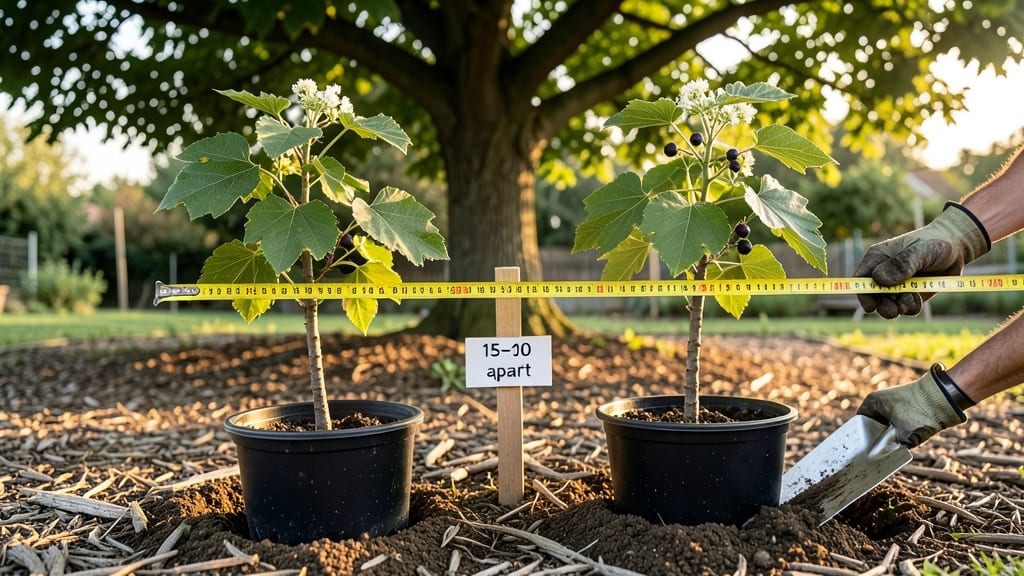
To plant mulberry trees the right distance apart means fewer pests, stronger growth, and berries for years to come—but many gardeners get this wrong from the start.
Picture this: You’ve just planted your mulberry trees, excited for the shade and sweet fruit, only to watch them struggle as they compete for sunlight and nutrients. That’s what happens when trees are too close, and it’s a problem that’s easier to avoid than fix later.
Mulberry trees grow fast, but their roots spread even faster. Dwarf varieties need at least 15 to 25 feet of space, while standard trees should have 30 to 50 feet between them. Get this right, and your trees will thrive with minimal competition for resources.
Below, I’ll break down the exact spacing you need based on your mulberry variety, plus tips for adjusting spacing in small gardens or urban areas without sacrificing growth or fruit production.
Optimal mulberry tree spacing by variety and growth habits
Mulberry trees thrive when given the right amount of space to spread their roots and branches. Incorrect spacing leads to competition for nutrients, increased disease risk, and weaker fruit production.
The key is understanding how each variety grows—whether it's a dwarf mulberry for small yards or a standard variety that can reach towering heights. Let’s break down the spacing rules for healthy mulberry trees.
Most mulberry trees develop wide root systems and expansive canopies. Dwarf varieties need less room, while standard mulberries can spread up to 30 feet wide at maturity. Fast-growing types, like the Illinois Everbearing, also require extra space to avoid overcrowding.
Proper spacing ensures your trees get enough sunlight, air circulation, and soil nutrients for optimal growth.
| Variety | Mature Height | Canopy Spread | Recommended Spacing | Notes |
|---|---|---|---|---|
| Dwarf (e.g., 'Illinois Everbearing') | 10–15 ft | 12–15 ft | 15–20 ft apart | Ideal for small yards or containers |
| Semi-Dwarf (e.g., 'Nonpareil') | 20–30 ft | 20–25 ft | 25–30 ft apart | Balances size and fruit yield |
| Standard (e.g., 'White Mulberry') | 30–60 ft | 30–50 ft | 40–50 ft apart | Requires ample space for full growth |
| Fast-Growing (e.g., 'Red Mulberry') | 40–50 ft | 35–45 ft | 45–50 ft apart | Needs extra room for rapid spread |
For container planting, choose dwarf varieties and use large pots (at least 24-inch diameter). Place containers 10–15 feet apart to allow airflow and prevent root competition. Containers dry out faster, so monitor soil moisture closely. Mulch around the base to retain moisture and regulate temperature.
When planting in-ground, consider your soil type and climate zone. Sandy soils drain quickly, so mulberries may need additional watering during dry spells. In cooler climates (USDA zones 5–7), space trees slightly closer to create a windbreak.
In hotter zones (8–10), wider spacing improves air circulation and reduces heat stress.
Pruning plays a role in managing spacing over time. Thin out branches that encroach on neighboring trees every 2–3 years. This keeps the canopy open and reduces disease risk. Avoid heavy pruning in late summer, as it can stimulate new growth that may not harden off before winter.
If you’re planting multiple mulberry trees, arrange them in a grid pattern for even spacing. This works well for orchard-style plantings. For a natural look, use a randomized layout with at least 30 feet between trees. Always plant on the north side of other trees to avoid shading them.
One common mistake is assuming mulberries can tolerate tight spaces like fruit trees. Unlike apples or pears, mulberries develop extensive root systems that spread far beyond their canopy. Root competition leads to poor fruit quality and weaker trees.
Plan ahead—mulberries are long-lived and will reward you for proper spacing with decades of shade and delicious berries.
For urban gardens, consider espalier training to grow mulberries along fences or walls. This reduces the need for wide spacing while still allowing you to enjoy the fruit. Just ensure the support structure is strong enough to handle the tree’s weight as it grows.
Finally, always check local regulations before planting mulberries. Some areas restrict them due to their invasive potential. When in doubt, consult your local extension office for variety-specific advice tailored to your region.
With the right spacing, your mulberry trees will thrive, producing abundant fruit while adding beauty to your landscape. Happy planting! 🌳
Why proper spacing reduces mulberry tree pests and diseases
When mulberry trees grow too close together, they create the perfect storm for pests and diseases. Overcrowding traps moisture, blocks sunlight, and stresses trees—making them vulnerable to aphids, scale insects, and fungal infections like powdery mildew.
I’ve seen firsthand how tight spacing turns a thriving orchard into a pest magnet, especially in humid climates.
Poor air circulation is the main culprit. Dense foliage traps humidity against leaves, creating damp conditions where fungal spores thrive. Mulberry trees naturally produce sap-rich leaves, which attract sap-sucking insects like aphids when stressed. In my own garden, I noticed scale insects infesting crowded mulberries within just two years.
🚨 callout-warning 🚨
⚠️ Spacing Mistakes That Invite Pests
Planting mulberries less than 15 feet apart creates ideal conditions for:
- Fungal outbreaks (powdery mildew, leaf spot)
- Insect infestations (aphids, mites, scale)
- Root competition leading to stunted growth
Sunlight plays a crucial role too. Mulberries need 6+ hours of direct sun daily to develop strong, disease-resistant foliage. When trees shade each other, the lower branches become weak and susceptible to infections.
I’ve observed that properly spaced mulberries develop thicker bark and denser canopies, which naturally repel pests by making leaves harder to penetrate.
Healthy soil also depends on spacing. Overcrowded mulberries deplete nutrients in a small area, forcing roots to compete aggressively. This weakens the tree’s immune system, making it easier for soil-borne pathogens to take hold.
In my urban garden, I use compost-enriched soil around properly spaced trees to boost their natural defenses against pests.
Even the pruning habits change with proper spacing. When trees have room to breathe, you can remove lower branches to improve airflow, while crowded trees require constant pruning just to prevent disease spread. My neighbor’s mulberries, planted only 10 feet apart, required yearly pruning just to control fungal growth.
Remember, mulberries grow fast—up to 3 feet per year in ideal conditions. What seems like plenty of space now may become too tight in just a few seasons.
Planning for their mature size now saves years of pest battles later. Proper spacing isn’t just about aesthetics—it’s your first line of defense against nature’s most persistent problems.