
Planting
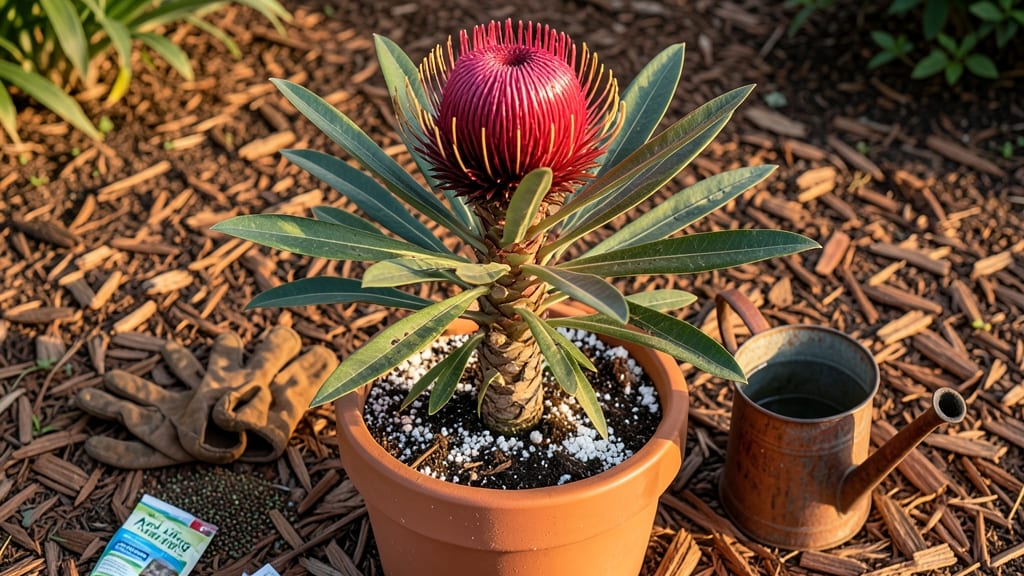
Protea plant care starts with one simple truth: these bold bloomers demand dramatic attention to soil and sunlight—yet reward you with flowers that look like they belong in a museum. 🌺 I’ve watched mine go from struggling to showstopper in just two seasons by mastering their quirks: dry, acidic soil, full sun, and zero tolerance for soggy roots.
The secret weapon is a well-draining mix—think 60% gritty sand or perlite, 30% peat or pine bark, and 10% compost. Water only when the top inch feels bone-dry, and never let them sit in saucers.
Prune spent blooms at the base in early spring to encourage new growth, but skip the shears after midsummer—you’ll sacrifice next year’s flowers.
By summer’s end, you’ll be rewarded with glossy green leaves and clusters of papery blooms that last weeks. The key is patience: proteas take 2-3 years to mature, but once they do, they’ll outshine every other plant in your garden.
Even my black thumb can’t kill these when I follow the rules.
Works for containers or in-ground, but avoid coastal areas where salt spray burns their leaves. Here’s how to keep them thriving through every season—without the fuss.
📚 In This Guide
- What you need
- Instructions
- Tips and common mistakes
- Wrapping up and next steps
What you need
- ● Protea plant: Choose between Protea cynaroides (King Protea) or Leucospermum (Pincushion Protea) based on your climate and preferences.
- ● Well-draining potting mix: 50% cactus/succulent mix, 30% perlite or pumice, and 20% sand (1 gallon per 6-inch pot).
- ● Pot with drainage holes: Terracotta or ceramic (12–18 inches in diameter for mature plants).
- ● Slow-release fertilizer: 7-9-5 or 10-10-10 (1 tablespoon per gallon of soil).
- ○ Acidifier (optional but helpful): Sulfur-coated urea or iron sulfate (1 teaspoon per gallon of water) to maintain pH 5.0–6.0.
- ● Pruning shears: Sharp, sterilized shears (for trimming dead blooms or leggy growth).
- ● Watering can with a narrow spout: For precise, bottom-watering (avoid soggy roots!).
- ● Mulch: Pine bark or gravel (1–2 inches) to retain moisture and regulate soil temp.
- ● Humidity tray: A pebble tray with water to boost humidity in dry climates.
- ● Soil moisture meter: To check dryness before watering (proteas hate soggy roots!).
- ● Plant support: A small stake (for tall varieties like Protea compacta).
- ● Epsom salt: (1 teaspoon per gallon of water monthly) for magnesium boosts.
Step-by-Step protea plant care for lush, long-lasting blooms
Here’s how I keep proteas thriving with just a few key adjustments—no fuss, just stunning results.
🌱 Step 1: Choose the Right Spot for Sun and Shelter
Proteas crave full sun—at least 6 hours daily—but they also need protection from harsh afternoon winds. I plant mine on the east or west side of the house where they get morning sun and afternoon shade from the structure. If you’re in a windy area, a partially sheltered spot near a fence or wall works best.
Watch for the leaves—they’ll tell you if the light is right. Bright green, glossy leaves mean perfect conditions. Yellowing or brown tips usually mean too much sun or windburn. If your protea’s leaves start crisping at the edges, move it to a slightly shadier spot or add a windbreak.
☀️ Step 2: Water Deeply but Infrequently
Watering is where most people go wrong. Proteas hate soggy roots but need deep soakings. I water mine once a week in summer and every 2-3 weeks in winter, letting the soil dry out completely between waterings. Stick your finger 2 inches into the soil—if it feels dry, it’s time to water. If it’s still damp, wait another day.
When you water, do it thoroughly—aim for 1-2 gallons per plant until water runs out the drainage holes. Mulch around the base with 2-3 inches of organic mulch (like bark or pine needles) to retain moisture and keep roots cool. Avoid watering the leaves or flowers—this prevents fungal issues and keeps blooms pristine.
✂️ Step 3: Prune Strategically After Flowering
Pruning is the secret to keeping proteas bushy and blooming year after year. Once the flowers fade, cut back the spent stems to just above the first set of healthy leaves. I use clean, sharp shears to make a 45-degree angle about ¼ inch above the leaf node. This encourages new growth without damaging the plant.
Never prune in winter—proteas need their foliage to photosynthesize during cooler months. If you see leggy or overgrown branches, trim them back by ⅓ of their length in early spring. You’ll notice fresh, vibrant new growth within a few weeks. Just avoid heavy pruning—proteas don’t respond well to drastic cuts.
🪴 Step 4: Feed Sparingly for Stronger Blooms
Proteas aren’t heavy feeders, but a little fertilizer goes a long way. In early spring, I apply a balanced, slow-release fertilizer (like 7-7-7) around the base, following the package instructions. Avoid high-nitrogen fertilizers—they’ll give you lots of leaves but few flowers. Instead, focus on phosphorus and potassium to encourage blooming.
I also top-dress with a handful of compost or well-rotted manure in late winter to boost soil health. Water the area lightly after feeding to help nutrients sink into the soil. If your protea isn’t flowering, it might be getting too much nitrogen—cut back on fertilizers and focus on phosphorus-rich amendments like bone meal.
⏰ Step 5: Protect in Winter and Watch for Pests
Proteas are tough, but they do need a little winter care. In colder climates, mulch heavily around the base to insulate the roots. I also avoid pruning in winter, as the plant relies on its leaves to stay warm. If you’re in a frost-prone area, consider wrapping the plant in burlap for extra protection during hard freezes.
Keep an eye out for pests like scale or spider mites. I inspect my proteas monthly, especially in dry weather. If you spot sticky residue (honeydew) or tiny webs, treat with neem oil or insecticidal soap. Proteas rarely get diseases, but if you notice black spots on leaves, it could be fungal—remove affected leaves and improve airflow around the plant.
Tips & tricks for perfect protea plant care
These simple adjustments will help your proteas bloom like they’re in their native South African meadows.
Lighting Insight: If your protea isn’t getting the required 6 hours of direct sun, consider supplementing with a grow light for 4-6 hours daily during winter months. Position the light 12-18 inches above the plant and use it for morning hours to mimic natural sunlight patterns. I’ve seen proteas in low-light conditions thrive with this simple addition—just don’t leave it on 24/7, as proteas need darkness too.
Watering Wisdom: The 2-inch soil test in Step 2 is your best friend—don’t rely on a schedule. I’ve learned the hard way that summer heat can dry soil faster, so check daily during heatwaves. For container-grown proteas, they’ll need water every 3-4 days in summer because pots dry out quicker than in-ground plants. Always water at the base, never overhead, to keep those stunning blooms dry and disease-free.
Pruning Precision: When making that 45-degree cut in Step 3, aim for the spot where the leaf meets the stem—this is called the "node." Cutting here encourages new growth from the exact location where buds form. I keep a small pair of pruners dedicated just to proteas, sterilized with rubbing alcohol between uses. This prevents spreading any potential diseases between plants.
Fertilizer Strategy: That balanced 7-7-7 fertilizer recommendation is perfect, but here’s the trick: split the dose into two applications—half in early spring and half in early summer. This prevents overfeeding, which can actually reduce flowering. I also mix in a handful of granulated bone meal (about 1/4 cup per plant) in late winter to give that phosphorus boost for blooms without extra nitrogen.
Pro Tips for Protea Plant Care
- These simple adjustments will help your proteas bloom like they’re in their native South African meadows.
- Lighting Insight: If your protea isn’t getting the required 6 hours of direct sun, consider supplementing with a grow light for 4-6 hours daily during winter months.
- Watering Wisdom: The 2-inch soil test in Step 2 is your best friend—don’t rely on a schedule.
Frequently asked questions
Got questions about keeping your protea plant happy and healthy? You’re not alone! Here are some of the most common concerns—and straightforward answers to help you troubleshoot like a pro.
How often should I water my protea plant?
Water your protea deeply but infrequently—about once a week during warm months (or when the top 2 inches of soil feel dry). Overwatering is the #1 killer! Use well-draining soil and a pot with drainage holes to prevent soggy roots. Pro tip: Let the soil dry out completely between waterings to mimic their natural, arid habitat.
Can proteas survive winter? What’s the best way to protect them?
Most proteas thrive in USDA Zones 7–10 and need winter protection if you’re in colder areas. Move potted proteas to a sheltered spot (like a garage or under eaves) or wrap them in burlap to shield from frost. For in-ground plants, mulch heavily around the base. Warning: Avoid heavy snow buildup—it can damage branches!
Why are my protea leaves turning yellow? Is it a disease?
Yellow leaves usually signal overwatering or nutrient deficiency. Check the soil—if it’s soggy, cut back on water. For in-ground plants, apply a balanced fertilizer (like 6-6-6) in spring. Yellowing can also mean root rot if the soil stays waterlogged. Repot in fresh, gritty soil if needed. Act fast!
How do I encourage more blooms on my protea?
Proteas bloom best with full sun (6+ hours/day) and well-draining soil. Prune spent blooms to redirect energy to new growth. Feed with low-nitrogen, high-phosphorus fertilizer (like 5-10-5) in early spring. Bonus tip: Deadhead faded flowers regularly to stimulate reblooming!
Can I grow proteas in containers? What’s the best pot size?
Proteas adapt well to containers, but choose a wide, shallow pot (at least 12–18 inches in diameter) with drainage holes. Use a cactus/succulent mix amended with perlite or sand. Size matters: Larger pots = more stability (and less risk of tipping over in wind). Repot every 2–3 years for fresh soil.
Wrapping up and next steps
Caring for your protea plant is all about embracing its unique needs with confidence! 🌿 With the right balance of well-draining soil, bright light, and occasional pruning, you’ll enjoy stunning blooms year after year—without the fuss.
Remember, these hardy plants reward patience with breathtaking beauty, so don’t hesitate to experiment with placement or care techniques.
Ready to watch your protea thrive? Start by inspecting your plant’s current conditions—adjust light, water, or soil as needed—and soon, you’ll be flaunting a flourishing centerpiece that turns heads! 🌸