
Planting
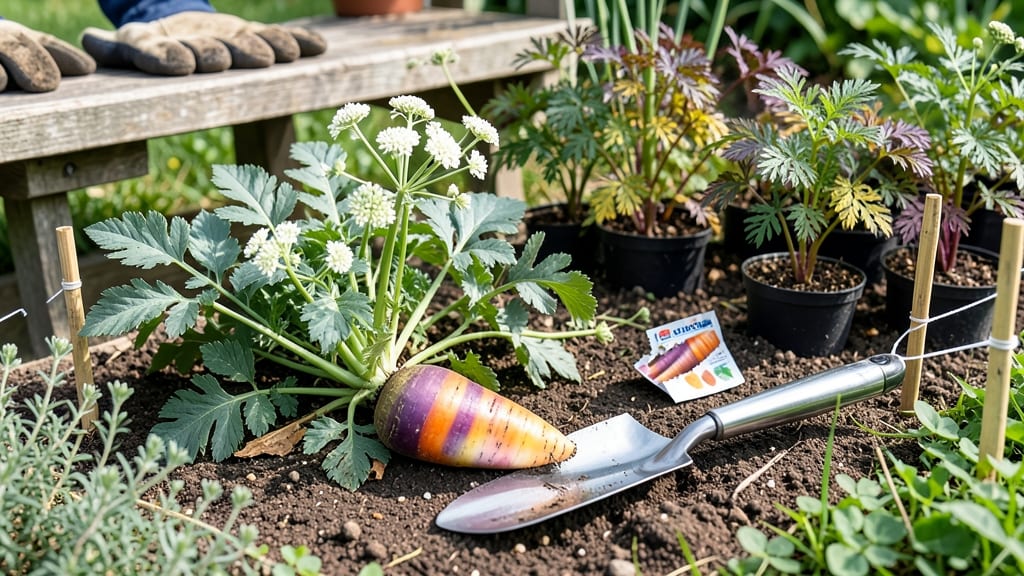
Rainbow carrots transform your garden into a vibrant rainbow—70 days from seed to harvest. 🌈 I planted my first batch last spring, and the mix of purple, orange, yellow, and red roots stole the show at the farmers' market.
These colorful varieties aren't just pretty; they taste sweeter and pack more nutrients than standard carrots.
The secret to growing them starts with loose, stone-free soil—no clumps—and a long, straight seedbed. Scatter seeds thinly (they're tiny!) and keep them consistently moist until sprouts appear. Too much water or uneven soil causes forking, which ruins the shape.
I learned that the hard way with my first batch—now I use a wooden board to create a straight, firm seedbed.
By day 60, you'll be pulling roots in every color of the rainbow. The purple varieties develop a nutty flavor when cooked, while the orange ones taste like classic carrots. They thrive in full sun and cool weather, making them perfect for spring or fall planting.
Just watch for carrot rust fly and cover seeds with fine mesh if pests are a problem in your area.
Rainbow carrots grow just like regular carrots—they just look (and taste) better. The key is patience and consistent moisture. Once you try them, you'll never go back to plain orange roots again. Ready to turn your garden into a colorful masterpiece?
📚 In This Guide
- What you need
- Instructions
- Tips and common mistakes
- Wrapping up and next steps
What you need
- ● Rainbow Carrot Seeds: Choose a heirloom or hybrid mix (e.g., 'Rainbow Blend' or 'Cosmic Purple'). Aim for 1–2 grams of seeds (roughly 200–400 seeds).
- ● Growing Space: In-ground garden bed: 12–18 inches deep (carrots need room to grow!).
- ● OR containers: 10–12 inches deep (use wide, shallow pots for shorter varieties).
- ● Well-draining Soil: Loose, sandy loam mixed with compost (avoid clay—it causes forking!).
- ● Fertilizer: Balanced organic fertilizer (5-5-5 or 10-10-10) or compost tea.
- ● Watering Can or Hose: With a gentle spray nozzle to avoid displacing seeds.
- ○ Row Cover or Mesh: Optional but helpful for pest protection (especially in early stages).
- ● Seedling trays for early starts (if sowing indoors).
- ● Plant markers or labels (to track varieties!).
- ● Mulch (straw or grass clippings) to retain moisture and suppress weeds.
- ● Organic pest deterrents (e.g., neem oil or row covers).
- ● Garden gloves (to keep hands clean while handling soil!).
Step-by-Step instructions for planting rainbow carrots
Here's how to grow vibrant, colorful carrots that'll brighten your plate and garden.
🌱 Step 1: Prepare the Soil for Perfect Carrot Growth
Rainbow carrots need loose, stone-free soil to grow straight and develop their full color. Work in 2-3 inches of compost into the top 12 inches of soil—this prevents forking and ensures sweet roots. I like to add a handful of sand or perlite per square foot to improve drainage, especially in clay-heavy soils.
Test the soil by digging a 6-inch deep hole. If you feel rocks or compacted layers, mix in more sand or organic matter. The soil should crumble easily between your fingers when moist. Avoid fresh manure—it can cause forking and bitter flavors. A soil pH between 6.0 and 6.8 is ideal, so test it if you're unsure.
🌱 Step 2: Sow Seeds at the Right Depth and Spacing
Carrot seeds are tiny and slow to germinate, so I plant them ¼ inch deep in rows spaced 12-18 inches apart. For a 4-plant harvest, sow seeds in a 12-inch long trench. Scatter seeds thinly—1 teaspoon covers about 1 foot—because overcrowding leads to stunted, misshapen roots.
After sowing, cover lightly with soil and water gently with a fine mist to avoid washing seeds away. Place a small marker at each end of the row to remember where you planted. Carrot seeds need consistent moisture to germinate, so keep the soil damp (not soggy) until you see first true leaves in 2-3 weeks.
☀️ Step 3: Thin Seedlings for Strong, Straight Roots
When seedlings reach 2 inches tall, thin them to stand 2-3 inches apart. Use sharp scissors to snip unwanted sprouts at soil level—this prevents disturbing the roots of remaining plants. I always thin in stages: first to 4 inches apart, then again to 2-3 inches when they're 4 inches tall.
Thinning might seem cruel, but it ensures your carrots grow straight and develop their full rainbow colors. If you skip this, you'll end up with forked, twisted roots that taste bitter. Water the bed deeply after thinning to help roots recover. Mulch with 1 inch of straw to retain moisture and keep weeds at bay.
💧 Step 4: Water and Fertilize for Sweet, Colorful Harvests
Carrots need consistent moisture—about 1 inch of water per week—but avoid overhead watering after germination. Water at the base in the morning to prevent fungal diseases like leaf blight. I use a soaker hose to keep the soil evenly damp without wetting the foliage.
Side-dress with ½ cup of 5-10-10 fertilizer per 10-foot row when plants are 4 inches tall, then again at 8 weeks. Too much nitrogen makes carrots leafy but stunts root growth. Harvest when tops reach 12-14 inches or when 70 days have passed—this is when their natural sweetness peaks and colors deepen.
⏰ Step 5: Harvest and Store for Long-Lasting Flavor
Pull carrots gently by the greens when roots are ¾ inch thick for baby carrots or wait until 1-1.5 inches for full-sized harvests. Dig carefully with a fork to avoid bruising. I harvest in the morning when soil is moist—this makes roots easier to pull cleanly.
Store carrots in the crisp drawer of your fridge for up to 3 weeks. For longer storage, trim greens, pack in sand or sawdust, and keep in a cool, dark place. Rainbow carrots store best when dry—moisture speeds up spoilage. Enjoy their sweet crunch in salads, roasts, or raw snacks!
Tips & tricks for perfect rainbow carrot planting
Here's what I've learned after growing rainbow carrots for years—these tricks make all the difference in your harvest.
Soil Prep Secret: In Step 1, don't just add compost—sift it through a mesh bag to remove any rocks or clumps. I've found that even small pebbles can cause forking in rainbow carrots. For heavy clay soils, mix in one part sand to three parts soil by volume to create that perfect loose texture. The goal is soil that crumbles like cake when moist, not sticks like wet clay.
Seed Sowing Strategy: When planting those ¼-inch deep seeds in Step 2, I like to use a seed tape or sprinkle them along a ruler for perfect spacing. The key is patience—don't be tempted to plant more densely to get more carrots. Those 12-inch row spacing and 1 teaspoon per foot measurements are non-negotiable for straight roots. I've seen gardeners double the seeds only to end up with tiny, misshapen roots.
Thinning Technique: In Step 3, I've found that thinning in two stages actually reduces stress on the plants. First thin to 4 inches apart when they're 2 inches tall, then wait until they're 4 inches tall before the final thinning to 2-3 inches. This gives the roots more time to establish before competition begins. And always use scissors—pulling seedlings can disturb neighboring roots and cause forking.
Watering Wisdom: The 1 inch per week guideline in Step 4 is perfect, but timing matters more than you'd think. I water deeply in the morning using a soaker hose, then let the soil dry slightly between waterings. This prevents fungal issues and encourages deeper root growth. The first true leaves should appear in 2-3 weeks, but if you see them wilting, it's usually a sign of inconsistent moisture rather than too much water.
Pro Tips for Planting Rainbow Carrots
- Here's what I've learned after growing rainbow carrots for years—these tricks make all the difference in your harvest.
- Soil Prep Secret: In Step 1, don't just add compost—sift it through a mesh bag to remove any rocks or clumps. I've fo...
- Seed Sowing Strategy: When planting those ¼-inch deep seeds in Step 2, I like to use a seed tape or sprinkle them alo...
Frequently asked questions
Got questions about growing rainbow carrots?
You’re not alone! Here are answers to the most common queries to help you grow these vibrant veggies like a pro.
How deep should I plant rainbow carrot seeds?
Plant rainbow carrot seeds about ¼ inch deep in loose, well-draining soil. Since they’re small and delicate, avoid burying them too deep—this ensures they sprout easily. Use a fine seed starter or mix seeds with sand for even spacing. Pro tip: If planting in rows, space them 1–2 inches apart to prevent overcrowding.
Can I plant rainbow carrots in late summer for a fall harvest?
Yes! Rainbow carrots thrive in cool weather, so a late summer planting (8–10 weeks before first frost) works well. Choose fast-maturing varieties (like ‘Rainbow’ or ‘Paris Market’) for a harvest before winter sets in. Just ensure soil temps stay above 50°F (10°C)—they won’t germinate well in heat.
What can I plant instead of rainbow carrots if I have rocky soil?
Rainbow carrots need deep, loose soil to grow straight and colorful. If your soil is rocky or clay-heavy, try these alternatives:
- Radishes (fast-growing, tolerate compacted soil)
- Beets (sweeter and more forgiving)
- Turnips (edible greens + roots)
- Short varieties like ‘Paris Market’ carrots (grow in containers or raised beds)
Why aren’t my rainbow carrot seeds sprouting?
Slow germination is common! Rainbow carrot seeds need consistent moisture and warmth (60–80°F / 15–27°C) to sprout. If they’re taking longer than 3 weeks, check:
- Soil moisture (keep damp, not soggy)
- Seed freshness (store-bought seeds last 1–2 years)
- Temperature (too cold? Try a seedling heat mat)
- Pests (rodents may dig them up—use wire mesh as a barrier)
Will rainbow carrots lose their colors when cooked?
Nope! Rainbow carrots retain their vibrant hues when cooked—whether roasted, steamed, or stir-fried. The colors come from natural pigments (e.g., purple = anthocyanins, orange = beta-carotene), which are stable in heat. For the best results, cook them gently to preserve texture and nutrients. Bonus: Their colors make dishes visually stunning!
Wrapping up and next steps
Growing rainbow carrots isn’t just about adding a splash of color to your garden—it’s a rewarding journey that yields delicious, nutrient-packed roots in just 70 days! 🌈 With the right soil, spacing, and care, you’ll enjoy a vibrant harvest that’s as fun to grow as it is to eat.
Whether you’re a seasoned gardener or a curious beginner, these sweet, crisp carrots are a fantastic addition to any plot.
Ready to dive in? Start small—try a few rows this season—and watch your garden transform into a rainbow of flavors. Next, experiment with succession planting to enjoy fresh carrots all year round! 🌱