
Planting
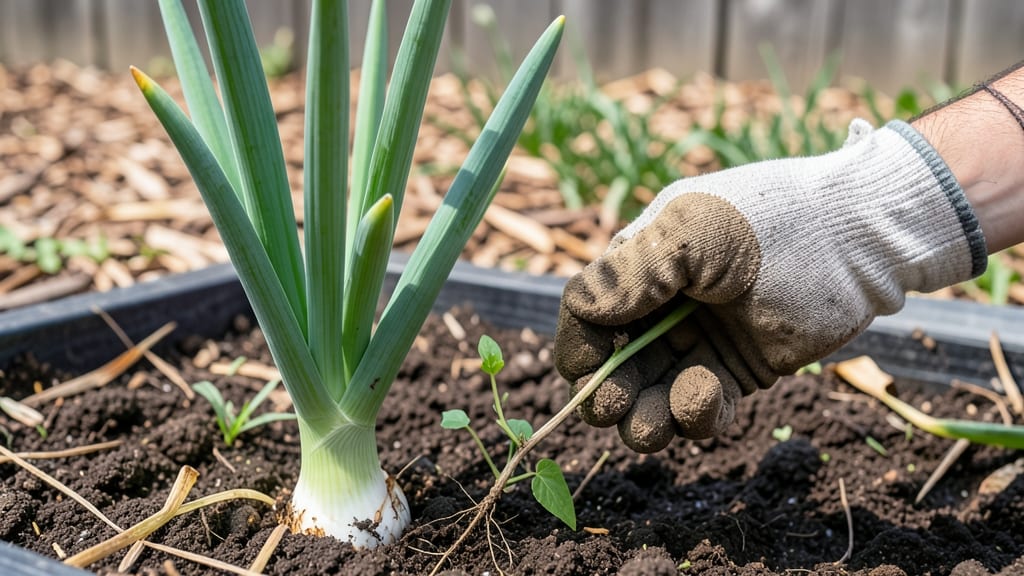
Fighting onion plant weeds? The battle starts with knowing your enemy—wild onions, chickweed, or crabgrass can strangle your crop if you wait too long.
I’ve pulled weeds from my onion beds for years, and I’ll show you how to spot them early, remove them cleanly, and keep your onions thriving without chemicals.
Most weeds in onion gardens appear in early spring, competing for water and sunlight. The key is acting fast—once weeds reach 2 inches tall, they’re harder to pull without disturbing onion roots.
I’ve found that a weekly check after rain keeps them from taking over, and mulching with straw blocks new weeds from sprouting.
Hand-pulling works best for small patches, but for stubborn weeds like crabgrass, a vinegar spray (1 gallon vinegar + 1 ounce dish soap) kills them without harming onions. Just apply on calm days to avoid drift. Your onions will reward you with bold, sweet bulbs by harvest time.
Prevention is easier than cleanup—cover soil with 3-4 inches of mulch right after planting to smother weeds before they start. This method cuts weed growth by 80% and keeps your onions healthy all season. Let’s get those beds weed-free!
Root Causes of Unwanted Growth
When your onion plants start hosting unwanted weeds, it’s rarely a random act of nature—it’s usually a sign that something in your garden’s ecosystem is out of balance.
Understanding these root causes helps you take precise action to reclaim your space. Let’s break down the science behind why these intruders show up in the first place.
Onions thrive in well-aerated, nutrient-rich soil, but weeds love disturbed, loose ground. If you till or loosen the soil too aggressively before planting, you’re essentially inviting weeds to move in by creating the perfect seedbed.
Weeds like chickweed and crabgrass germinate quickly in freshly turned soil because their seeds need light and moisture to sprout.
Why it happens:
- Excessive tilling buries weed seeds deeper, but also exposes them to ideal germination conditions when brought back to the surface.
- Lack of mulch leaves soil bare, allowing weed seeds (blown in by wind or carried by tools) to take root.
- Improper pH balance (soil too acidic or alkaline) weakens onions but doesn’t deter weeds, creating a competitive advantage for invaders.
Actionable fix: Use a no-till approach or minimal disturbance when planting. Apply a thick layer of organic mulch (straw or wood chips) to block light and suppress weed seeds before they germinate.
Weeds often flourish where onions struggle—especially in soggy or inconsistently moist soil. Overwatering creates a damp, anaerobic environment that onions dislike, while weeds like nutgrass and dandelions thrive in these conditions. Conversely, erratic watering stresses onion plants, leaving gaps where weeds can establish themselves.
Why it happens:
- Excess moisture softens the soil, making it easier for weed seeds to penetrate and sprout.
- Poor drainage leads to root rot in onions but encourages weeds like smartweed, which tolerates waterlogged conditions.
- Uneven watering creates dry patches where weeds germinate quickly to capitalize on available moisture.
Actionable fix:
- Install drip irrigation or soaker hoses to deliver water directly to onion roots, reducing surface moisture for weeds.
- Ensure your garden has proper drainage—amend heavy clay soil with compost or sand.
- Water deeply but infrequently (1–1.5 inches per week) to encourage onion roots to grow deeper, outcompeting shallow-rooted weeds.
Onions are slow to establish a dense canopy, leaving ample space for weeds to germinate and spread. Unlike aggressive ground covers (e.g., clover or living mulches), onions don’t smother weeds naturally. This gives opportunistic weeds like purslane or lamb’s quarters the upper hand.
Why it happens:
- Slow onion growth in cool or shaded conditions delays canopy closure, leaving bare soil exposed.
- Wide spacing between plants (common in onion sets) creates gaps weeds exploit.
- Weak onion varieties (e.g., short-day onions) may struggle to outcompete weeds in your climate.
Actionable fix:
- Plant onions closer together (1–2 inches apart for green onions, 4–6 inches for bulbs) to crowd out weeds.
- Use competitive cover crops like rye or buckwheat in off-seasons to suppress weeds without harming onions.
- Interplant onions with fast-growing companions like radishes or lettuce, which shade the soil early.
When onions are weakened by pests (e.g., onion maggots, thrips) or diseases (e.g., Fusarium or Botrytis), their growth slows, and they become less competitive. Weeds like bindweed or quackgrass seize the opportunity to fill the void, especially in stressed patches.
Why it happens:
- Pest damage (e.g., maggots eating roots) reduces onion vigor, leaving gaps for weeds.
- Fungal infections create dead zones where weeds thrive in the absence of healthy plants.
- Nutrient deficiencies (e.g., low nitrogen) stunt onions but don’t affect weeds, widening the competitive gap.
Actionable fix:
- Apply neem oil or insecticidal soap early to prevent pest outbreaks.
- Rotate crops annually to break disease cycles (e.g., avoid planting onions in the same spot every year).
- Fertilize with balanced organic matter (e.g., compost or worm castings) to boost onion resilience.
By addressing these underlying issues, you’re not just removing weeds—you’re creating an environment where onions can thrive without them. The key is consistency: healthy soil, smart watering, and proactive competition management will keep your onion patch weed-free for seasons to come.
Quick Fixes for Unwanted Garden Invaders
Got an onion plant weed takeover? Don’t panic—these practical solutions will help you reclaim your garden without breaking a sweat. Below, we’ve matched common causes to easy, effective fixes, plus prevention tips to keep your plants thriving.
Cause: Weeds (including onion plant weeds) spread fast when left unchecked. Fix:
- 👨🍳 Grab and tug—Pull weeds before they seed (when soil is moist after rain).
- 🔪 Use a hand trowel for stubborn roots—dig deep to avoid regrowth.
- 🗑️ Dispose properly—Toss weeds in the trash (not compost) to stop seeds from sprouting.
Pro Tip: 💡 Work in layers—Remove weeds in stages (e.g., morning and evening) to avoid exhaustion.
Cause: Weeds thrive in bare soil with easy access to sunlight. Fix:
- 🥗 Spread 2–4 inches of mulch (straw, wood chips, or grass clippings) around onion plants.
- 🔥 Block sunlight—Mulch smothers weeds while retaining moisture for your crops.
- ⏰ Refresh mulch every 2–3 months to maintain weed suppression.
Pro Tip: 🌡️ Avoid thick mulch piles near plant stems—keep it 2–3 inches away to prevent rot.
Cause: Overwatering or inconsistent watering stresses plants, making them vulnerable to weeds. Fix:
- 💧 Water deeply but infrequently—Soak soil 6–8 inches down, then let it dry slightly between waterings.
- 🌧️ Use drip irrigation to target onion plants directly, reducing weed growth in surrounding areas.
- 🚫 Avoid overhead watering—Wet leaves encourage fungal diseases and spread weed seeds.
Pro Tip: ✨ Early morning watering (6–8 AM) minimizes evaporation and gives plants a strong start.
Cause: Weeds invade through cracks in walkways, garden beds, or between plants. Fix:
- 📊 Lay landscape fabric under mulch in high-weed areas (e.g., between rows).
- 🍎 Use cardboard or newspaper as a biodegradable barrier—wet it down before covering with mulch.
- 🌿 Plant dense ground covers (like clover or creeping thyme) to outcompete weeds naturally.
Pro Tip: 🎯 Cut cardboard into strips for narrow spaces—no need for full sheets!
Once you’ve cleared the weeds, keep them away for good with these habits:
- 🌱 Rotate crops—Plant onions in different spots yearly to disrupt weed cycles.
- 🔍 Inspect new plants—Check seeds/purchased plants for hidden weed seeds.
- 🌿 Keep beds weed-free year-round—Even "dead" weeds can resprout.
Remember: Consistency is key! Dedicate 10–15 minutes weekly to weeding, and your garden will stay lush and low-maintenance. Happy gardening! 🌱
Frequently asked questions
How can I tell if a weed in my onion bed is actually a wild onion or garlic?
Wild onions and garlic (like Allium vineale) look similar but have key differences. Check the bulb: wild onions have a round bulb, while garlic has a segmented clove structure. The leaves also differ—wild onions have hollow, grass-like leaves, while garlic leaves are flatter and more rigid. Pull and check the roots if unsure, but avoid composting them as they'll regrow!
Is vinegar safe to use for killing weeds around my onions?
Yes, but use it carefully! A mix of 1 gallon white vinegar (5% acidity) + 1 tablespoon dish soap works well on broadleaf weeds. Apply on a calm day to avoid drift onto onion leaves. For stubborn weeds like crabgrass, repeat every 3-5 days until they wilt. Test a small area first to ensure it doesn't harm your onions.
Why do weeds seem to grow faster than my onions?
Weeds often outpace onions because they germinate quickly and thrive in disturbed soil. Onions grow slowly at first, leaving gaps for weeds to establish. To fix this, plant onions closer together (2-4 inches apart) and use 2-3 inches of mulch immediately after planting to block sunlight and slow weed growth.
Can I use corn gluten meal to prevent weeds in my onion garden?
Corn gluten meal is a natural pre-emergent herbicide that works well for onions. Apply 20 pounds per 1,000 sq ft in early spring before weeds sprout. It won't harm established onions but will prevent most annual weeds. Reapply after rain or every 2-3 months for continuous protection.
What's the best time of day to pull weeds from my onion patch?
Early morning is ideal! The soil is moist from dew, making weeds easier to pull without breaking. Avoid midday when the ground is dry and weeds are more resistant. If you must pull later, water the area first to soften the soil and make extraction easier.