
Planting
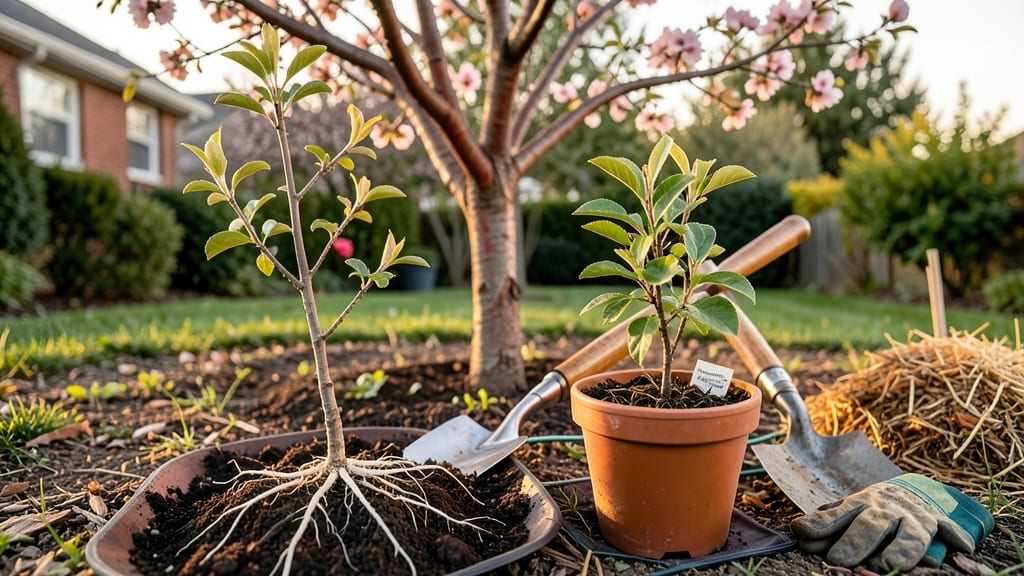
Planting nectarine trees in your sunny yard means juicy summer fruit with minimal effort—once you know the right moves. 🌞 I learned the hard way that nectarines need perfect conditions: full sun, well-draining soil, and the right timing to thrive.
Skimp on any of these, and you’ll end up with sparse blooms or bitter fruit. The secret starts with USDA zones 5-9—outside that range, winter cold or summer heat will stress your tree. Bare-root saplings (available in early spring) establish fastest, while container-grown trees let you plant anytime.
Dig a hole twice as wide as the root ball but no deeper, then loosen the soil at the bottom to encourage root spread. After planting, water deeply—2-3 gallons—to settle the soil around roots.
Mulch with 2-3 inches of organic material (straw or wood chips) to lock in moisture and keep weeds away. In the first year, focus on root growth over fruit production; prune only to remove dead branches or crossing limbs.
For long-term success, feed your tree in early spring with 10-10-10 fertilizer and thin fruit when they’re golf-ball size to prevent overcrowding. With patience, you’ll harvest sweet, velvety nectarines in 2-4 years—worth every bit of upfront care.
📚 In This Guide
- What you need
- Instructions
- Tips and common mistakes
- Wrapping up and next steps
What you need
- ● Nectarine Tree: 1 bare-root or container-grown Prunus persica (nectarine) sapling (choose a self-pollinating or compatible variety if growing solo).
- ● Size: 1–3 feet tall (bigger = faster fruiting, but younger trees adapt easier).
- ● Planting Site: Full sun spot (6+ hours of direct sunlight daily).
- ● Well-draining soil (pH 6.0–7.0; test or amend with lime/sulfur if needed).
- ● Space: 15–20 feet from other trees (or buildings) for airflow.
- ● Digging & Prep: Shovel or trowel (for digging holes).
- ● Garden fork (to loosen soil).
- ● 5-gallon bucket (for mixing soil amendments).
- ○ Soil Amendments (Optional but Helpful): 2–3 lbs compost or aged manure (per hole).
- ● 1 cup balanced fertilizer (10-10-10 or citrus-specific).
- ● 2 lbs sand or perlite (if soil is heavy/clay).
- ● Support & Protection: Stake (4–6 ft bamboo or metal) + soft tree tie (for young trees).
- ● Mulch (3–4 inches of wood chips or straw, keep 6 inches from trunk).
- ● Root stimulator gel (dip roots before planting for faster establishment).
- ● Drip irrigation kit (to keep soil moist during the first year).
- ● Fruit tree spray (organic copper or neem oil to prevent pests/diseases).
- ● Pruning shears (for shaping after planting).
Step-by-Step guide to planting nectarine trees
Here's my foolproof method for planting nectarine trees that thrive and produce fruit for decades.
🪴 Step 1: Choose the Perfect Planting Spot
Nectarines demand full sun—at least 6-8 hours of direct sunlight daily. I always pick a location with southern or western exposure where the tree gets morning warmth and afternoon sun. Avoid low spots where cold air settles, as nectarines are sensitive to late frosts.
Test the soil drainage by digging a 12-inch deep hole—if water pools after 30 minutes, amend the area with 2-3 inches of compost or plant on a slight mound. Nectarines hate soggy roots, which leads to root rot and weak growth. The ideal spot also has 6-8 feet of clearance from structures or other trees to prevent competition.
🌱 Step 2: Prepare the Planting Hole and Soil
Dig a hole twice as wide as the root ball but only as deep—planting too deep suffocates the graft union (the bulge near the base where the tree was grafted). Loosen the soil at the bottom of the hole with a shovel to encourage root spread. Mix the native soil with a 50/50 blend of compost to improve fertility and drainage.
If your soil is heavy clay, add a handful of perlite to the backfill mix. I always water the hole thoroughly 24 hours before planting to prevent transplant shock. The soil should be moist but not soggy—think of a well-wrung sponge. This gives roots a head start absorbing water immediately after planting.
☀️ Step 3: Plant the Nectarine Tree Correctly
Gently remove the tree from its container and tease the roots outward if they’re circling. Position the tree so the graft union sits 1-2 inches above soil level—this prevents the tree from sending up unwanted suckers from below the graft. Place it in the center of the hole and backfill with your amended soil mixture, tamping lightly every 3 inches to eliminate air pockets.
Create a water basin around the base by mounding soil outward—this directs irrigation straight to the roots. Water deeply immediately after planting until the soil 6 inches down is thoroughly moist. You’ll see the soil settle slightly as it absorbs water—this confirms proper saturation. Mulch with 2-3 inches of wood chips, keeping it 6 inches away from the trunk to prevent rot.
💧 Step 4: Water and Protect Newly Planted Trees
Water your nectarine every 2-3 days for the first 2 weeks, then taper to once a week unless rainfall provides 1 inch of moisture. Overwatering now causes more problems than underwatering—you’ll know it’s right when the top 2 inches of soil feel damp but not waterlogged. Use a soaker hose or drip irrigation to deliver water slowly at the base.
Install a tree guard or wire cage around the trunk to deter rabbits and deer, which love young nectarine bark. I also apply a tree wrap in winter to protect the trunk from temperature swings. Prune only to remove any broken branches—wait until early spring for the first major pruning session to shape the tree properly.
⏰ Step 5: Monitor Growth and Prepare for First Fruit
Watch for new leaf growth within 4-6 weeks—this signals the tree has established roots. Fertilize lightly in early spring with a balanced 10-10-10 formula (follow package rates), but avoid heavy feeding the first year. Nectarines bear fruit on new wood, so prune annually in late winter to encourage strong branches and airflow.
Thin fruit when they’re 1 inch in diameter to 6-8 inches apart—this ensures larger, sweeter nectarines. I always harvest when the fruit easily detaches with a slight twist and has a rich color. With proper care, your tree will produce full crops in 3-4 years, rewarding you with juicy, sun-ripened fruit for decades.
Tips & tricks for perfect nectarine planting
These sun-smart strategies will help your nectarine tree grow strong and fruit abundantly for years to come.
Sunlight Strategy: I can't stress this enough—those 6-8 hours of direct sunlight are non-negotiable. If your yard has afternoon shade, consider planting near a south-facing wall that reflects sunlight back onto the tree. I've seen nectarines in partial shade produce smaller fruit or even fail to set fruit entirely. Trust me, this is where most people go wrong!
Drainage Test: That 30-minute water test in Step 1 reveals everything about your soil. If water still pools after 30 minutes, you're dealing with heavy clay. In this case, I recommend creating a raised bed or planting on a mound rather than just adding compost. The goal is to mimic the well-draining conditions nectarines crave in their native Mediterranean climate.
Root Ball Prep: When you remove the tree from its container in Step 3, gently separate the roots if they're circling. I use my fingers to tease them outward—this encourages them to spread into the surrounding soil instead of staying compacted. Pro tip: If the root ball feels dry, soak it in a bucket of water for 10 minutes before planting to reduce transplant shock.
Mulching Wisdom: That 2-3 inches of wood chips is perfect, but keep it 6 inches away from the trunk to prevent rot. I've seen beginners pile mulch right against the trunk, which creates moisture traps that invite disease. Think of it like a donut—cover the roots but leave the center clear. Also, avoid fresh wood chips, which can draw nitrogen from the soil as they decompose.
Pro Tips for Plant Nectarine
- These sun-smart strategies will help your nectarine tree grow strong and fruit abundantly for years to come.
- Sunlight Strategy: I can't stress this enough—those 6-8 hours of direct sunlight are non-negotiable.
- Drainage Test: That 30-minute water test in Step 1 reveals everything about your soil.
Frequently asked questions
Got questions about growing your own nectarine trees? You’re not alone! Here are answers to the most common concerns—so you can plant with confidence and enjoy sweet success.
When is the best time to plant a nectarine tree?
The ideal time is late winter or early spring, when the soil is workable but before buds break. For warmer climates (zones 7-9), fall planting is also great—just avoid extreme heat or frost. Young trees need time to establish roots before summer stress kicks in!
How cold-hardy are nectarine trees?
Most nectarines thrive in USDA zones 5-9, but they’re not as cold-tolerant as peaches. Young trees may need winter protection (like burlap wraps or mulch) in zones 5-6. Choose low-chill varieties (300-500 hours) if you live in warmer areas to avoid poor fruit set.
Why isn’t my nectarine tree bearing fruit?
Common culprits include:
- Age: Trees need 3-5 years to mature.
- Pollination: Most nectarines are self-pollinating, but a second tree nearby can boost yields.
- Pruning: Over-pruning or removing flowering wood reduces fruit production.
- Nutrients: Lack of nitrogen or zinc can stunt growth.
Can I grow nectarines in containers?
Yes! Dwarf varieties (like ‘Fantasy’ or ‘Red Gold’) work well in 15+ gallon pots with drainage. Use well-draining soil and repot every 2-3 years. Place in full sun and fertilize regularly. Just know: container trees may produce smaller yields than in-ground plants.
How do I protect my nectarine tree from pests?
Watch for:
- Peach tree borers: Apply beneficial nematodes or prune infected branches.
- Aphids/mites: Spray with neem oil or insecticidal soap.
- Birds: Use netting when fruit ripens.
Wrapping up and next steps
Planting a nectarine tree is a rewarding journey that leads to sweet, juicy fruit—if you give it the right care and patience! 🌱 By choosing the perfect spot, preparing the soil, and following the steps for planting and pruning, you’re well on your way to a thriving orchard. Remember: consistency with watering, pruning, and pest control will make all the difference in your harvest.
Now that you’re armed with the knowledge, it’s time to roll up your sleeves and get planting! Start by marking your calendar for spring or early fall—when the weather is just right—and watch your nectarine tree grow into a fruitful centerpiece for your garden. Happy planting! 🌞🍑