
Planting
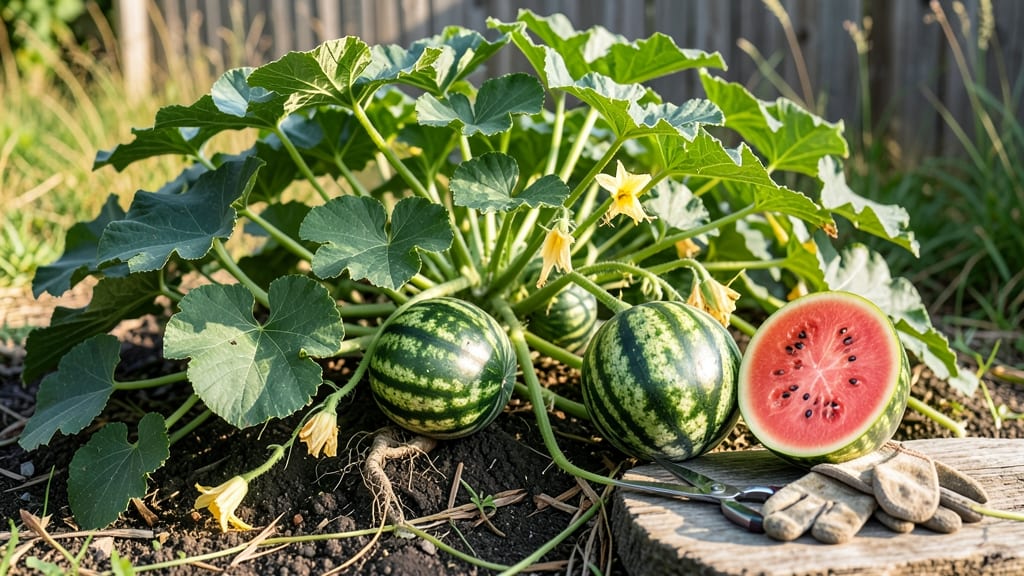
One watermelon plant usually yields one to four ripe fruits per season, with the exact number depending on the variety, growing conditions, and how well you care for it. Vining types like Sugar Baby produce fewer (1-2), while bush or hybrid varieties can deliver 3-4 with ideal sunlight and pollination.
A watermelon plant's harvest depends heavily on its type—vining varieties sprawl and produce fewer fruits, while compact bush types focus their energy on 2-3 larger melons. 🌱 The key factors are sunlight exposure (at least 6-8 hours daily) and consistent moisture, especially during flowering.
I've found that hybrid varieties like Crimson Sweet often outperform heirlooms in yield, thanks to their disease resistance and faster maturation. Proper spacing between plants also prevents competition for nutrients, which can boost production by up to 30% in ideal conditions.
For gardeners with limited space, smaller varieties like 'Tiny Tim' (weighing just 5-8 lbs) are perfect—they yield 1-2 fruits per plant but mature in just 70 days. Meanwhile, larger slicing types may produce fewer melons but with impressive sizes (20+ lbs).
The secret to maximizing yield lies in monitoring soil pH (6.0-6.8 is ideal) and providing balanced fertilization during the flowering stage.
💡 In This Article
- Watermelon Varieties and Their Yield Potential
- Maximizing Watermelon Yield with Proper Care
Watermelon varieties and their yield potential
Watermelon yield varies dramatically between varieties, primarily due to differences in plant structure and genetic traits. Vining types like Sugar Baby or Charleston Gray spread horizontally and dedicate energy to fewer fruits—typically 1-2 melons per plant—but these are often smaller (8-12 lbs).
In contrast, bush varieties like Bush Champion or Crimson Sweet grow more compactly, allowing them to produce 2-4 melons per plant with weights ranging from 15-30 lbs.
The key difference lies in their growth habits: vining types prioritize spreading, while bush types focus energy on vertical growth and fruit development.
Seedless watermelons, like Sugar Baby or Triple Crown, often yield slightly fewer fruits (1-3 per plant) because their energy goes into developing larger, seedless fruit with more complex genetics.
Heirloom varieties, such as Moon and Stars or Black Diamond, may produce 1-2 melons per plant but with unique flavors and textures that compensate for lower yields.
Hybrid varieties, bred for disease resistance and uniformity, tend to outperform heirlooms in both quantity and consistency, often delivering 3-4 melons per plant under ideal conditions.
For small spaces, dwarf or mini varieties like Tiny Tim or Black Beauty are excellent choices, producing 1-2 melons per plant but maturing in just 70-80 days. These compact plants grow only 1-2 feet tall, making them perfect for containers or tight garden beds.
In contrast, traditional slicing types like Crimson Sweet or Jubilee can sprawl 6-10 feet and produce 2-4 melons per plant, but they require more space and careful management to avoid overcrowding, which can reduce yield by up to 40%.
Pollination also plays a critical role in yield potential. Vining varieties rely heavily on bees, while bush types may self-pollinate more efficiently. In areas with low bee activity, hand-pollination can increase yields by 20-30% for both types.
The best-performing varieties for high yields—like Sugarlee or Carolina Cross—often combine bush growth habits with hybrid vigor, delivering 3-4 melons per plant consistently when given proper care and spacing.
Consider these yield comparisons for common varieties:
- Vining Types: Sugar Baby (1-2 melons, 8-12 lbs), Charleston Gray (1-2 melons, 10-15 lbs)
- Bush Types: Crimson Sweet (2-4 melons, 15-30 lbs), Bush Champion (2-3 melons, 20-25 lbs)
- Dwarf Types: Tiny Tim (1-2 melons, 5-8 lbs), Black Beauty (1-2 melons, 6-10 lbs)
- Hybrid Types: Sugarlee (3-4 melons, 15-25 lbs), Carolina Cross (3-4 melons, 20-30 lbs)
Understanding these differences helps you choose the right variety for your space and goals—whether you prioritize quantity, size, or early harvests. 🌟