
Planting
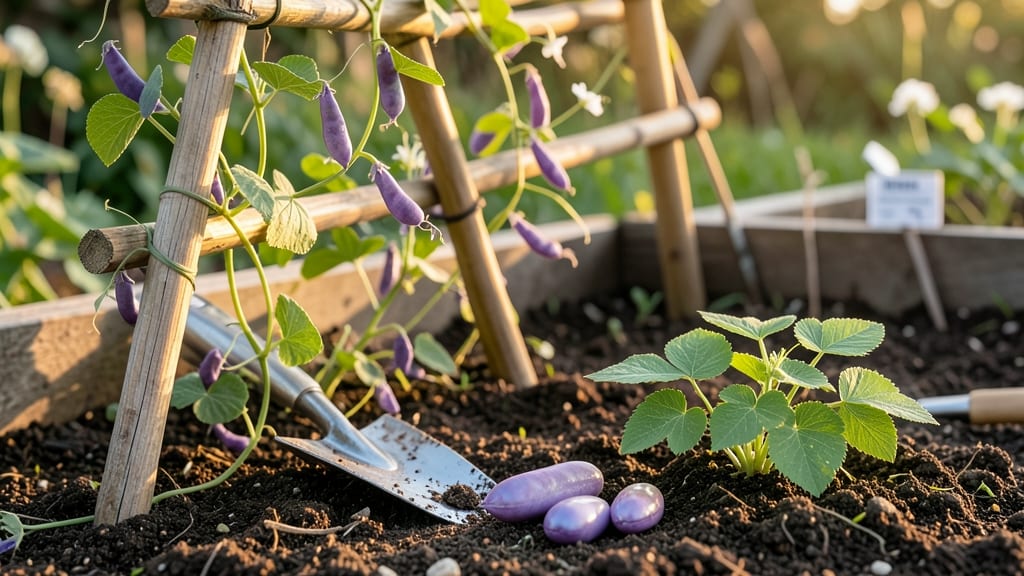
To plant Purple Hull Peas 🌱 for maximum pods per square foot, aim for 3–4 inches between seeds and 18–24 inches between rows—the sweet spot for airflow and yield.
Picture this: You’ve spent weeks waiting for those first purple pods, only to find your plants struggling because they’re either crammed together or sprawling into wasted space. Purple Hull Peas aren’t just delicious—they’re one of the most productive vining plants, but only if you get their spacing right.
Whether you’re working with a traditional in-row setup, a vertical trellis, or a container garden, the right spacing makes all the difference. Too close, and you’ll stunt growth; too far apart, and you’ll miss out on the highest possible harvest from every square foot of your garden.
Below, I’ll break down the exact spacing rules for your growing method, how to calculate seeds per square foot, and the 5 common mistakes that waste space—and how to fix them.
Purple hull pea spacing by growing method: in-rows, trellises, and containers
Getting the purple hull pea spacing right transforms your garden from a chaotic tangle to a high-yielding harvest machine. These vining powerhouses need room to breathe—too crowded, and you’ll smother their growth; too sparse, and you’ll leave precious space (and pods) behind.
The key? Tailoring your spacing to your growing method—whether you’re planting in traditional rows, climbing a trellis, or tucking them into containers.
Standard purple hull pea varieties can reach 4-6 feet tall, while dwarf types stay under 2 feet. This height difference directly impacts how much space you’ll need to give them. For example, a 6-foot trellis lets you pack more plants vertically, while dwarf varieties thrive in tight containers.
Let’s break down the exact measurements for each method to maximize your pods per square foot.
Here’s the golden rule: 2-3 inches between seeds and 18-24 inches between rows for in-ground planting. But if you’re using a trellis or container, you can squeeze plants closer—just not too close!
Overcrowding invites fungal diseases like powdery mildew and reduces air circulation, which means fewer pods and more stress on your plants. Think of it like a dance floor—too packed, and no one can move; too empty, and you’re wasting space.
| Growing Method | Spacing Between Seeds | Spacing Between Rows/Plants | Best For | Yield Impact |
|---|---|---|---|---|
| In-Row Planting | 2-3 inches | 18-24 inches | Standard varieties, large gardens | Moderate pods per sq ft |
| Trellis System | 3-4 inches | 12-18 inches apart along trellis | Dwarf/semi-dwarf, small spaces | Highest pods per sq ft |
| Containers (5+ gallons) | 4-6 inches | 1-2 plants per container | Balconies, patios, dwarf varieties | Moderate pods per container |
| Hill Planting | 3-4 inches | 12 inches between hills | Small gardens, traditional methods | Low-moderate pods per sq ft |
For in-row planting, stick to 2-3 inches between seeds and 18-24 inches between rows. This gives roots room to spread while keeping plants from competing for sunlight.
If you’re growing dwarf varieties, you can reduce row spacing to 12-18 inches—just monitor for signs of overcrowding like yellowing leaves or stunted growth. Pro tip: Use a soil marker to map your rows and ensure consistency.
When using a trellis system, you can get creative with spacing. Plant seeds 3-4 inches apart along the base of the trellis, then space rows 12-18 inches apart along its length. This vertical approach maximizes pod production per square foot because vines spread upward instead of outward.
Just ensure your trellis is at least 6 feet tall for standard varieties—dwarf types need only 3-4 feet. A sturdy trellis also improves air circulation, reducing the risk of fungal diseases like powdery mildew.
Container gardening with purple hull peas is a game-changer for small spaces. Choose containers that are at least 5 gallons
How many purple hull peas to plant per square foot: yield calculations
Calculating the perfect number of purple hull peas per square foot starts with understanding their growth habits. These vining plants can reach 4-6 feet tall and produce 10-20 pods per plant when spaced correctly. The key is balancing plant density with air circulation to prevent disease while maximizing yield.
For traditional in-ground planting, aim for 4-6 plants per square foot when using a trellis. Without vertical support, reduce this to 2-3 plants per square foot to prevent sprawling. Containers need even tighter spacing—8-12 plants per square foot—since they have limited root space.
To calculate your exact seed count, multiply the plants per square foot by your garden's total square footage. For example, a 100 sq ft garden with 4 plants per sq ft needs 400 seeds. Always buy 10-20% extra to account for germination failures.
For succession planting, stagger sowings every 2 weeks to extend your harvest. This method can increase your total pods by 30-50% compared to a single planting. Just ensure each new batch gets its own trellis space to avoid overcrowding.
Remember, air circulation is critical. Plants spaced 3-4 inches apart in rows 18-24 inches apart will yield more consistently than cramped clusters. Thin seedlings early to avoid competition for nutrients.
Start with these calculations, then adjust based on your local climate and soil fertility. A well-spaced purple hull pea patch can produce enough pods for 50+ servings per 100 sq ft—worth the careful planning! 🌱