
Planting
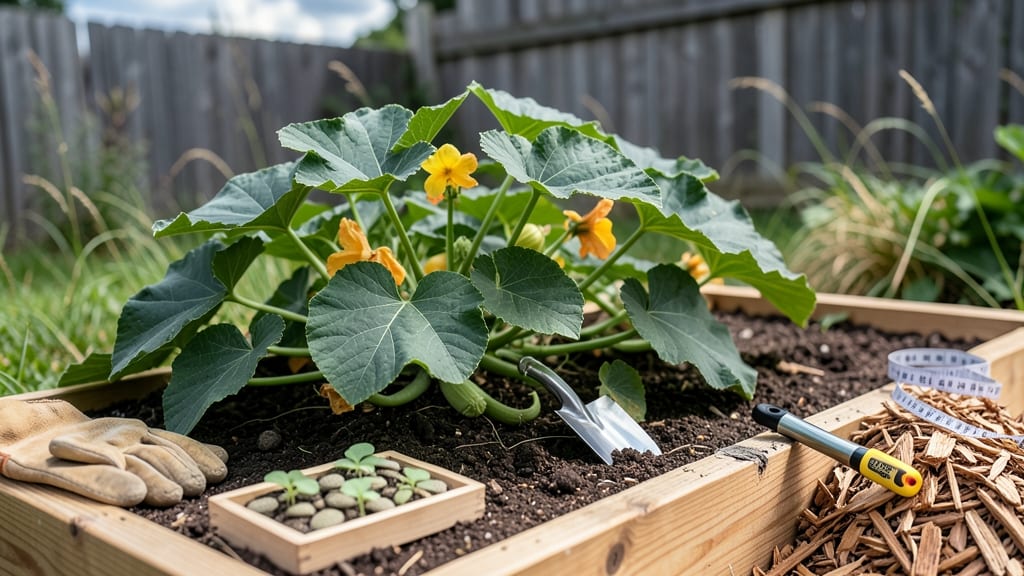
To plant acorn squash 🎃 with the right spacing, aim for 3-4 feet apart in all directions — this gives their sprawling vines room to thrive without stealing each other’s sunlight.
Picture this: you’ve just tucked your seeds into the warm soil, dreaming of a bountiful harvest, only to watch your squash turn yellow and stunted because they’re fighting for space. That’s not just a wasted effort — it’s a missed opportunity for plump, healthy fruit.
Proper spacing isn’t just about avoiding overcrowding; it’s about maximizing airflow, preventing disease, and ensuring each vine gets the sunlight it craves. Too close, and your plants compete for nutrients. Too far, and you’re leaving precious garden real estate empty.
Below, I’ll break down the exact spacing you need for both vining and bush varieties, how to adjust for small gardens or containers, and the game-changing tips that’ll turn your squash patch from good to spectacular.
Optimal acorn squash spacing: vines, bushes, and row layouts explained
Acorn squash thrives when given the right amount of space to spread its sprawling vines and develop healthy fruit. Unlike compact vegetables, squash needs room for sunlight exposure and air circulation to prevent diseases like powdery mildew.
The key is balancing plant density with garden efficiency—whether you're growing in rows, hills, or containers.
Most acorn squash varieties are vining plants that spread 3–5 feet wide, even if their vines only reach 1–2 feet tall. This sprawling habit means overcrowding is a common pitfall.
If you plant too closely, your squash will compete for nutrients, leading to smaller yields and poor fruit development. But planting too far apart wastes precious garden real estate.
Here’s the golden rule: Give each acorn squash plant 3–4 feet of space in all directions. This ensures enough room for vines to stretch without shading neighbors.
For bush varieties (like 'Table Queen'), you can reduce spacing to 2–3 feet, but even these benefit from extra room in high-heat climates where vines grow more aggressively.
Proper spacing also improves harvest quality. Squash that touch each other often develop misshapen fruit or rot at contact points. Plus, good airflow reduces humidity around leaves, which is crucial for preventing fungal diseases that thrive in damp conditions.
Now, let’s break down the specifics with a spacing cheat sheet for different growing scenarios—because not all gardens are created equal.
For in-ground planting, I recommend creating mounds or hills of soil to improve drainage—acorn squash hates soggy roots. Place 3–4 seeds in each hill, then thin to the strongest plant once vines emerge. This hill method also makes harvesting easier and reduces soil-borne diseases.
If you're working with raised beds, aim for a single row of squash along the length of the bed. Planting in the center can lead to shaded, diseased foliage because the bed’s edges get more sunlight.
For container gardening, choose varieties like 'Sweet Dumpling' and use at least 5-gallon pots with drainage holes to prevent root rot.
Don’t forget about companion planting! Pair acorn squash with bush beans or corn to utilize vertical space efficiently. Avoid planting near potatoes or fennel, which can stunt squash growth. And if you’re short on space, consider trellising—it’s a game-changer for small gardens.
Finally, adjust your spacing based on your local climate. In hot, dry regions, give plants extra room to spread out and cool. In cooler areas, you can plant slightly closer since vines grow more slowly.
Always prioritize airflow and sunlight over squeezing in extra plants—your harvest will thank you!
🎃
How to adjust spacing for different acorn squash varieties and garden sizes
Not all acorn squash varieties play by the same rules. The compact 'Table Queen' thrives in tight spaces, while giant 'Turban' squash needs room to spread its vines. Your garden size—whether a small balcony container or a large in-ground plot—also changes the game.
Let’s break down how to adjust spacing for different varieties and space constraints to maximize your harvest.
First, consider the vine spread of each variety. Compact varieties like 'Table Queen' or 'Sweet Dumpling' need only 2-3 feet apart in rows spaced 3 feet apart.
In contrast, giant varieties like 'Turban' or 'Giant Turban' demand 4-5 feet apart with rows 5-6 feet apart to accommodate their massive vines and fruit size.
| Variety | Plant Spacing (in-ground) | Row Spacing (in-ground) | Container Spacing | Notes |
|---|---|---|---|---|
| Compact ('Table Queen', 'Sweet Dumpling') | 2-3 feet | 3 feet | 1 plant per 12-inch pot | Ideal for small gardens |
| Standard ('Autumn Ale', 'Honeynut') | 3-4 feet | 4 feet | 1 plant per 18-inch pot | Balanced for most gardens |
| Giant ('Turban', 'Giant Turban') | 4-5 feet | 5-6 feet | Not recommended | Requires large spaces |
For small spaces, consider trellising compact varieties like 'Sweet Dumpling'. Train vines vertically to save ground space while still giving them room to grow. Use a sturdy trellis or cage, and space plants 18-24 inches apart in rows. This method also improves air circulation, reducing disease risk.
If you’re growing in containers, choose dwarf varieties like 'Sweet Dumpling' or 'Table Queen'. Use 18-inch pots with well-draining soil and place them in full sun. For larger varieties, opt for 5-gallon containers and limit to one plant per pot.
Remember, container-grown squash need consistent watering and regular feeding to compensate for limited root space.
In raised beds, space plants according to their mature size but reduce row spacing by 1-2 feet compared to in-ground planting. For example, plant 'Autumn Ale' 3 feet apart in rows 3 feet apart instead of 4 feet.
This works because raised beds provide better drainage and soil warmth, allowing vines to spread slightly more efficiently.
Pro tip: Use companion planting to make the most of your space. Pair acorn squash with bush beans or radishes, which grow quickly and don’t compete for space. Avoid planting near potatoes or cucumbers, as they can attract the same pests and diseases.