
Planting
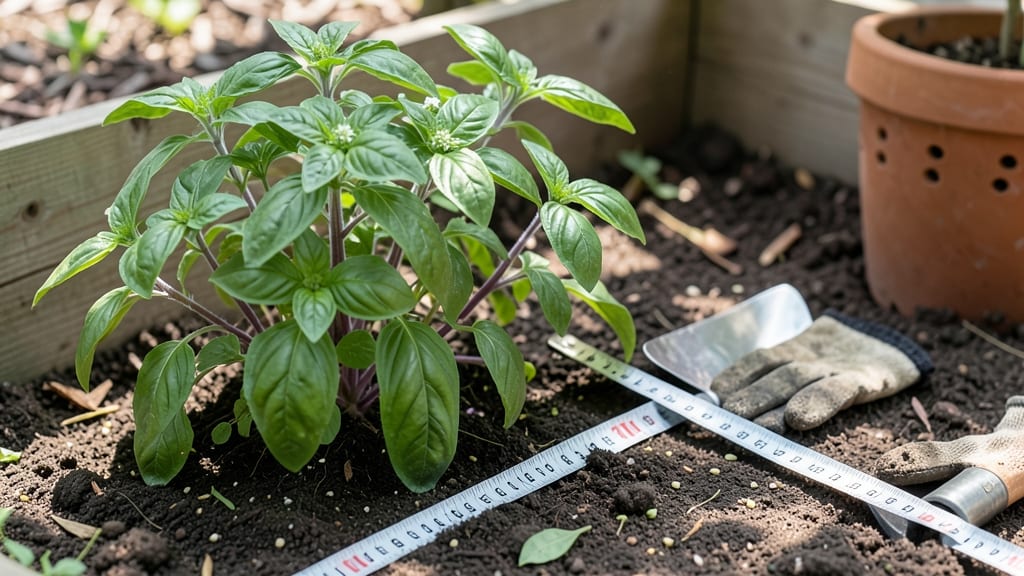
To plant basil properly, how far apart should basil be planted—space them 12 to 18 inches apart in the ground or 6 to 8 inches apart in containers—this is the golden rule for bushier, more productive plants 🌿.
Struggling with leggy basil plants that produce fewer leaves and more stems? Proper spacing is the secret weapon gardeners use to maximize yield and plant health—but most beginners get it wrong.
When basil plants are too close, they compete for sunlight and nutrients, leading to weak stems, fewer leaves, and a higher risk of disease. On the other hand, giving them enough room encourages strong root systems and better air circulation, which means more flavorful leaves and a higher harvest.
In this guide, I’ll break down the exact spacing you need for containers vs. in-ground planting, how to adjust for different basil varieties, and common mistakes to avoid—so you can grow basil that’s both healthy and productive.
Optimal basil plant spacing by growing method (containers vs ground)
If you've ever grown basil only to watch it stretch toward the sky with sparse leaves, you're not alone. The secret to bushier, more productive basil lies in proper plant spacing.
Whether you're using containers or in-ground beds, spacing affects everything from air circulation to sunlight exposure, and getting it wrong can mean the difference between a thriving herb garden and a disappointment. Let's break down the science-backed spacing rules for both growing methods.
Basil thrives when it has room to spread its roots and foliage without competing with neighbors. In containers, space limitations force us to get creative, while in-ground planting offers more flexibility.
The key difference? Containers require closer spacing to maximize limited space, while in-ground beds allow for wider spacing to prevent disease and encourage robust growth. Let's explore the optimal distances for each method.
Comparison Table: Basil Spacing by Growing Method
When planting basil in-ground, aim for 12-18 inches between plants. This spacing gives each plant enough room to develop a strong root system and access to sunlight from multiple angles.
In my own garden, I've found that 18-inch spacing works best for Genovese basil, while smaller varieties like Thai basil can handle the closer end of the range. The extra space also improves air circulation, which is crucial for preventing fungal diseases like downy mildew.
For container gardening, the rules change slightly. A 5-gallon pot is the minimum size for one basil plant, giving it enough room to grow without becoming root-bound.
If you're using hanging baskets, you can fit 3-5 plants in a 12-inch diameter basket, but be prepared to prune regularly to maintain shape. I've had great success with bush basil varieties in containers because their compact growth habit makes them ideal for small spaces.
Square-foot gardening is another popular method for maximizing space efficiency. In this system, you plant 4 basil plants per square foot, which works well for small gardens or urban spaces. The key here is to keep the soil rich and well-draining, as basil hates soggy roots.
I've used this method in my balcony garden with excellent results, especially when combined with companion planting like tomatoes or peppers.
One common mistake I see is overcrowding basil, especially in containers. When plants are too close, they compete for nutrients and water, leading to stunted growth and leggy stems.
I learned this the hard way when I crammed three basil plants into a 3-gallon pot—they all grew tall and spindly with few leaves. Since then, I've stuck to one plant per 5-gallon container and seen a dramatic improvement in both yield and plant health.
Proper spacing also affects how you harvest basil. When plants have room to grow, they develop more side shoots, giving you a continuous supply of leaves. I like to harvest the outer leaves first, which encourages new growth from the center.
This method keeps my basil bushy and productive throughout the growing season, rather than letting it bolt prematurely.
If you're growing basil in full sun conditions, which is ideal, wider spacing helps ensure every plant gets enough light. In my experience, basil grown in partial shade can tolerate slightly closer spacing, but you'll sacrifice some yield and flavor intensity.
Always prioritize sunlight exposure when planning your spacing, especially in containers where mobility is limited.
Finally, remember that basil is an annual, so spacing becomes less critical in the long term. However, proper spacing now means healthier plants that produce more leaves for your kitchen—and fewer pests to deal with.
Whether you're a container gardener or have a full in-ground bed, following these spacing guidelines will give you the bushiest, most productive basil of your gardening career. 🌿
How spacing affects basil growth: science behind bushier plants
When I first grew basil, my plants looked like twiggy sticks with tiny leaves instead of the lush, leafy giants I'd seen in gardening magazines. The culprit? Poor spacing.
Basil isn't just picky about sunlight or soil—it's incredibly sensitive to how much room its roots and leaves have to spread. Understanding this botanical science can transform your basil patch from scraggly to spectacular.
At its core, basil's growth pattern relies on three key factors: root competition, light interception, and air circulation. When plants are too close, they compete aggressively for nutrients and water, leading to stunted roots.
Meanwhile, crowded foliage blocks sunlight from reaching lower leaves, causing them to yellow and fall off. Even humidity levels shift—too many plants in one area create a damp microclimate that invites fungal diseases like downy mildew.
⚠️ Warning: Overcrowding = Lost Harvest
Planting basil too close (less than 6 inches apart) triggers a survival response: instead of producing leaves, your plants will focus on taller stems to reach sunlight. Studies show overcrowded basil yields 30-50% fewer leaves and grows 2x slower than properly spaced plants. Even worse? Crowded basil attracts more pests like aphids, which thrive in dense foliage.
Pro Tip: If you're using containers, limit to 1-2 plants per 6-inch pot—any more and you'll see the same stunting effects as in-ground overcrowding.
Let me show you the difference with a real-world example. Last summer, I planted two identical basil patches side by side: one with plants 12 inches apart (proper spacing) and another with plants 4 inches apart (my "space-saving" experiment).
By mid-July, the crowded patch had plants reaching 2 feet tall with sparse leaves, while the properly spaced patch had bushy, 18-inch-tall plants with dense foliage. The overcrowded patch also developed powdery mildew on the lower leaves—a classic sign of poor air circulation.
The science gets even more interesting when you consider how basil's photomorphogenesis (light-driven growth) works. Basil leaves contain phytochrome pigments that detect light intensity. When plants are crowded, lower leaves receive less than 30% of the light that upper leaves get, triggering a stress response.
This causes the plant to allocate energy to stem elongation rather than leaf production—a survival tactic that backfires for gardeners.
Humidity plays a sneaky role too. Basil thrives in 60-70% humidity, but crowded plants create their own microclimate with 80%+ humidity near the soil. This excess moisture promotes fungal spores, which is why you'll often see mold or mildew in tight basil patches.
Even if you water the same amount, overcrowded basil stays damp longer, inviting disease. I learned this the hard way when my 4-inch-apart patch lost half its leaves to mildew within three weeks.
Here's the good news: fixing spacing issues is easy. If your basil is already crowded, prune aggressively to remove lower leaves and stems, then thin out the weakest plants. Give the remaining ones 12-18 inches of space and watch them rebound in 2-3 weeks.
For new plantings, use a simple rule: space basil 12-18 inches apart in-ground and 6-12 inches apart in containers. This gives roots room to expand while ensuring every leaf gets sunlight.
Next time you're tempted to cram basil into tight spaces to save room, remember: bushier plants come from proper spacing, not crowding. The science is clear—give your basil room to breathe, and it'll reward you with more leaves, better flavor, and fewer pests. 🌿