
Planting
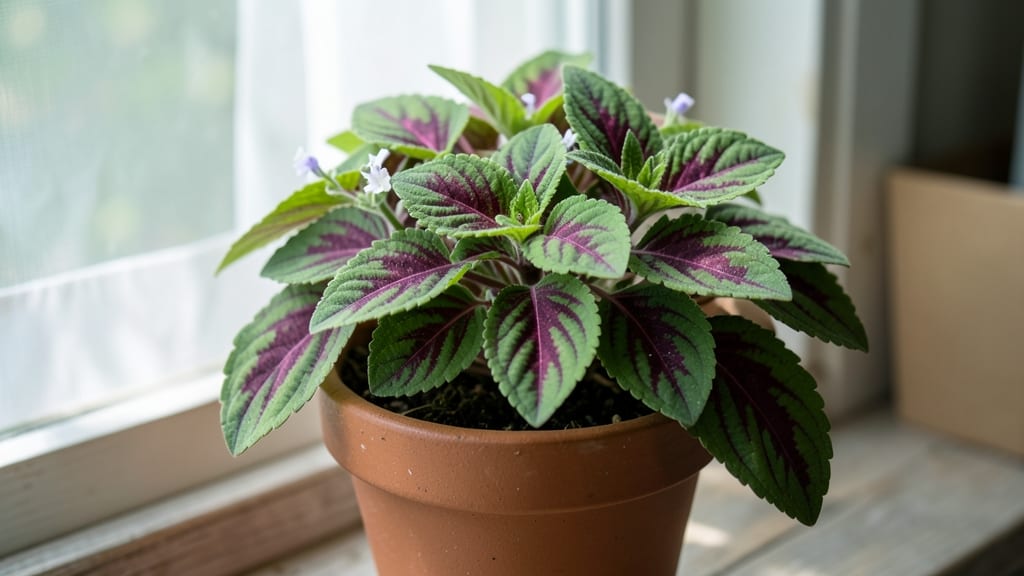
A green leaf red veins plant is most likely a Coleus (Solenostemon), known for its bold burgundy or deep red veins contrasting against vibrant green foliage. This easy-care plant thrives in bright indirect light, well-draining soil, and moderate humidity with minimal upkeep.
Coleus stands out among foliage plants because its striking color patterns come from natural pigmentation rather than variegation. 🌿 Many gardeners love it for its versatility—it grows well in containers or garden beds and adapts to indoor environments with proper lighting.
The key to keeping those vivid veins is avoiding direct sunlight, which can cause fading, and ensuring consistent moisture without waterlogging the roots.
The red veins aren't just decorative—they're a sign of the plant's health. When you notice them dulling or turning brown, it's often a sign of stress from overwatering or poor drainage. I've found that misting the leaves occasionally helps maintain that crisp, vibrant look while keeping pests at bay.
💡 In This Article
- Identifying Common Plants with Red-Veined Green Leaves
- Optimal Care Tips for Maintaining Bold Red-Veined Foliage
Identifying common plants with red-veined green leaves
The most iconic plant with vivid green leaves and striking red veins is the Coleus (Solenostemon), particularly varieties like 'Black Dragon' or 'Wine & Roses'.
What makes Coleus unique is its anthocyanin pigmentation—these water-soluble compounds give the veins their deep burgundy or crimson hues, which intensify in cooler temperatures.
Unlike variegated plants (which have white or yellow markings from chlorophyll loss), Coleus maintains its bold coloration because these pigments are always present in the leaf cells.
Another standout is Alternanthera (Joseph's Coat), which features small, rounded leaves with prominent red veins and sometimes pink or purple edges. The key difference? Alternanthera's veins often appear more linear and pronounced, creating a "feathered" look, while Coleus veins are typically thicker and more irregular.
For example, 'Purple Heart' Alternanthera has leaves that look like tiny, velvety burgundy hearts with green centers—perfect for hanging baskets where the cascading effect highlights the contrast.
If you're seeing a succulent-style plant with red-veined leaves, it might be Echeveria 'Lola', though its veins are more subtle and the overall leaf shape is rosette-based.
The real tell here is leaf texture: Coleus leaves are soft and slightly fuzzy, while succulents have thick, waxy surfaces. 🌿 For accurate ID, check the leaf arrangement—Coleus grows in opposite pairs along the stem, while many other red-veined plants (like Croton) have alternate leaf patterns.
One common misidentification involves red-veined peperomia, which often gets confused with Coleus. The difference? Peperomia leaves are thicker and waxy, with veins that appear more like raised lines rather than the bold, fluid strokes of Coleus.
Another clue: Peperomia varieties like 'Emerald Ripple' have wavy edges, while Coleus leaves are typically smooth or slightly serrated. The vein color in peperomia also tends to be darker red or almost black, especially in low light.
For gardeners, the easiest way to confirm a Coleus is by its growth habit—it sprawls rather than growing upright, with leaves that can reach 2-6 inches long depending on the variety.
The 'Neon Series' Coleus, for example, has bright green leaves with electric pink veins, while 'Kong' features deep purple-black leaves with green centers. This variation means you can find red-veined Coleus in nearly every shade of green, from lime to forest.
Pro tip: If your plant has red stems in addition to red veins, it might be a Croton (Codiaeum)—these tropical shrubs have more glossy leaves and often develop bright yellow or orange highlights when stressed.
Unlike Coleus, which thrives in moderate light, Crotons love bright, direct sunlight and can even handle partial shade, making them a great alternative for sunnier spots.