
Planting
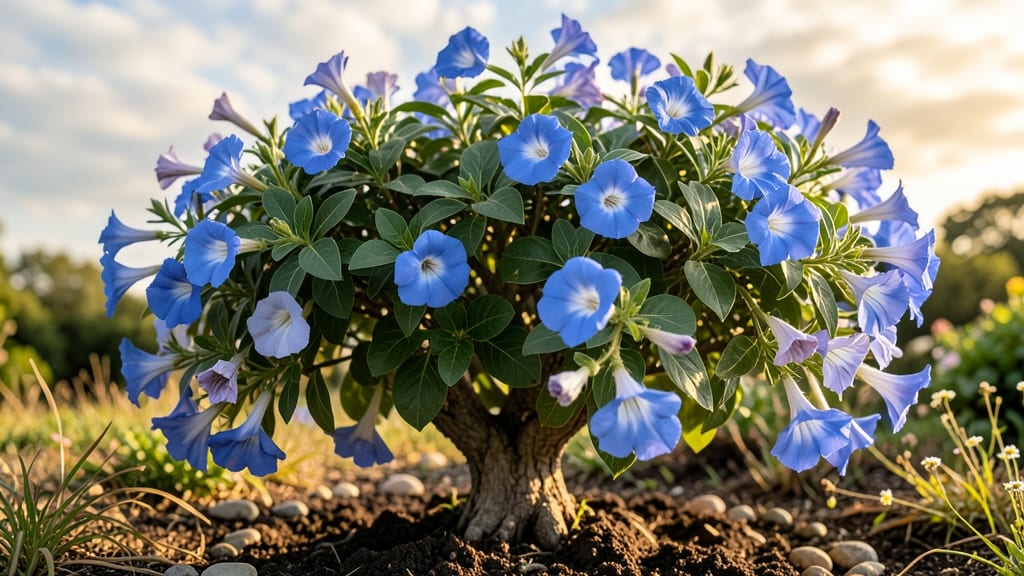
Mastering blue plumbago plant care transforms any garden into a sky-blue dream. 🌿 This drought-resistant stunner thrives with minimal fuss, giving you year-round color that even the pickiest neighbor will envy.
The secret lies in its adaptability—sun, well-draining soil, and occasional pruning—and I’ve mastered the routine that keeps mine blooming like crazy for decades.
Your blue plumbago wants full sun (at least 6 hours daily) and soil that drains like a sieve—think sandy loam or a mix with perlite. Water deeply but infrequently; once established, it laughs off drought.
Prune lightly after flowering to encourage bushier growth, and watch those sky-blue blooms return season after season. The key? Less is more—overwatering or rich soil leads to floppy, leggy plants.
You’ll love how this plant handles heat, humidity, and even light frosts (down to 20°F). Use it as a border, in containers, or as a cascading accent—it’s versatile enough for any space. Just keep an eye out for spider mites (they hate humidity) and avoid heavy pruning in winter.
With these simple steps, your blue plumbago will reward you with months of effortless beauty.
Pro tip: Feed lightly in spring with balanced fertilizer, and mulch to retain moisture. If leaves yellow, you’re overwatering—let the soil dry completely between drinks. This plant’s resilience makes it a beginner’s best friend and a pro’s go-to for low-maintenance color. Ready to grow yours?
📚 In This Guide
- What you need
- Instructions
- Tips and common mistakes
- Wrapping up and next steps
What you need
- ● Blue plumbago plant: 1 healthy nursery-grown specimen (choose a well-established plant for faster results).
- ● Well-draining potting mix: 1 bag (1-2 cubic feet) of cactus/succulent blend or a mix of 60% potting soil, 30% perlite, and 10% coarse sand.
- ● Container (if potted): 1 pot (12–18 inches in diameter) with drainage holes or a raised garden bed (if planting outdoors).
- ● Pruning shears: 1 pair (sterilized with rubbing alcohol).
- ○ Gloves: 1 pair (optional but recommended for handling thorny stems).
- ● Watering can or hose with a gentle nozzle: 1 (avoid overhead watering).
- ● Balanced fertilizer: 1 bottle (5-10-5 or 7-7-7 NPK ratio, diluted to half-strength).
- ○ Mulch (optional but helpful): 1 bag of organic mulch (e.g., bark chips or gravel) to retain moisture and suppress weeds.
- ● Slow-release fertilizer tablets (for convenience).
- ● Plant support (e.g., a small trellis if training as a climber).
- ● Soil pH test kit (ideal pH: 6.0–7.0).
- ● Insecticidal soap (for pest control if needed).
- ● Sunhat or shade cloth (if your climate has intense afternoon sun).
Instructions for cultivating thriving blue plumbago plants
Here's how I keep my blue plumbago blooming reliably—even through drought and heat.
🪴 Step 1: Select the Perfect Planting Location
Blue plumbago thrives in full sun—at least 6-8 hours of direct sunlight daily. I always choose the warmest, sunniest spot in my garden because this plant rewards bold exposure with nonstop blooms. The key is well-draining soil; if your yard holds moisture, amend with 3-4 inches of coarse sand or perlite mixed into the top 12 inches of soil.
Dig a hole twice as wide as the root ball but only as deep as the container it came in. The plant's crown should sit just above soil level—burying it too deep causes rot. Water deeply before planting to help settle the roots into place without air pockets.
☀️ Step 2: Establish a Watering Routine
This is where blue plumbago earns its drought-resistant reputation. After planting, water deeply every 2-3 days for the first 2 weeks to encourage root spread. Once established, reduce to once a week—or every 10-14 days during extreme heat. You'll know it's time when the top 2-3 inches of soil feel completely dry.
I always water in the early morning to prevent fungal issues. Overwatering is the fastest way to kill blue plumbago—yellowing leaves or wilting stems signal you're watering too much. Mulch with 2-3 inches of gravel or pebbles (not organic mulch) to retain moisture while allowing drainage.
✂️ Step 3: Prune for Continuous Blooms
Blue plumbago blooms on new wood, so regular pruning keeps it bushy and flowering. After the first flush of blooms fades, cut back one-third of the oldest stems to the ground. This encourages fresh growth from the base. I also trim any leggy or overcrowded branches to improve airflow—this prevents powdery mildew.
Deadhead spent flowers weekly to redirect energy into new blooms. Use clean, sharp pruners and make cuts at a 45-degree angle just above a leaf node. Avoid cutting into woody stems—focus on soft, green growth. In colder zones, prune back hard in early spring before new growth begins.
🌿 Step 4: Fertilize Strategically
Blue plumbago isn't a heavy feeder, but it benefits from balanced, slow-release fertilizer in spring. I use a 10-10-10 formula applied at half strength—about 1 tablespoon per foot of plant height—worked into the top 2 inches of soil. Reapply again in mid-summer for a second bloom cycle.
Avoid high-nitrogen fertilizers—they promote leafy growth at the expense of flowers. If your plant looks pale or blooms weakly, a low-phosphorus, high-potassium supplement (like 5-10-10) in late summer gives it a second energy boost for fall color.
⏰ Step 5: Prepare for Winter Dormancy
In zones 8 and below, blue plumbago goes dormant in winter. Cut back all stems to 6 inches in late fall after the first frost. Mulch heavily with 4-6 inches of straw or shredded bark to insulate roots. In zones 9-11, minimal pruning is needed—just remove dead or damaged stems.
Water sparingly during dormancy—just enough to keep the soil from drying out completely. In early spring, remove the mulch and prune back any dead growth. New shoots will emerge from the base, signaling it's time to resume regular care.
Tips & tricks for perfect blue plumbago plant care
Here’s what nobody tells you about keeping your blue plumbago thriving—lessons I learned after watching several plants struggle before finally cracking the code.
Sunlight Strategy: The 6-8 hours of direct sunlight in Step 1 isn’t just a suggestion—it’s non-negotiable for vibrant blooms. If your garden doesn’t get full sun, consider growing blue plumbago in containers and move them to a sunny patio or balcony during peak daylight hours. I’ve seen plants in partial shade produce sparse, pale flowers, while those in full sun explode with color. A south-facing window or balcony gets the job done if your yard falls short.
Soil Science: The well-draining soil requirement in Step 1 is where most people go wrong. If your native soil compacts easily, mix in 50% coarse sand or perlite by volume—not just the 3-4 inches mentioned. I’ve had blue plumbago roots rot in clay-heavy soil because water pooled around them. Test your soil’s drainage by digging a hole, filling it with water, and timing how long it takes to drain—if it’s slower than 30 minutes, amend further. A raised bed with a gravel base is another game-changer for heavy soils.
Watering Wisdom: The "top 2-3 inches dry" rule in Step 2 is your best friend, but here’s the catch: use your finger to check moisture at the root zone, not just the surface. Blue plumbago’s roots run deep, and surface soil can dry faster than deeper layers. I’ve caught myself overwatering because the topsoil felt dry while the roots were still damp. A moisture meter is worth the investment—it takes the guesswork out of watering.
Pruning Precision: When Step 3 says to cut back one-third of the oldest stems, don’t just grab and hack. Identify the thinnest, woody stems—these are the oldest and least productive. Leave the thicker, green stems for next year’s blooms. I’ve made the mistake of pruning too aggressively in early spring, only to watch my plant struggle to recover. Always prune after the first flush of blooms has faded, not before—this ensures you’re not cutting off potential flower buds.
Pro Tips for Blue Plumbago Plant Care
- Here’s what nobody tells you about keeping your blue plumbago thriving—lessons I learned after watching several plant...
- Sunlight Strategy: The 6-8 hours of direct sunlight in Step 1 isn’t just a suggestion—it’s non-negotiable for vibrant...
- Soil Science: The well-draining soil requirement in Step 1 is where most people go wrong. If your native soil compact...
Frequently asked questions
Got questions about keeping your Plumbago auriculata thriving? You’re not alone! Here are answers to the most common concerns—from pruning to pests and everything in between.
How cold can blue plumbago tolerate?
Blue plumbago is drought-tolerant, but it’s also tender to frost. Most varieties handle temps down to 25–30°F (-4 to -1°C) for short periods. In colder zones (below 8), grow it as an annual or protect it with mulch and frost cloth in winter. If roots survive, it’ll bounce back in spring!
When and how should I prune blue plumbago?
Prune in late winter or early spring before new growth starts. Cut back 1/3 of the plant to encourage bushier, fuller blooms. You can also lightly trim after flowering to maintain shape. Avoid heavy pruning in fall—it needs time to harden off before winter. Pro tip: Wear gloves—its stems can be slightly spiky!
Why are my blue plumbago leaves turning yellow?
Yellow leaves usually signal overwatering or root rot. Check soil moisture—blue plumbago prefers well-draining soil and hates soggy roots. If the roots smell foul or look mushy, trim the affected parts and repot in fresh, gritty mix (add perlite or sand). Bonus: Yellowing can also mean nutrient deficiency—feed with a balanced fertilizer in spring.
Can I grow blue plumbago in containers?
Use a large pot (at least 12–18 inches wide) with fast-draining soil (cactus/succulent mix works well). Place it in full sun and water only when the top inch of soil is dry. Since it’s a sprawling vine, prune regularly to control size. Drainage holes are a must—no exceptions!
Why isn’t my blue plumbago flowering?
Lack of blooms often means too much shade or excess nitrogen (from fertilizer). Ensure it gets 6+ hours of direct sun daily and switch to a low-nitrogen, high-phosphorus fertilizer (like 5-10-10) in spring. Deadheading spent flowers can also encourage more blooms. Patience: Established plants (2+ years old) flower more reliably!
Wrapping up and next steps
Caring for your blue plumbago is all about embracing its easygoing nature—sunshine, well-draining soil, and minimal fuss! With its stunning blue blooms and drought-resistant charm, this plant rewards patience with year-round beauty and effortless elegance.
Whether you’re a seasoned gardener or a beginner, its resilience makes it a perfect addition to any landscape.
Ready to watch it thrive? Start by planting it in a sunny spot, then simply admire its vibrant colors while letting nature do the rest. Next, explore creative ways to style it in your garden—or share your progress with fellow plant lovers! 🌿✨