
Planting
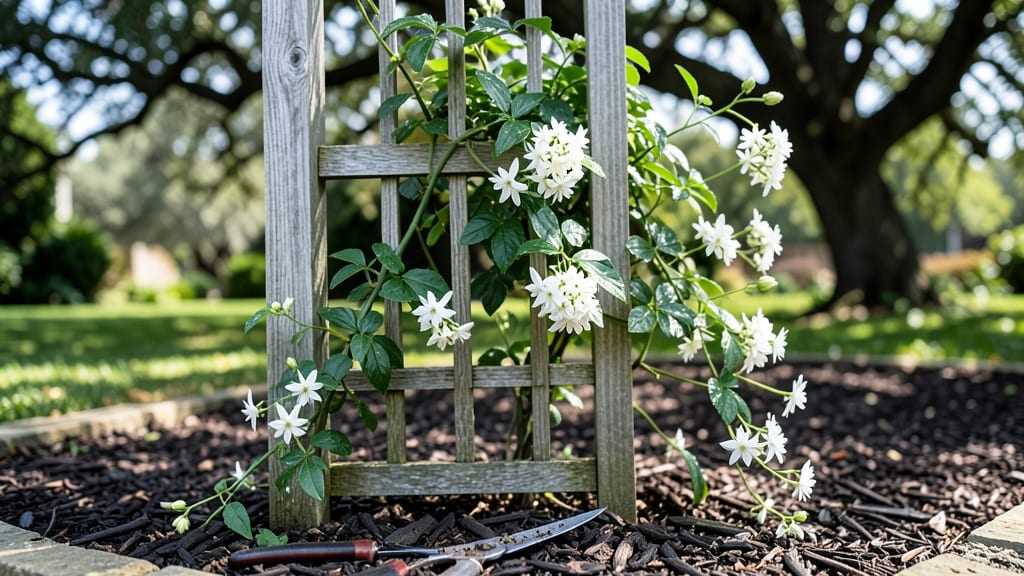
The jasmine plant support you choose will make all the difference—your fragrant blooms deserve a sturdy home to climb. 🌿 I learned the hard way that flimsy supports snap under heavy blooms, leaving vines dangling like sad noodles—until I upgraded to a 6-foot wooden trellis that now cradles my star jasmine like a hammock for its velvety green tendrils.
Not all jasmine varieties need the same support: climbing types like jasmine officinale (true jasmine) thrive on diagonal trellises or arbors, while shrub varieties like jasmine sambac (Arabian jasmine) just need a light stake to shape their bushy growth.
The key is matching the support to the vine's natural climbing habit—think of it like choosing the right ladder for a wall.
Once installed, train young vines with soft twine tied in loose figure-eights (too tight and you'll strangle the stems). Prune in late winter to remove crossing branches, and fertilize lightly in spring to encourage lush, fragrant growth that clings beautifully to its support.
Within a season, you'll have a scented cloud of blooms that transforms any patio or fence into a romantic hideaway.
For heavy climbers, add horizontal crossbars every 2 feet to distribute weight—this is where most gardeners go wrong. And here's a pro tip: water at the base, not overhead, to keep those delicate flowers dry and lasting longer.
Your jasmine will reward you with months of intoxicating perfume that turns heads (and noses) in your neighborhood.
📚 In This Guide
- What you need
- Instructions
- Tips and common mistakes
- Wrapping up and next steps
What you need
- ● Main Support Structure: Trellis: 6–8 ft tall, made of wood, metal, or PVC (choose based on durability and aesthetics). Recommended: Cedar wood (rot-resistant) or galvanized metal.
- ○ Optional: Pre-made lattice panels (for a cleaner look) or bamboo stakes (for lightweight options).
- ● Fasteners & Hardware: Galvanized screws or nails (2–3 inches long) – 6–10 pieces depending on trellis size.
- ● Outdoor-rated zip ties (1/4-inch width) – 10–15 pieces for securing vines.
- ● Heavy-duty staples (if using lattice) – 1 box.
- ● Tools: Drill or hammer (with masonry bit if mounting to brick/wall).
- ● Measuring tape.
- ● Level (to ensure your trellis stands straight!).
- ● Pliers (for bending wire or cutting zip ties).
- ● Location: A spot with full sun to partial shade (6+ hours of sunlight daily for optimal blooms).
- ● Soil Prep: Well-draining soil (amend with compost if needed). pH: 6.0–7.0 (jasmine loves slightly acidic to neutral soil!).
- ● Jasmine Plant: A healthy, established plant (or a young one with flexible stems for easy training). Pro tip: If using a new plant, give it 1–2 weeks to acclimate before attaching to the trellis! 💡
- ○ Safety Gear (Optional but Smart):strong> Work gloves (to protect hands from splinters or sharp edges).
- ● Safety goggles (if drilling into hard surfaces).
- ● Decorative climbing hooks (for a cottage-core vibe).
- ● Plant ties (softer than zip ties, gentler on stems).
- ● Watering can or hose (to keep your jasmine hydrated post-install!).
- ● Mulch (2–3 inches) to retain moisture and suppress weeds.
Instructions for building sturdy jasmine trellis supports
Here's how I create trellises that let jasmine vines climb beautifully while supporting their weight.
🪴 Step 1: Choose the Right Trellis Materials
For jasmine, I use galvanized metal or cedar because both resist rot and provide long-term support. A 4-foot tall trellis works for standard varieties, but taller ones (up to 8 feet) suit vigorous climbers like Jasminum officinale. Avoid plastic or lightweight bamboo—jasmine vines get heavy with flowers and need sturdy backing.
The key is spacing: horizontal slats should be 6-8 inches apart to give vines room to twine naturally. I like 1-inch diameter poles for the frame—they're thick enough to handle the plant's weight without bending. If using metal, powder-coated finishes prevent rust near soil contact.
✂️ Step 2: Construct the Framework
Start with two vertical posts (4 feet tall) set 3 feet apart. For extra stability, bury the bottom 12 inches deep in the ground or anchor them with concrete footings. I use L-brackets to attach horizontal slats at 12-inch intervals—this creates a ladder-like structure that guides vines upward.
For a freestanding trellis, reinforce the top with diagonal braces (like an "X" between posts). If attaching to a fence or wall, use heavy-duty lag screws into studs or masonry anchors for brick surfaces. The goal is zero wobble—jasmine vines will test your structure's stability once they're established.
🌱 Step 3: Position and Plant Jasmine Near Support
Plant your jasmine 6-12 inches away from the trellis—close enough for easy training but far enough to avoid root competition. Dig a hole twice as wide as the root ball and 1 inch deeper to encourage downward growth. Mix in compost for better moisture retention, since jasmine hates soggy roots.
At planting, gently weave the main vine through the bottom slats of the trellis. This gives the plant an instant anchor. I like to tie the vine loosely with soft plant ties (never wire or plastic) to prevent stem damage as it thickens. Watch for new growth curling toward the trellis—that's your cue it's finding purchase.
💧 Step 4: Train and Maintain Vines Seasonally
During the growing season, guide vines upward weekly by tucking them into the next slat. Jasmine climbs by twining, so never force branches—let them find their own path. In late spring, when flowers appear, prune side shoots that grow away from the trellis to focus energy on upward growth and blooms.
After flowering, cut back leggy growth by one-third to encourage bushier, stronger new shoots. This also prevents the trellis from sagging under the weight of next year's growth. In winter, if your jasmine is deciduous, remove old wood to make space for fresh spring growth.
☀️ Step 5: Ensure Year-Round Stability
Check your trellis twice a year for signs of stress: sagging slats, loose brackets, or leaning posts. Tighten screws, replace rotted wood, and add extra braces if needed—especially before spring when new growth surges. For container-grown jasmine, use a freestanding A-frame trellis with a wide base to prevent tipping.
Here's the thing—jasmine vines double in size each year. What looks flimsy in spring will be heavy with blossoms by summer. If your trellis starts to lean or creak, reinforce it immediately. A well-built support turns a delicate vine into a fragrant, long-lasting centerpiece that thrives for decades.
Tips & tricks for perfect jasmine trellis construction
These pro-level insights will help you build a trellis that lasts for years and supports your jasmine's growth beautifully.
Material Selection: When choosing between galvanized metal and cedar, consider your climate. Cedar's natural oils make it ideal for humid areas, while galvanized metal handles wet conditions better. For extra durability, I recommend using 1-inch diameter poles—anything thinner risks bending under the weight of mature vines. The powder-coated finish on metal is worth the investment if you're near coastal areas where salt spray accelerates rust.
Framework Stability: The 12-inch deep burial for vertical posts is non-negotiable for wind-prone areas. If you're building near a fence, use masonry anchors instead of screws—they distribute weight better over time. For freestanding trellises, the diagonal braces should form a true "X" at the top, not just a loose cross. I've seen many trellises fail because builders skipped this critical reinforcement step.
Planting Technique: The 6-12 inch spacing between plant and trellis might seem generous, but it prevents root competition while still allowing easy training. When weaving the main vine through the bottom slats, don't force it—let the vine naturally find the path of least resistance. This natural twining is what creates that beautiful, organic climb. Watch for the vine's natural curling motion toward the trellis; that's your signal it's ready for gentle guidance.
Seasonal Maintenance: The one-third pruning after flowering isn't just about aesthetics—it redirects the plant's energy toward stronger growth rather than weak, leggy stems. For winter maintenance, focus on removing only the dead wood; healthy stems can survive winter pruning and will produce more flowers in spring. If you notice any sagging slats during your twice-yearly checks, it's better to add a new brace than to let the vine struggle against an unstable structure.
Pro Tips for Jasmine Plant Support
- These pro-level insights will help you build a trellis that lasts for years and supports your jasmine's growth beauti...
- Material Selection: When choosing between galvanized metal and cedar, consider your climate. Cedar's natural oils mak...
- Framework Stability: The 12-inch deep burial for vertical posts is non-negotiable for wind-prone areas. If you're bui...
Frequently asked questions
Got questions about keeping your jasmine climbing strong?
Here are answers to the most common ones—so you can enjoy fragrant blooms without the stress!
What’s the best material for a jasmine plant support?
A sturdy trellis (wood, metal, or PVC) or a strong fence works best. Avoid flimsy wire mesh—jasmine vines can get heavy! For quick growth, opt for a slatted wooden trellis (like a lattice) or a heavy-duty wire frame. If you’re DIY-savvy, repurpose an old ladder or pergola for a rustic look!
How soon can I plant jasmine on its support?
Plant your jasmine near its support immediately after transplanting—they’re eager climbers! If starting from seeds, wait until vines reach 6–12 inches tall (about 4–6 weeks) before gently weaving them onto the trellis. Pro tip: Use soft plant ties or twist ties to guide young vines without damaging them!
Can I use a trellis for both jasmine and other climbing plants?
Yes, but prioritize jasmine! It’s aggressive and can outcompete slower growers like clematis or morning glories. If sharing space, plant jasmine on the top or outer edges of the trellis to give others room. For mixed gardens, use separate supports or a divided trellis system (like a tiered design).
Why is my jasmine not climbing even with a support?
Jasmine needs two things: training and encouragement. Gently weave or tie vines onto the support every few weeks, and prune leggy growth to focus energy upward. If it’s still sluggish, check for nutrient deficiencies (yellow leaves = more fertilizer) or shade (jasmine loves 6+ hours of sun!).
How often should I prune jasmine for better support?
Prune twice a year: lightly in early spring (before new growth) to shape the plant, and heavily after flowering (late fall/winter) to remove dead wood. Trim back 1/3 of the oldest stems to encourage new, vigorous vines. Warning: Avoid pruning during active blooming—you’ll sacrifice those sweet-scented flowers!
Wrapping up and next steps
Choosing the right jasmine plant support is the secret to thriving, fragrant vines that climb to new heights—literally! Whether you opt for a sturdy trellis, a rustic arbor, or a simple wire grid, the key is matching your setup to your jasmine’s needs.
With the right support, you’ll enjoy months of blooms and a lush, picturesque garden that feels like a tropical escape. 🌿
Ready to transform your space? Start by picking your favorite support style, gather your materials, and get planting! Your future self—and your nose—will thank you for the effort. Happy growing! 🌸