
Planting
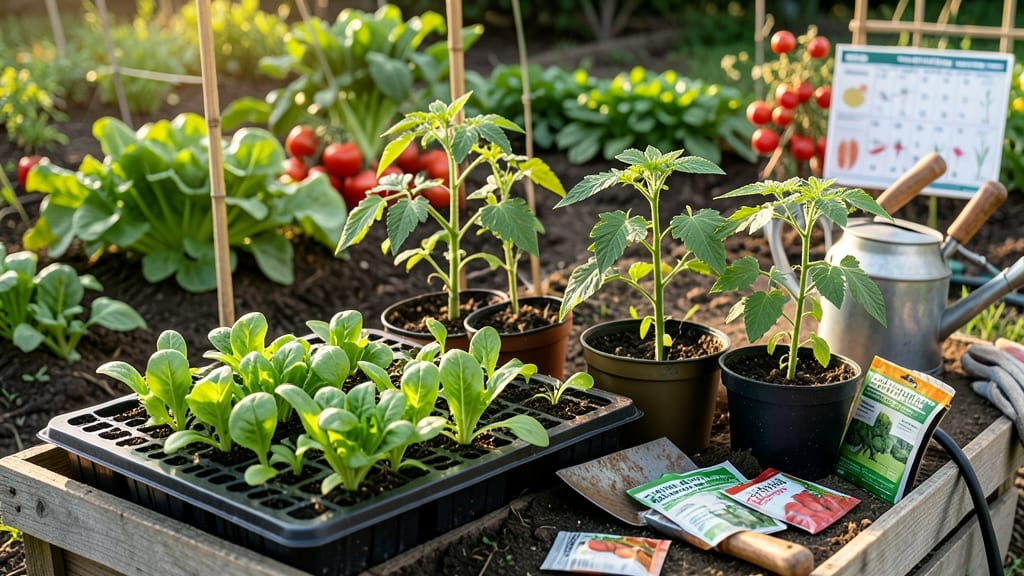
A vegetable planting calendar for Zone 7 🥕 is your secret weapon for turning a chaotic garden into a bountiful harvest—no more guessing when to sow or transplant.
Zone 7 gardeners know timing is everything—plant too early and risk frost damage, too late and miss peak harvests. This calendar gives you the exact dates to sow, transplant, and harvest vegetables for maximum success in your region.
Whether you're a beginner or a seasoned gardener, knowing when to plant cool-season crops like lettuce or warm-season favorites like tomatoes can mean the difference between a thriving garden and a disappointing one.
Below, I’ll break down the ideal planting windows by month, share succession planting tips, and help you adjust for your specific microclimate—so you can enjoy fresh veggies from spring through fall.
Zone 7 vegetable planting schedule by month: exact dates for cold-hardy and warm-season crops
Mastering the Zone 7 planting schedule means understanding your last frost date—typically April 15 for Zone 7a and April 22 for Zone 7b. This guide breaks down exact planting windows for 20+ vegetables, including frost-sensitive tomatoes and heat-loving peppers, so you can align your garden with your region’s climate.
Whether you’re a beginner or seasoned gardener, these month-by-month dates will help you avoid common mistakes like premature frost damage or bolting lettuce.
For cool-season crops like spinach and carrots, start sowing 4-6 weeks before your last frost date. In Zone 7, that means early March for hearty varieties. Meanwhile, warm-season crops like eggplants and okra need to wait until the soil warms to 60°F, usually mid-May.
Use this schedule as your roadmap to maximize yields and extend harvests into fall.
| Vegetable | Zone 7a Planting Window | Zone 7b Planting Window | Key Notes |
|---|---|---|---|
| Lettuce | March 1 - April 15 (sow indoors Feb 15) | March 1 - April 22 (sow indoors Feb 22) | Succession plant every 2 weeks; avoid bolting with shade cloth. |
| Peas | March 1 - April 15 | March 1 - April 22 | Plant in cool soil; trellis for vertical growth. |
| Spinach | March 1 - September 1 (fall crop) | March 1 - September 15 (fall crop) | Bolt-resistant varieties for summer; harvest young leaves. |
| Tomatoes | April 22 - May 10 (transplant after last frost) | April 29 - May 15 (transplant after last frost) | Start seeds indoors 6-8 weeks before transplanting; stake for support. |
| Peppers | May 1 - May 15 (transplant after soil reaches 60°F) | May 1 - May 20 (transplant after soil reaches 60°F) | Slow growers; use black plastic mulch to warm soil faster. |
| Green Beans | April 22 - June 1 (direct sow) | April 29 - June 15 (direct sow) | Succession plant every 3 weeks for continuous harvest. |
| Cucumbers | May 1 - June 1 (transplant or direct sow) | May 1 - June 15 (transplant or direct sow) | Trellis for better air circulation; harvest frequently. |
| Carrots | March 1 - April 15 (spring) & Aug 1 - Sept 1 (fall) | March 1 - April 22 (spring) & Aug 1 - Sept 15 (fall) | Loose, stone-free soil; thin seedlings to 2-3 inches apart. |
| Kale | March 1 - September 1 (succession plant) | March 1 - September 15 (succession plant) | Cold-hardy; harvest outer leaves to prolong production. |
Egg
How to adjust your Zone 7 planting calendar for microclimates and succession plantingYour Zone 7 garden might feel like one climate zone, but microclimates can create wildly different growing conditions within just a few feet. Urban heat islands, shaded corners, or higher elevations can shift your last frost date by weeks—sometimes even months. Understanding these variations lets you extend your growing season and avoid costly mistakes. For example, a south-facing wall might warm up 10°F faster than your open garden bed, while a shaded patio could delay warm-season crops by 3-4 weeks. Similarly, elevation changes of just 1,000 feet can push frost dates back by 2-3 weeks. By fine-tuning your calendar, you’ll maximize harvests and reduce wasted effort. 1
Adjust for elevation: Add 1 week per 300 feet to your frost dates if you're at 1,000+ feet above sea level. For example, if your lowland last frost is April 15, a 2,000-foot elevation might push it to May 5.
2
Urban heat islands: Cities can be 5-10°F warmer than rural areas. Start warm-season crops 1-2 weeks earlier (e.g., tomatoes on April 10 instead of April 15) and extend fall planting by 3 weeks.
3
Shaded areas: Delay planting light-loving crops (like tomatoes or peppers) by 2-3 weeks or choose shade-tolerant varieties (e.g., 'Black Krim' tomatoes or 'Provider' carrots).
4
Succession planting for lettuce: Sow every 2 weeks from March 15 to August 15 for a continuous harvest. Use row covers to protect early plantings from late frosts.
5
Extend beans and carrots: For 3-month harvests, plant bush beans every 3 weeks from May 1 to July 15. For carrots, stagger plantings every 4 weeks from March 1 to June 15.
Succession planting is your secret weapon for nonstop harvests. Instead of planting all your lettuce or beans at once, stagger sowings every 2-4 weeks. This ensures a steady supply while keeping your garden productive. For example, if you plant 3 rows of lettuce 2 weeks apart in April, you’ll harvest the first row in June, the second in July, and the third in August—tripling your yield! To make succession planting foolproof, keep a simple garden journal. Note when you sow each batch, track soil temperatures, and adjust future plantings based on what worked. For instance, if your carrots bolted in a hot June, plan to sow them earlier in shaded beds next year. Small adjustments like this can double your success rate. Don’t forget to protect your extended-season crops with row covers or cold frames. A lightweight frost blanket can add 4-6°F of warmth, letting you plant spinach or kale 3 weeks earlier in spring or 2 weeks later in fall. Pair this with drip irrigation to keep roots cool during heatwaves—your plants will thank you with bigger, sweeter harvests. With these microclimate tweaks and succession strategies, you’ll turn your Zone 7 garden into a year-round powerhouse. Start small—try adjusting just one crop’s planting date this season—and watch how quickly your harvests improve. Happy growing! 🌱 |