Planting
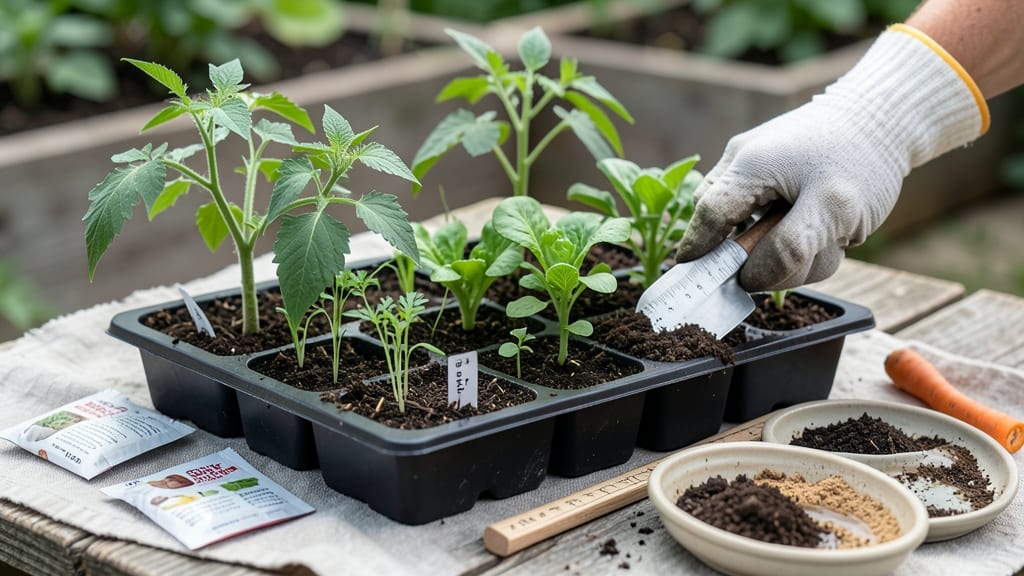
Planting vegetable seeds at the right depth is the secret to fast germination and strong starts—too shallow or too deep, and you’re asking for trouble.
Picture this: you’ve spent hours prepping your garden beds, carefully selected your 🌱 vegetable seeds, and now you’re about to drop them into the soil. But if you bury them too shallow, they’ll dry out before sprouting.
Too deep, and they’ll struggle to push through, wasting weeks of your time. The good news? There’s a simple rule to follow—and it’s not as complicated as you might think.
Most seeds need to be planted at a depth equal to 2-3 times their diameter. Tiny seeds like lettuce or carrots go in just a ¼ inch deep, while larger seeds like beans or peas can handle up to 1 inch.
But soil type and moisture play a role too—sandy soil drains faster, so you might need to plant a little deeper, while clay holds moisture longer, letting you go slightly shallower.
In this guide, I’ll break down the exact depths for your favorite veggies, share common mistakes that kill germination, and give you pro tips to adjust for your climate. No more guessing—just faster, healthier plants from day one.
Exact seed planting depths by vegetable type for optimal germination
Getting the planting depth right is one of the most overlooked factors in seed germination. Too shallow, and seeds dry out; too deep, and they struggle to reach light.
The rule of thumb is to plant seeds at a depth equal to 2-3 times their diameter, but exact measurements vary by seed size and type. For example, tiny lettuce seeds need just 1/4 inch of soil, while large bean seeds thrive at 1-2 inches deep.
Understanding these differences ensures faster sprouts and stronger seedlings.
Seeds contain stored energy in their cotyledons, which fuel early growth. When planted too deep, seedlings may exhaust their energy reserves trying to reach the surface. Conversely, shallow planting exposes seeds to temperature fluctuations and drying out.
The key is to balance moisture retention with light access—most seeds need consistent soil contact while still having a clear path upward. Let’s break down the exact depths for common vegetables to maximize your germination success.
📌 Pro Tip: Always moisten the soil before planting and keep it consistently damp (not soggy) until seeds sprout. A fine mist spray bottle works perfectly for delicate seeds like carrots or radishes.
For tiny seeds like lettuce, I often use a seedling mix and press them gently into the surface rather than burying them. These seeds need light to germinate, so covering them with more than 1/4 inch of soil can stunt their growth.
On the other hand, large seeds like pumpkins benefit from deeper planting—up to 2 inches—because they have more energy reserves to push through denser soil.
Another critical factor is seedling vigor. Weak or old seeds may need slightly shallower planting to compensate for reduced energy. For instance, if your tomato seeds are from last year’s packet, plant them at 1/4 inch instead of the usual 1/2 inch to encourage faster sprouting.
Always check the seed packet for specific recommendations, as some varieties (like heirloom tomatoes) may have unique needs.
💡 Light-Loving Seeds: Some seeds, such as basil or parsley, require light to germinate. Simply press them into the top layer of soil without covering them. Use a humidity dome or plastic wrap to retain moisture until sprouts appear.
Soil type also plays a role. In sandy soil, which drains quickly, plant seeds slightly deeper (e.g., 1/2 inch instead of 1/4 inch) to retain moisture. In clay soil, which holds water well, you can plant closer to the surface.
Always loosen the soil before planting to create a consistent planting depth and improve root penetration.
Finally, consider your climate zone. In cooler regions, planting seeds a bit deeper (e.g., 1/2 inch instead of 1/4 inch) can protect them from temperature swings. In hot, dry climates, shallow planting with mulch helps retain moisture. Always monitor soil moisture—dry soil = failed germination.
With these exact planting depths, you’ll see faster germination, stronger seedlings, and healthier plants. Happy planting! 🌱
Common mistakes that kill seed germination (and how to avoid them)
Even the most experienced gardeners can fall victim to seed germination failures, and planting depth is one of the most overlooked factors. Seeds planted too deep may never emerge, while those buried too shallowly dry out or get washed away.
The key is understanding how seed size and soil conditions interact to create the perfect environment for sprouting.
I’ve seen firsthand how a simple miscalculation in depth can turn a promising garden bed into a wasteland of failed seeds. For example, tiny lettuce seeds need barely any soil coverage, while large bean seeds require deeper planting.
Let’s break down the most common mistakes and how to fix them before your next planting session.
⚠️ Wrong Depth = Failed Germination
Rule of thumb: Plant seeds at a depth equal to 2-3 times their diameter. For instance:
- Tiny seeds (e.g., carrots, lettuce): 1/8 inch deep (just press into soil)
- Small seeds (e.g., radishes, spinach): 1/4 inch deep
- Medium seeds (e.g., beans, peas): 1 inch deep
- Large seeds (e.g., corn, squash): 1.5–2 inches deep
Why it matters: Too deep = seeds starve for light/air; too shallow = seeds dry out or get washed away. Always adjust for soil type (sandy soils need slightly deeper planting).
One of the biggest mistakes I see is over-planting seeds too closely in hopes of thicker growth. While it’s tempting to sow seeds densely, this often leads to crowded seedlings that compete for nutrients and light, stunting their development.
Instead, follow the spacing guidelines on your seed packet and thin seedlings once they’ve sprouted to give them room to grow.
Another critical error is poor soil contact around seeds, which disrupts moisture and air flow. When planting, gently press the soil around each seed to ensure firm contact. Loose soil creates air pockets that prevent consistent moisture, leading to uneven or failed germination.
I’ve even seen gardeners accidentally skip this step, only to watch their seeds dry out despite regular watering.
Moisture management is just as crucial as depth. Seeds need consistent moisture to germinate, but overwatering can suffocate them or cause rot. After planting, use a fine mist to keep the soil damp (not soggy) until germination occurs. A simple trick I use is to place a clear plastic dome or even a plastic bag over seedlings to retain humidity, then remove it once sprouts appear.
Finally, don’t forget that temperature and soil type play a role in how deep you should plant. In sandy soils, seeds may need to be planted slightly deeper to retain moisture, while clay soils can be planted shallower because they hold water better.
Always adjust your depth based on your local soil conditions to give your seeds the best chance of success.
By avoiding these common mistakes—wrong depth, overcrowding, poor soil contact, and moisture mismanagement—you’ll set your seeds up for reliable germination every time. Now grab your trowel and get planting with confidence! 🌱