
Planting
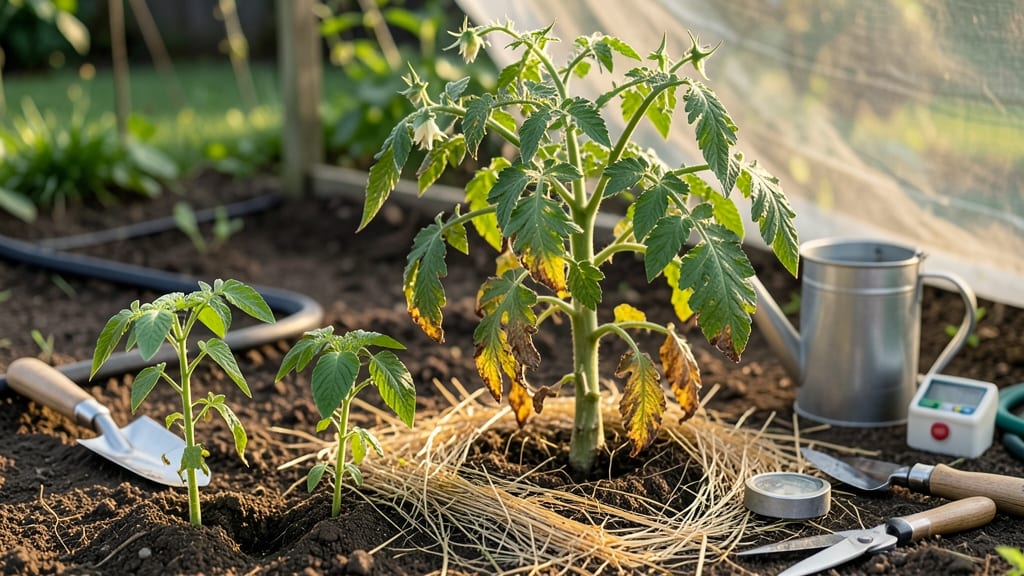
Your tomatoes wilted after transplant—don’t panic, this is fixable. 🌱 I’ve nursed back dozens of plants from this exact situation, and the key is acting fast with the right care.
Transplant shock, root damage, or even hidden pests could be the culprit, but with proper watering and support, most plants bounce back within days.
The first step is checking the roots for damage—gentle pruning of any mushy or broken roots can make all the difference. Then, water deeply but carefully, avoiding soggy soil that invites disease.
A light shade cloth for a few days helps stressed plants adjust to their new home without wilting further.
Within 3-5 days, you should see new signs of life—firm stems, perky leaves, and even fresh growth. If the wilting persists beyond a week, fungal issues might be at play, and a targeted treatment could be needed. The good news? Most tomatoes recover fully with the right care.
Next time, harden off seedlings gradually and transplant on a cloudy day to reduce stress. With these adjustments, your future transplants will thrive from day one—no wilting in sight!
Root Causes Of Post-Transplant Wilting
Wilted tomato plants after transplanting can feel like a gut punch—especially after all your hard work. But before you panic, let’s break down the real science behind why this happens. Understanding the root causes (literally and figuratively) is the first step to saving your plants.
Below, we’ll explore the most common culprits, why they trigger wilting, and what’s happening at the cellular level.
When you uproot tomato seedlings—even gently—their delicate roots get damaged. Root hairs, which absorb up to 90% of water and nutrients, are especially vulnerable. Here’s what goes wrong:
- Mechanical stress: Digging disrupts the mycorrhizal fungi (beneficial soil microbes) that help roots absorb water.
Without them, roots struggle to take up moisture efficiently. - Root pruning: If roots are trimmed too aggressively during transplanting, the plant loses its ability to support itself, leading to osmotic stress—where cells lose water faster than they can replenish it. - Delayed recovery: Tomato roots need 24–48 hours to start regrowing after transplanting.
If wilting starts immediately, the plant may not be getting enough water to compensate.
💡 Pro Tip: To minimize shock, water deeply 1–2 days before transplanting to encourage root growth toward the edges of the pot. This makes them more resilient when moved.
Wilting after transplanting is often a hydration crisis. Tomatoes have shallow roots and need consistent moisture to thrive. Here’s how watering goes wrong:
- Overwatering (yes, really): Soggy soil cuts off oxygen to roots, leading to anaerobic conditions where roots can’t absorb water efficiently.
This causes physiological drought—even if the soil looks wet. - Underwatering: If the root ball dries out too quickly after transplanting, the plant can’t replenish lost moisture.
Tomato leaves wilt as a stress signal to conserve water. - Inconsistent moisture: Fluctuating water levels confuse the plant’s xylem vessels (the "straws" that carry water from roots to leaves). This disrupts the transpiration-cohesion-tension mechanism, leading to wilting.
🌡️ Science Alert: Tomato plants wilt when only 10–20% of their leaf cells lose turgor pressure—so by the time you see drooping, the plant is already in distress.
Tomatoes are heat-loving but hate sudden changes. If your transplant timing or location is off, wilting can be an environmental red flag:
- Heat stress: Temperatures above 90°F (32°C) cause stomata (leaf pores) to close to prevent water loss. Without open stomata, the plant can’t transpire (release water vapor), leading to wilting. - Cold shock: Transplanting into chilly or windy conditions slows root growth and increases water loss through evaporation.
Tomato roots prefer soil temps above 60°F (15°C) to function properly. - Sunburn: If seedlings are moved from shade to full sun too quickly, leaves can scorch, reducing their ability to photosynthesize and support the plant’s water needs.
✨ Quick Fix: Use shade cloth for the first week after transplanting if temps are extreme, and water in the early morning to reduce evaporation.
Even the best soil can become problematic after transplanting. Here’s how nutrient and soil issues trigger wilting:
- Compacted or poor-draining soil: If roots can’t spread into loose soil, they suffocate. Clay or heavy soils hold too much water, while sandy soils drain too fast—both starve roots of oxygen and moisture. - Nutrient deficiencies: A lack of potassium (K) or calcium (Ca) weakens cell walls, making them more prone to wilting.
Tomato roots also need phosphorus (P) to grow quickly after transplanting. - Salt buildup: If you’ve used fertilizers or tap water with high sodium, salts can osmotically pull water out of roots, causing wilting even in wet soil.
📊 Soil Check: Test your soil’s pH (6.0–6.8 is ideal for tomatoes) and organic matter content. Amend with compost or coconut coir to improve structure and water retention.
Sometimes, wilting isn’t just environmental—it’s a silent invasion. Pests and pathogens can cripple a tomato plant overnight:
- Root-knot nematodes: These microscopic worms pierce roots, creating galls that block water and nutrient uptake. Infected plants wilt even when soil is moist. - Fungal infections (e.g., Fusarium wilt): Fungi like Fusarium oxysporum clog xylem vessels, preventing water transport.
Wilting often starts in one side of the plant before spreading. - Aphids or spider mites: These sap-sucking pests stress the plant, reducing its ability to regulate water. Heavy infestations lead to rapid wilting, especially in hot weather.
🔥 Early Warning Sign: Check the underside of leaves and root zone for pests. Yellowing or curling leaves often precede wilting in pest-related cases.
Revive Your Tomatoes Fast
Wilted tomatoes after transplanting can feel like a setback, but with the right care, you can often bring them back to full health. The key is identifying the root cause—whether it’s stress, disease, or environmental factors—and taking targeted action.
Below, we’ll break down practical solutions for each common issue, plus prevention tips to keep your plants thriving.
Transplant shock is the most common culprit, and the good news? It’s usually temporary. Here’s how to nurse your tomatoes back to strength:
💧 Hydrate Like a Pro
- Step 1: Water deeply immediately after transplanting (if you haven’t already). Use a soaker hose or watering can to deliver moisture straight to the roots.
Avoid overhead watering, which can stress the plant further. - Step 2: Keep the soil consistently moist (not soggy) for the first 7–10 days.
Stick your finger 1–2 inches deep—if it’s dry, water again. - Step 3: Mulch around the base with 2–3 inches of straw or shredded leaves to retain moisture and regulate soil temperature.
🌡️ Shield from Stressors
- Sun & Wind: If your tomatoes were transplanted on a hot, windy day, move them to a shaded spot (like under a 30% shade cloth) for 2–3 days to recover.
Gradually reintroduce full sun. - Temperature Swings: Avoid transplanting when temps are below 50°F or above 90°F. If you must, use row covers for extra protection.
💡 Pro Tip:
If your tomatoes are limp but still green, they’re likely just thirsty. If they’re yellowing or mushy, check for root damage (see next section).
If the roots were disturbed or cut during transplanting, your tomatoes may struggle to absorb water. Here’s how to help them recover:
✂️ Prune Damaged Roots (If Needed)
- Gently loosen the soil around the base and inspect the roots.
If you see black, mushy, or broken roots, trim them with sterilized scissors (dip in rubbing alcohol first). - Replant at the same depth as before—burying too deep can suffocate the stem.
🌿 Boost Root Growth with Fertilizer
- Use a balanced, water-soluble fertilizer (like 10-10-10) diluted to half strength to give your tomatoes a quick nutrient boost.
Avoid high-nitrogen fertilizers, which can burn stressed roots. - Organic option: Mix 1 tablespoon of compost or worm castings into the soil around the base.
🔥 Emergency Root Rescue
For severely damaged roots, try a rooting hormone dip (like willow water or a commercial rooting gel) before replanting. This can encourage faster regrowth.
If wilting is paired with spots, mold, or a foul smell, a fungal or bacterial infection may be to blame. Act fast to stop it from spreading:
🧼 Clean Up & Disinfect
- Remove any affected leaves (especially lower ones touching the soil) and dispose of them in the trash (not compost).
- Sterilize pruners with rubbing alcohol between cuts to prevent cross-contamination.
🍄 Treat Fungal Issues
- Baking Soda Spray: Mix 1 teaspoon baking soda + 1 quart water + a few drops of dish soap. Spray every 5–7 days until symptoms improve.
- Copper Fungicide: For severe cases, use a copper-based fungicide (like Bordeaux mixture) as directed.
🌡️ Improve Airflow
- Space plants 18–24 inches apart to reduce humidity buildup.
- Stake or cage tomatoes early to keep foliage off the ground.
Once your tomatoes are back on track, prevent future wilting with these habits:
🌱 Choose the Right Time to Transplant
- Wait until nighttime temps stay above 50°F and daytime temps are below 85°F.
- Best time: Early morning on a cloudy day to minimize stress.
💧 Water Wisely
- Deep watering (1–2 inches per week) is better than frequent shallow drinks.
- Avoid wetting leaves to prevent disease.
🌿 Harden Off Seedlings
Before transplanting, acclimate seedlings for 5–7 days:
- Day 1–3: Place in partial shade for 2–3 hours.
- Day 4–5: Increase to half-day sun.
- Day 6–7: Move to full sun for a few hours.
🌱 Use the Right Soil Mix
- Amend garden soil with compost or coconut coir for better drainage.
- Avoid clay-heavy soil, which holds too much moisture and suffocates roots.
- Mild transplant shock: 3–7 days with proper care.
- Root damage: 1–2 weeks (new roots grow quickly in warm soil).
- Disease: 5–10 days with treatment (but may take longer for severe cases).
Stay patient! With the right approach, your tomatoes can bounce back—sometimes even producing fruit sooner than expected. 🍅✨
Frequently asked questions
Why do my tomato plants wilt immediately after transplanting?
This is usually transplant shock—your plants lost root hairs and beneficial microbes during uprooting. The roots need 24–48 hours to start recovering. Water deeply right after transplanting and keep soil consistently moist (not soggy) for the first 7–10 days. A light shade cloth can also help reduce stress.
How can I tell if wilting is from root damage vs. underwatering?
Check the roots: Healthy roots are white/firm, while damaged roots appear black/mushy. If roots look damaged, trim the bad sections and replant at the same depth. For underwatering, the soil will be dry 1–2 inches deep—water immediately and mulch to retain moisture.
Is it safe to use baking soda to treat wilting tomatoes?
Yes, but only for fungal issues (like early blight). Mix 1 teaspoon baking soda + 1 quart water + a few drops of dish soap and spray every 5–7 days. For wilting caused by transplant shock or root damage, baking soda won’t help—focus on watering and root care instead.
Can I save tomatoes that wilted and turned yellow after transplanting?
Yellowing leaves usually mean root damage or disease. If only the lower leaves are yellow, prune them and monitor closely. If wilting persists beyond 5–7 days or you see spots/mold, treat with a copper fungicide and improve airflow. For severe cases, consider replacing the plant to prevent spread.
What’s the best time of day to transplant tomatoes to avoid wilting?
Transplant in the early morning on a cloudy day to minimize stress. Avoid midday heat or windy conditions. If you must transplant in the afternoon, water thoroughly beforehand and provide shade for 2–3 days to help the plants recover.