
Planting
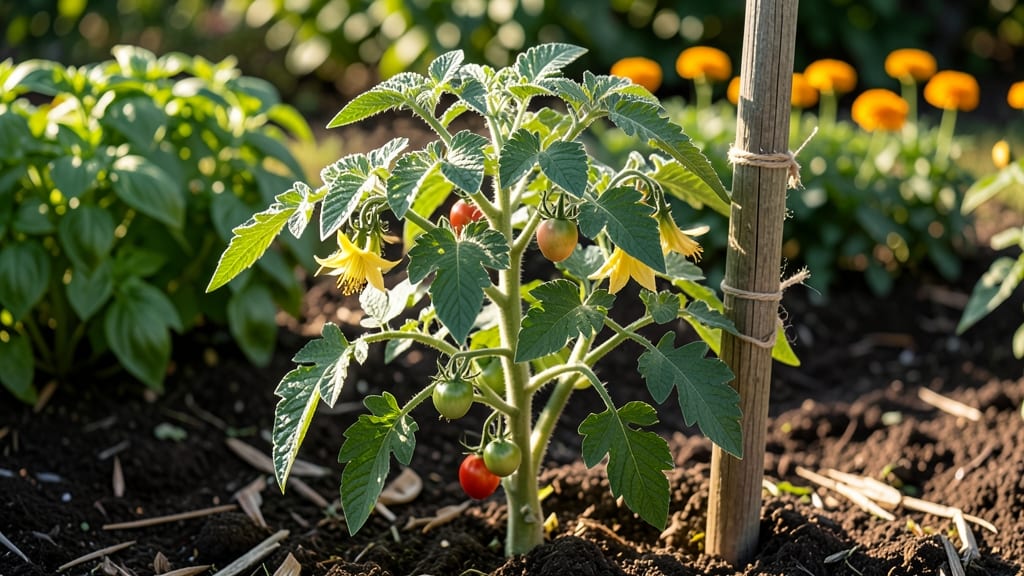
When your tomato plant leaves point up like a frightened cat’s ears, you’re staring at a classic sign of stress—but it’s not always what you think. 🌱 I’ve seen this happen from overwatering to viral infections, and the fix depends on what’s really going on with your plants.
The good news? Most cases aren’t permanent, and you can often turn things around in just a few days with the right adjustments.
First, check the soil—if it’s soggy or smells like a swamp, you’re overwatering. Tomato roots need air, not a swampy environment. Then look for pests like aphids or spider mites hiding on the undersides of leaves, which can drain plants and cause leaves to curl upward.
Finally, if the leaves are thick, brittle, and have a yellowish cast, it might be a nutrient deficiency (like nitrogen or magnesium) rather than a pest or disease.
For quick fixes, start by adjusting your watering schedule—deep watering once a week is better than daily shallow drinks. Prune any severely affected leaves to redirect energy, and add a balanced fertilizer if the soil test shows deficiencies.
If you suspect a viral infection (like curly top), isolate the plant immediately to prevent spreading, as viruses often have no cure.
Most tomato plants bounce back fast if you catch the issue early. Within a week, you’ll see leaves flattening out and new growth emerging—just keep an eye on the soil moisture and watch for pests. The key is acting before the problem spreads beyond the first few leaves.
Root Causes Behind Leaf Distress
When your tomato plant’s leaves start pointing upward—often called cupping or upward curling—it’s rarely a coincidence. This symptom is usually a cry for help from your plant, signaling underlying stress or disease. Below, we break down the most common culprits, explained in simple terms with actionable science.
Tomatoes are tropical plants at heart, and when temperatures soar or soil dries out too quickly, their leaves react by curling upward. This is a survival mechanism to reduce water loss through transpiration.
- Why it happens:
- High temperatures (>90°F/32°C) or low humidity force stomata (tiny leaf pores) to close, limiting gas exchange. The plant’s cells lose turgor pressure, causing leaves to pucker upward.
- Inconsistent watering (e.g., deep soaks followed by drought) stresses roots, triggering a wilting response even if soil appears moist on the surface.
- Actionable fix:
- Water deeply at the base of the plant (1–2 inches of soil moisture) in the morning to avoid evaporation.
- Use mulch (straw or shredded leaves) to retain moisture and cool roots.
- Avoid overhead watering—it increases fungal risks and accelerates leaf burn.
Tiny invaders like aphids and spider mites aren’t just annoying—they’re sap-sucking vampires that distort your tomato’s leaves. Their feeding disrupts hormone signals, causing upward curling as the plant tries to conserve energy.
- Why it happens:
- Aphids inject toxic saliva into leaf tissue, triggering a phytohormone imbalance (specifically, an overproduction of ethylene, a stress hormone).
- Spider mites puncture cells while feeding, leading to localized dehydration and curled edges.
- Actionable fix:
- Inspect undersides of leaves for sticky residue (aphids) or fine webbing (mites).
- Blast pests off with a strong spray of water (early morning works best).
- Introduce natural predators like ladybugs or release neem oil (1 tsp per liter of water) every 5–7 days.
If your plant’s leaves are stiff and upward-pointing with a yellowing or mottled pattern, a viral or fungal infection could be the culprit. These pathogens hijack the plant’s cellular machinery, altering growth patterns.
- Why it happens:
- Curly Top Virus (CTV): Spread by beetles, CTV disrupts phloem transport (the plant’s vascular system), causing leaves to thicken and curl upward. It’s not curable—only manageable.
- Early Blight or Septoria Leaf Spot: Fungal spores clog stomata, reducing gas exchange. The plant’s response? Curling to protect damaged areas.
- Actionable fix:
- For viruses: Remove infected plants immediately and sterilize tools with 70% isopropyl alcohol. Do not compost infected material.
- For fungi:
- Apply copper fungicide (follow label rates) at the first sign of spots.
- Space plants 18–24 inches apart for airflow and avoid overhead watering.
Tomatoes are heavy feeders, and when their diet is off—whether from over-fertilizing or deficiencies—they send distress signals through leaf curling. Upward-pointing leaves often indicate a phosphorus or potassium deficiency or excess nitrogen.
| Symptom | Likely Cause | Quick Fix |
|---|---|---|
| Leaves curl upward with purple stems | Phosphorus deficiency (critical for root/flower development) | Apply bone meal or a 5-10-10 fertilizer (focus on the middle number). |
| Yellowing edges with upward curl | Potassium deficiency (weakens cell structure) | Use greensand or potassium sulfate. Avoid overwatering, which leaches K. |
| Dark green, glossy leaves with upward curl | Excess nitrogen (burns roots, disrupts hormone balance) | Flush soil with water to leach out excess N. Switch to a balanced 10-10-10 fertilizer. |
Pro Tip: 💡 Test your soil’s pH (ideal: 6.0–6.8). Nutrient availability drops outside this range—lime raises pH, sulfur lowers it.
Most upward-curling leaves are reversible with targeted care, but viruses like CTV require removal to prevent spread. Act fast, and your tomatoes will bounce back—literally!
Fixing Curly Leaves Fast
Now that you know why your tomato plant’s leaves are pointing upward (likely due to curly top virus, nutrient imbalance, or environmental stress), let’s tackle the problem with actionable fixes. Below are targeted solutions based on the most common causes, along with prevention tips to keep your plants thriving.
If your tomato plant is infected with curly top virus, there’s no cure—but you can manage symptoms and prevent spread.
🍳 Remove Infected Plants Immediately
- Step 1: Dig up and destroy infected plants (do not compost them).
- Step 2: Wear gloves and sanitize tools with rubbing alcohol to prevent cross-contamination.
- Step 3: Check neighboring plants for symptoms (yellowing, stunted growth, upward-pointing leaves).
👨🍳 Strengthen Remaining Plants
- Prune aggressively to improve airflow and reduce stress.
- Apply neem oil (1 tsp per quart of water) as a viral deterrent—it won’t cure the virus but may slow progression.
- Boost immunity with a balanced fertilizer (10-10-10) to help plants fight off secondary infections.
🌡️ Prevent Future Outbreaks
- 💡 Remove leafhoppers (the virus’s main carrier) with soapy water sprays or yellow sticky traps.
- 🎯 Rotate crops—never plant tomatoes or beans in the same spot two years in a row.
- ✨ Use virus-resistant varieties like ‘Mountain Merit’ or ‘Defiant PhR’ for future seasons.
If nutrient deficiency (especially potassium or magnesium) is causing upward leaves, correct the imbalance fast.
🔪 Soil Test First
- Buy a DIY soil test kit (or send a sample to a local extension office).
- Look for low levels of potassium (K), magnesium (Mg), or calcium (Ca).
💪 Quick Fixes for Nutrient Deficiency
| Deficiency | Symptoms | Solution |
|---|---|---|
| Potassium (K) | Yellowing leaf edges, weak stems | Epsom salt (1 tbsp per gallon of water, spray leaves) or banana peel tea |
| Magnesium (Mg) | Yellowing between leaf veins | Epsom salt soak (2 tbsp per gallon, water roots) |
| Calcium (Ca) | Blossom-end rot (on fruit) | Crushed eggshells or lime (calcium carbonate) |
🌱 Long-Term Soil Health
- Add compost (2-3 inches) around the base of the plant.
- Use a slow-release fertilizer (like 5-10-10) every 4-6 weeks.
- Mulch heavily to retain moisture and prevent nutrient loss.
If heat, wind, or transplant shock is causing leaves to point upward, adjust care immediately.
🌡️ Beat the Heat
- Provide shade cloth (30-50% coverage) during peak sun (11 AM–3 PM).
- Water deeply in the morning (1-2 inches per week) to prevent wilting.
- Avoid overhead watering—use drip irrigation to keep leaves dry.
💨 Protect from Wind
- Stake or cage plants to prevent flopping and stress.
- Use windbreaks (like bamboo screens or tall grass) in exposed areas.
🌱 Proper Transplanting Tips
- Hardening off seedlings (acclimate to outdoor conditions over 7-10 days).
- Plant at the right depth—bury stems up to the first true leaves to encourage root growth.
- Avoid transplant shock by watering thoroughly before and after moving.
- 🔥 Start with disease-free seedlings from reputable nurseries.
- 🌡️ Monitor leafhoppers regularly—act fast if you spot them.
- 💡 Practice crop rotation—never plant tomatoes, peppers, or eggplants in the same spot yearly.
- ✨ Test soil annually to catch deficiencies before they cause problems.
By addressing the root cause (literally and figuratively), your tomato plants should bounce back with stronger, straighter leaves—and better yields. Act fast, stay consistent, and your garden will thank you! 🍅🌿
Frequently asked questions
Why do tomato leaves point upward instead of staying flat?
This is a stress signal! Upward-pointing leaves usually mean your plant is fighting heat stress, nutrient deficiencies (like potassium or magnesium), or pest attacks. It’s the plant’s way of reducing water loss or protecting damaged areas.
Can I save my tomato plant if the leaves are already pointing up?
Start by checking the soil moisture—tomatoes hate soggy roots. If it’s dry, water deeply at the base. For pests, spray leaves with soapy water. If it’s a nutrient issue, add Epsom salt (for magnesium) or banana peel tea (for potassium). Most plants recover within 5-7 days of proper care.
What’s the difference between upward leaves from pests and from heat?
Pest damage (like aphids) causes sticky residue on leaves and often starts at leaf edges. Heat stress makes leaves feel dry and crispy, with curling happening uniformly across the leaf. Check undersides for tiny bugs or webbing to confirm the cause.
Will pruning help if my tomato leaves are pointing upward?
Yes—but only if the cause isn’t a virus! Prune only the most affected leaves to redirect the plant’s energy. Avoid heavy pruning during heatwaves, as it stresses the plant further. Focus on removing leaves with visible damage or pests first.
How do I prevent upward leaves in my tomato plants next season?
Start with healthy seedlings from trusted nurseries and use drip irrigation to avoid leaf wetness. Test soil pH annually (aim for 6.0-6.8) and add compost. Choose heat-tolerant varieties like ‘Heatmaster’ or ‘Solar Fire’ for hot climates.