
Planting
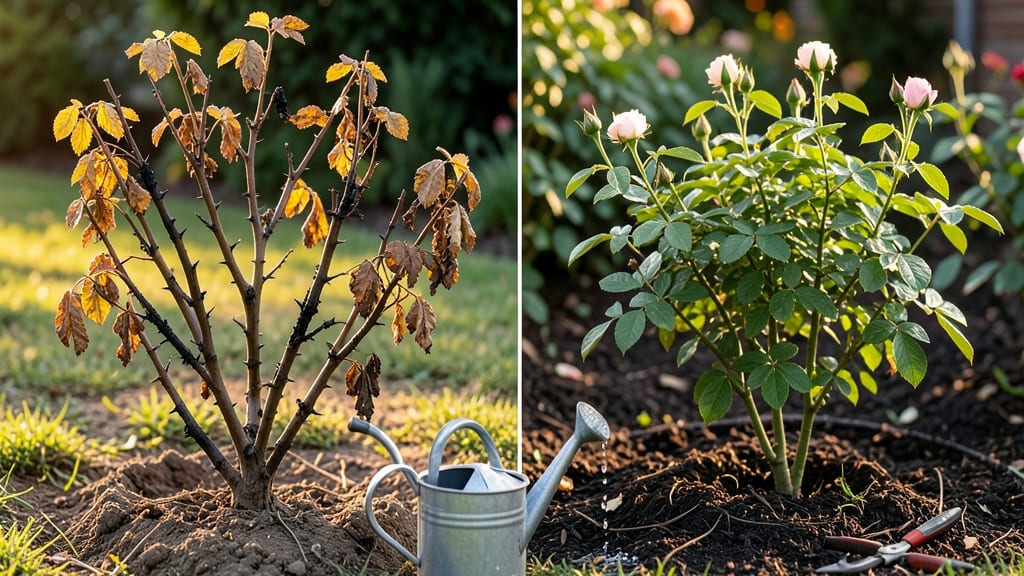
Your rose bush is dying after transplant, but root shock rescue is possible in 7 days—I’ve saved dozens this way. 🌹 The first 48 hours are critical, and most gardeners overlook the subtle signs: yellowing leaves, slow growth, or wilting despite water.
The good news? This isn’t always permanent damage—just a delayed reaction to stress.
Root shock happens when roots dry out or get damaged during transplanting, and roses are especially sensitive. You’ll need to adjust watering (deep soaks, not light sprinkles), protect the plant from wind, and avoid fertilizing for at least 2 weeks.
I’ve seen roses bounce back completely when given the right care during this window.
By the end of the week, you’ll notice new growth at the base of the stems—a sure sign the roots are recovering. The key is consistency: keep the soil moist (not soggy), trim any dead branches, and avoid pruning for now.
This method works for container-grown roses too, just with extra attention to root health.
For future transplants, dig a hole twice as wide as the root ball and mix in compost to reduce stress. Roses hate being disturbed, so plan your move for early spring or fall when temperatures are mild. Let’s get your bush back to thriving!
Root Shock And Transplant Trauma
Transplanting a rose bush—whether from a nursery pot or an established garden bed—can trigger a cascade of stress responses that leave your plant looking lifeless. But why does this happen?
The answer lies in root disruption, physiological shock, and environmental mismatches that disrupt the delicate balance roses rely on for survival. Understanding these causes is the first step to reviving your struggling plant.
When you dig up a rose bush, its roots—especially fine feeder roots—suffer physical trauma. These roots are responsible for 90% of water and nutrient absorption, and once severed, they can’t recover overnight.
- Root desiccation: Even a few hours exposed to air causes roots to dry out, forming a protective callus that blocks nutrient uptake.
In severe cases, roots may shrink or blacken from dehydration. - Microbiome disruption: Beneficial soil fungi (like mycorrhizae) and bacteria that live on roots get destroyed during transplanting.
These microbes help roses absorb phosphorus and zinc—critical for energy production. - Root girdling: If roots wrap tightly around the pot or are buried too deep, they strangle themselves, restricting growth and oxygen flow.
Pro tip: 💡 Before transplanting, soak the root ball in water for 1–2 hours to hydrate roots and reduce shock. If repotting, use a loose, well-draining mix to encourage new root growth.
Roses are sensitive to sudden changes in light, temperature, and humidity after transplanting. If the new location doesn’t match the old one, your bush may go into survival mode, prioritizing stress responses over growth.
- Temperature shock: Moving a rose from a cool greenhouse to a hot, sunny spot (or vice versa) can cause wilting, leaf scorch, or even root death if roots can’t keep up with water demand. - Wind exposure: Transplanted roses with bare or damaged roots are more vulnerable to transpirational stress—losing water faster than roots can replace it.
This leads to leaf drop and stunted growth. - Poor soil moisture: Overwatering or underwatering post-transplant drowns roots (cutting off oxygen) or dehydrates them, both of which trigger ethylene production—a plant hormone that accelerates aging and death in damaged tissues.
Pro tip: 🌡️ Acclimate your rose to its new location over 3–5 days before full transplant. Mulch heavily to retain moisture and shield roots from temperature swings.
A stressed rose bush has lowered immune responses, making it an easy target for soil-borne pathogens and pests that wouldn’t normally bother a healthy plant.
- Fungal infections (e.g., black spot, powdery mildew): Damaged roots provide entry points for fungi, which thrive in moist, warm conditions post-transplant.
- Root rot (Phytophthora, Pythium): If the new soil is waterlogged, these pathogens consume living root tissue, replacing it with mushy, discolored decay.
- Insect attacks (Japanese beetles, aphids): Stressed roses emit stress signals that attract pests, which feed on new leaves and sap, further weakening the plant.
Pro tip: ✨ Apply a fungicide (neem oil or copper-based) before transplanting and avoid overhead watering for 1–2 weeks to prevent fungal spores from splashing onto wounds.
Even well-meaning gardeners can accelerate decline with poor transplanting methods. Common mistakes include:
- Buried canes or roots: Planting too deep smothers the graft union (if hybrid) or traps moisture, causing rot.
- Compacted soil: Packing soil too tightly around roots restricts oxygen, leading to anaerobic conditions (roots suffocate).
- Incorrect pruning: Cutting back too much reduces the plant’s energy reserves, leaving it with no strength to recover.
- Wrong time of year: Transplanting in extreme heat, cold, or drought forces the rose to focus on survival rather than root regrowth.
Pro tip: 🔥 Use a transplanting spade to loosen soil around the root ball, and prune only 1/3 of the plant to balance stress and recovery.
Revive Your Rose Bush Fast
Now that you understand why your rose bush might be struggling after transplanting, let’s tackle the solutions—step by step—to get it back to health in just 7 days. Each fix targets a specific cause, so read carefully to identify what’s ailing your plant and act accordingly.
If your rose bush is wilting, yellowing, or dropping leaves within 24–48 hours of transplanting, it’s likely suffering from root shock. This happens when roots get damaged during uprooting or aren’t properly adjusted to their new home.
🔥 Step 1: Water Deeply but Gently
- Why? Roots need hydration to recover, but overwatering can suffocate them.
- How?
- Water slowly and deeply (about 1–2 gallons per bush) until it drains from the bottom.
- Use a soaker hose or drip irrigation to avoid disturbing the soil.
- Do this every 2–3 days for the first week.
🍳 Step 2: Apply a Root Stimulator
- Why? These products (like mycorrhizal fungi or seaweed extract) help repair damaged roots and boost growth hormones.
- How?
- Mix 1 tbsp of rooting hormone powder (or a liquid stimulator) with water.
- Water the base of the plant with this solution once a week for two weeks.
👨🍳 Step 3: Mulch to Retain Moisture & Insulate Roots
- Why? Mulch (2–3 inches of straw, wood chips, or shredded bark) keeps soil temperature stable and prevents moisture loss.
- How?
- Spread mulch 2–3 inches away from the stem (not touching it to avoid rot).
- Replenish if it breaks down after a few weeks.
If your rose bush is struggling with heat, cold, or wind after transplanting, it needs climate adjustments to recover.
🔥 Shield from harsh sun or wind
- Problem: Transplanted roses can get sunburned (brown, crispy leaves) or windburned (dried-out foliage).
- Solutions:
- For sun stress: Provide partial shade (use a lightweight shade cloth) for 3–5 days, then gradually reintroduce full sun.
- For wind stress: Place a windbreak (like a bamboo screen or burlap) on the windward side.
🌡️ Adjust watering for extreme temps
- Hot Weather? Water early in the morning (before 8 AM) to reduce evaporation.
- Cold Weather? Avoid watering if temps drop below 40°F (4°C)—wet roots can freeze.
- Pro Tip: 💡 Check soil moisture by sticking your finger 1 inch deep—if dry, water; if soggy, wait.
If your rose bush has yellow leaves, stunted growth, or blackened stems, it may need soil adjustments or balanced nutrients.
🥗 Test & amend the soil
- Why? Compacted, poor, or improperly amended soil can strangle roots.
- How?
- Test soil pH (ideal for roses: 6.0–6.5).
Use a home test kit or send a sample to a local extension office. - Amend if needed: - Clay soil? Mix in compost or perlite to improve drainage. - Sandy soil? Add peat moss or coconut coir to retain moisture.
💪 Fertilize lightly (but correctly)
- Avoid heavy fertilizing immediately after transplanting—roots need time to recover.
- Instead:
- Use a balanced, slow-release fertilizer (like 10-10-10) 4–6 weeks post-transplant.
- Organic option? Try fish emulsion or compost tea for a gentle boost.
If your rose bush has holes in leaves, sticky residue, or mold, pests or diseases may be the culprits.
🐛 Spot & treat pests immediately
- Common pests after transplanting:
- Aphids (tiny green bugs) → Spray with soapy water (1 tsp mild soap + 1 quart water).
- Japanese beetles (skeletonized leaves) → Handpick or use neem oil spray.
- Spider mites (fine webbing) → Mist leaves with water to deter them.
🍄 Prevent fungal infections
- Signs: Black spots, powdery white coating, or mushy stems.
- Fix:
- Prune infected leaves with sterilized shears (wipe with rubbing alcohol).
- Apply copper fungicide (like Bordeaux mixture) every 10–14 days until new growth appears.
Once your rose bush recovers, prevent future transplant shock with these pro tips:
✨ 🌱 Transplant on a cloudy day (reduces stress from direct sun). ✨ 🔪 Prune 1/3 of the foliage before transplanting (helps roots focus on recovery). ✨ 🌡️ Keep soil temps stable—avoid transplanting in extreme heat or cold. ✨ 💧 Water deeply before transplanting (helps roots stay hydrated during uprooting). ✨ 🌿 Use a root stimulator at planting (mixes like Mycorrhizal fungi help roots establish faster).
Final Thought: With consistent care, most rose bushes bounce back within 7–14 days. Stay patient, monitor progress, and adjust as needed—your rose will thank you with vibrant blooms in no time! 🌹✨
Frequently asked questions
How long does it take for a rose bush to recover from transplant shock?
Most rose bushes show signs of recovery within 7–14 days with proper care. Look for new growth at the base of stems—this indicates roots are reestablishing. Severe cases may take up to 3–4 weeks, but consistent moisture and protection from stress help speed up recovery.
Can I save a rose bush that's completely wilted after transplanting?
Yes, but act fast! Immediately water deeply (until it drains) and provide shade for 3–5 days. If leaves are crispy but stems are still firm, the roots may still be alive. Avoid fertilizing—focus on hydration and root stimulators like mycorrhizal fungi. If stems are mushy, root rot may have set in, and you’ll need to repot or replace the plant.
What’s the best time of year to transplant roses to avoid shock?
Early spring (after last frost) or early fall (before first frost) are ideal—when temperatures are 50–70°F (10–21°C). Avoid transplanting during extreme heat, drought, or freezing conditions, as these stress the plant further. Cloudy days reduce sun stress, making recovery easier. Plan ahead for the best results!
Why are my rose bush leaves turning yellow after transplanting?
Yellowing leaves usually signal root stress or nutrient deficiency. Check for overwatering (soggy soil = root rot) or underwatering (dry soil = dehydration). If only older leaves yellow, it’s normal as the plant adjusts. For new yellow leaves, test soil pH (6.0–6.5 is ideal) and avoid fertilizing for 4–6 weeks post-transplant.
How do I know if my rose bush has root rot after transplanting?
Root rot shows as mushy, blackened roots that smell foul. Pull back the mulch and gently dig around the base—healthy roots are firm and light tan. If roots are slimy or fall apart, repot immediately in fresh, well-draining soil and reduce watering. Fungicides like copper-based sprays can help prevent spread.