
Planting
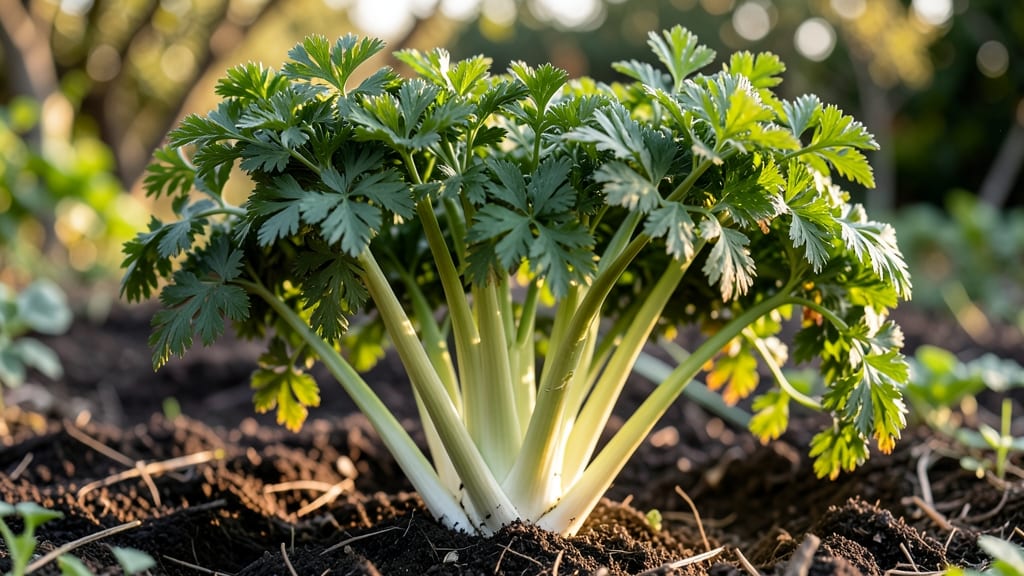
If you crave that celery-like crunch year-round, lovage might just be your new garden hero. 🌿 This perennial plant looks like celery’s taller, hardier cousin—with bold stems, feathery leaves, and a flavor that bridges celery, parsley, and anise.
Unlike annual celery, lovage thrives in the ground, regrowing every spring with minimal fuss. The top 3 celery look-alikes worth growing include lovage (the boldest), fennel (with a licorice twist), and carrot tops (edible greens with a milder taste).
All three demand similar care: full sun, moist but well-drained soil, and regular watering—just like celery. Spacing matters too: lovage needs 2–3 feet between plants, while fennel and carrot tops can crowd a bit closer.
You’ll harvest fresh leaves and stems for soups, salads, and teas—lovage’s flavor is so versatile it even works in baked goods. Fennel’s feathery fronds add ornamental flair to edible gardens, while carrot tops make a free, nutritious garnish.
Plant them together for a low-maintenance, crunchy harvest that outlasts store-bought celery. Perfect for beginner-friendly perennials or gardeners tired of celery’s fussiness. Once established, these plants reward you with cut-and-come-again harvests for years. Ready to grow your own? Let’s dive into the specifics!
Natural Growth Patterns Explained
If your garden is sprouting plants that resemble celery but aren’t the edible variety you planted, there’s usually a logical (and often fascinating) reason behind it. Understanding these causes can help you either embrace the unexpected greenery or take steps to redirect your garden’s focus.
Let’s break down the science behind why these celery-like plants might appear in your space.
Some plants naturally mimic celery’s appearance due to evolutionary adaptations.
These species belong to the Apiaceae family (like celery itself) and share similar growth habits, such as: - Long, hollow stems (e.g., wild parsnip or poison hemlock). - Fine, feathery foliage (e.g., lovage or giant hogweed). - Umbel-shaped flower clusters (a defining trait of the family).
Why it happens: These plants evolved to thrive in similar environments as celery—moist, well-drained soil with partial shade. Their celery-like structure helps them compete for sunlight and nutrients. If you’ve noticed these plants popping up unexpectedly, they might be volunteers from seeds dispersed by wind, wildlife, or even your compost pile.
Actionable tip: 🌱 If you’re okay with the look, let them grow! Many are edible (like lovage) or attract pollinators. If not, pull them early before they seed.
Not all celery-like plants are in the Apiaceae family, but some convergent evolution cases create similar appearances. For example:
- Grasses with slender stems (e.g., ornamental grasses like Miscanthus).
- Fern-like foliage (e.g., Osmunda cinnamomea, the cinnamon fern).
- Bamboo shoots (young growth can resemble celery stalks).
Why it happens: Plants from different families often develop parallel structures to adapt to similar growing conditions (e.g., wet, shaded areas). Their stems might look fibrous or segmented, mimicking celery’s texture. This is nature’s way of optimizing survival—no two plants need to invent the same solution twice!
Actionable tip: 🔍 Identify the plant by its roots, flowers, or growth pattern. If it’s a grass or fern, it’s not edible but can add texture to your garden.
If you’ve planted celery or other Apiaceae family members (like dill or fennel), their seeds might have cross-contaminated with wild varieties. Even organic seeds can harbor unwanted guests!
Why it happens:
- Wind or animal dispersal: Seeds from neighboring plants (or your compost) can blow in or hitch a ride.
- Shared soil or tools: Reusing pots, soil, or gardening tools can transfer seeds.
- Store-bought seeds: Some seed packets contain fillers or weed seeds as contaminants.
Actionable tip: 💡 Prevent future issues by:
- Sourcing seeds from reputable suppliers (e.g., Baker Creek or Johnny’s Selected Seeds).
- Sanitizing tools with a 10% bleach solution between uses.
- Testing soil for hidden seeds by letting a patch sit uncovered for a few weeks.
Sometimes, stressed plants (like your celery or other greens) develop elongated, thin stems that resemble wild celery-like growth.
Common stressors include: - Overcrowding: Plants stretch toward light, creating leggy, celery-like stalks. - Nutrient deficiencies: Lack of nitrogen or potassium can cause weak, elongated growth. - Water fluctuations: Too much or too little water triggers bolting (rapid stem elongation).
Why it happens: When plants sense competition or poor conditions, they prioritize survival over optimal growth. This can lead to etoliation (a condition where stems grow tall and thin to reach light), making them look like wild celery.
Actionable tip: 🌡️ Fix the issue by:
- Thinning plants to reduce competition.
- Amending soil with compost or a balanced fertilizer (e.g., 10-10-10).
- Watering consistently to avoid stress signals.
Some celery-like plants are perennial weeds that return year after year. Examples include:
- Wild celery (Apium graveolens var. dulce).
- Water hemlock (Cicuta spp.)—toxic, so identify carefully!
- Cow parsley (Anthriscus sylvestris).
Why it happens: These plants have deep root systems and self-seeding habits, allowing them to persist even if you pull them. Their resilience makes them hard to eradicate without persistent effort.
Actionable tip: ✨ Remove them completely by:
- Digging up roots (even small fragments can regrow).
- Mulching heavily to block sunlight (smothering method).
- Planting competitive ground covers (like clover) to outcompete them.
Quick Fixes for Celery-Like Plant Woes
If your celery-like perennial isn’t thriving, don’t panic—most issues have simple, actionable solutions. Below, we’ll match common problems with step-by-step fixes, so you can revive your plant and keep it lush year-round. Prevention tips are included to avoid future headaches!
Cause: Too many plants competing for nutrients, sunlight, or water. Fix:
- 🔪 Snip or Pull Excess Stems – Use clean scissors or gloves to remove overcrowded shoots at the base. Aim to leave 3–4 inches of space between each remaining plant.
- 🌱 Replant Divided Sections – If your plant is root-bound, dig it up, separate the roots gently, and replant the healthiest sections in fresh soil.
- 💡 Pro Tip: Thin in early spring before new growth spikes. Avoid doing this in extreme heat—plants stress easily!
Prevention:
- 📏 Space seeds/saplings 12–18 inches apart when planting.
- ✂️ Prune regularly to encourage airflow and reduce disease risk.
Cause: Soggy soil leads to root rot, yellowing leaves, or stunted growth. Fix:
- 🏗️ Improve Drainage – Amend heavy clay soil with compost or perlite (mix 1 part organic matter to 2 parts soil).
- 🚰 Adjust Watering – Water deeply 1–2 times per week (check soil moisture 2 inches down—it should be damp, not soaked).
- 🌡️ Raise Beds (If Needed) – For containers, ensure pots have drainage holes and elevate them slightly.
Prevention:
- 🌧️ Use mulch (straw or wood chips) to retain moisture without suffocating roots.
- 🚫 Avoid watering at night—wet foliage invites fungal issues.
Cause: Insufficient sunlight causes weak stems and poor flavor. Fix:
- 🔄 Relocate the Plant – Move it to a sunnier spot (6+ hours of direct light daily). Partial shade is fine, but avoid deep shade.
- 🌿 Prune Lower Leaves – Trim yellow or leggy leaves to redirect energy to new growth.
- 💡 Pro Tip: If indoors, place near a south-facing window or use a grow light (12–14 hours/day).
Prevention:
- 📅 Monitor growth—if stems stretch toward light, it’s time to adjust placement.
- 🌱 Rotate pots occasionally for even light exposure.
Cause: Aphids, slugs, or spider mites sap energy from your plant. Fix:
- 🦋 Blast Off Pests –
- Aphids/Spider Mites: Spray with soapy water (1 tsp mild soap + 1 quart water) or neem oil (1 tbsp oil + 1 quart water + drop of dish soap).
- Slugs/Snails: Set up beer traps (bury a shallow dish filled with beer) or use copper tape around pots.
- 🌿 Encourage Beneficial Bugs – Plant marigolds or dill nearby to attract ladybugs (natural predators).
- 🔥 Isolate Infested Plants – Move them away from healthy ones until pests are gone.
Prevention:
- 🌙 Check plants at dusk—slugs are most active then.
- 🌿 Keep garden beds weed-free—weeds harbor pests.
Cause: Frost or scorching heat can shock your plant. Fix: 1. 🧊 Shield from Frost – - Cover with frost cloth or a lightweight blanket if temps drop below 25°F. - ⏰ Remove covers by mid-morning to avoid overheating.
- 🔥 Beat the Heat – - 💦 Water deeply in the morning to cool roots. - 🌿 Provide shade cloth (30–50% coverage) if temps exceed 90°F.
- 🌱 Choose the Right Variety – Some celery-like perennials (e.g., lovage or celery root) tolerate cooler climates better.
Prevention:
- 📅 Plant in spring or fall to avoid peak summer heat.
- 🌿 Group plants together for shared microclimate protection.
Cause: Poor soil or over-harvesting depletes essential minerals. Fix: 1. 🍽️ Test Your Soil – Use a DIY soil test kit (or send a sample to a local extension office).
Amend based on results: - Low nitrogen? Add compost or fish emulsion. - Low potassium? Use wood ash or banana peels (composted). 2. 💡 Pro Tip: Side-dress with fertilizer in early spring—sprinkle granules near roots and water lightly. 3. 🌱 Avoid Over-Fertilizing – Too much salt burns roots.
Stick to balanced 10-10-10 or organic options.
Prevention:
- 🌱 Rotate crops if growing in the same spot yearly.
- 🍃 Harvest selectively—don’t take more than 1/3 of the plant at once.
Cause: Some celery-like perennials (like celery root or lovage) grow slowly in their first year. Fix:
- 🌱 Be Patient – Focus on root development in Year 1. Harvest sparingly.
- 💡 Pro Tip: Cut back dead leaves in late winter to encourage new shoots.
- 🌿 Boost with Worm Castings – Mix 1 cup per plant into soil for a gentle nutrient boost.
Prevention:
- 📅 Start from seeds (not transplants) for stronger roots.
- 🌱 Choose fast-growing varieties like celery root if you need quicker harvests.
If your plant is beyond saving (e.g., severe root rot, irreversible pest damage), don’t hesitate to: 1. 🌱 Propagate Healthy Cuttings – Snip a 4-inch stem, remove lower leaves, and root it in water or moist soil.
- 🛒 Buy a New Plant – Sometimes, starting fresh is the best solution!
Final Thought: Most celery-like perennials are hardy and forgiving—with a little TLC, they’ll bounce back stronger. 🌟 Track your fixes in a garden journal to spot patterns and refine your approach next season!
Frequently asked questions
What’s the easiest celery-like plant to grow for beginners?
Start with lovage—it’s the hardiest and most forgiving! This perennial thrives in partial sun and moist soil, and its bold flavor works in soups, stews, or as a parsley substitute. Unlike annual celery, lovage regrows every year with minimal care, making it perfect for first-time gardeners.
Can I eat plants that look like celery but aren’t labeled edible?
Not all celery-like plants are safe! Wild celery (like Apium graveolens var. dulce) is edible, but poison hemlock or water hemlock are deadly. Always check for umbel-shaped flowers (a giveaway for the Apiaceae family) and avoid plants with milky sap or toxic roots. When in doubt, consult a field guide or local extension office.
How do I tell the difference between lovage and fennel?
Lovage has broader, more rugged leaves with a flavor blending celery, parsley, and anise, while fennel boasts delicate, feathery fronds with a stronger licorice kick. Fennel’s stems are also thinner and more segmented, while lovage’s are thicker and hollow. Both grow tall (3–6 feet), but lovage’s leaves stay lush longer.
Will celery-like plants grow in containers?
Lovage, fennel, and even dwarf celery varieties thrive in 5-gallon pots with well-draining soil and regular watering. Use a balanced fertilizer (like 10-10-10) every 4–6 weeks and place containers in full sun to partial shade. Just ensure pots have drainage holes to prevent root rot.
Can I freeze celery-like plants for later use?
Yes! Chop leaves and stems into 1-inch pieces, blanch in boiling water for 2 minutes, then shock in ice water. Drain, dry, and store in airtight containers or freezer bags for up to 8 months. For lovage or fennel, freezing preserves their flavor perfectly—just thaw and use in cooked dishes (avoid raw use after freezing).