
Planting
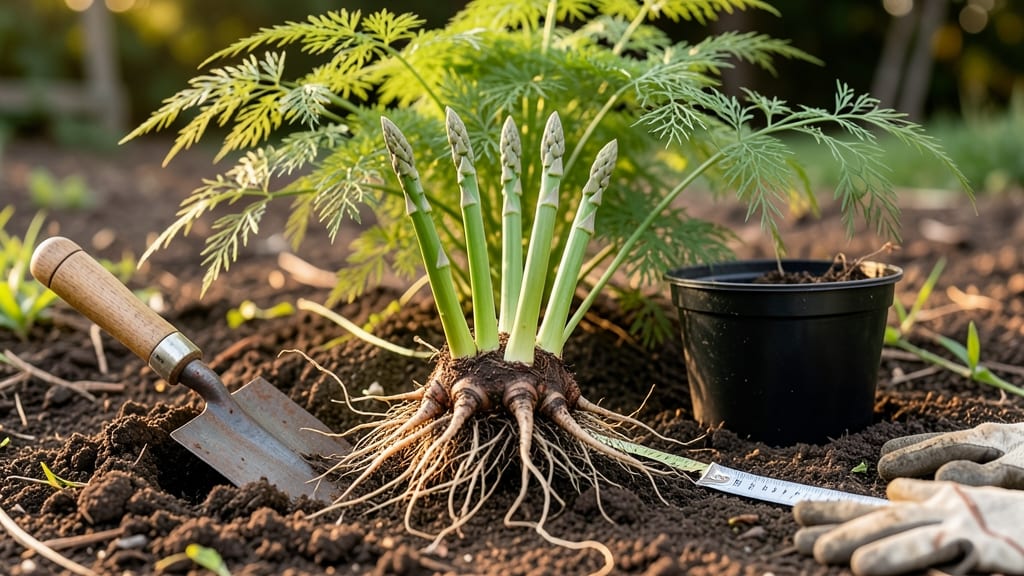
Planting asparagus crowns too close will turn your patiently awaited harvest into a tangled mess of thin spears fighting for sunlight—so spacing matters more than you might think.
If you’ve ever dug into your asparagus bed only to find spears so thin they snap like dry twigs, you know the frustration. The secret isn’t just about planting deeper or richer soil—it’s about giving each crown enough elbow room to thrive.
Too tight, and you’re left with a crowded, underperforming patch. Too wide, and you waste precious garden space.
For year-round success, asparagus crowns need 12–18 inches apart in rows spaced 3–5 feet apart. This spacing prevents disease, maximizes airflow, and ensures those prized spears grow thick and straight.
Whether you’re working with sandy soil or heavy clay, the right distance makes all the difference in your harvest’s quality and quantity.
In this guide, I’ll walk you through the exact spacing rules for different varieties, how to fix overcrowded beds, and pro tips to stretch your asparagus patch without sacrificing yield. Ready to grow like a pro?
Optimal asparagus crown spacing by variety and soil type
Getting the asparagus crown spacing right is the secret to a bountiful harvest for years. Most gardeners aim for 12–18 inches apart between crowns, but the exact distance depends on your variety and soil type.
Compact varieties like Mary Washington can handle closer spacing, while larger types like Jersey Knight need more room to thrive.
Soil also plays a critical role—sandy soil drains quickly, allowing roots to spread faster, while clay soil can restrict growth if not amended. Row spacing of 3–5 feet further prevents disease and ensures each plant gets enough sunlight. Let’s break down the best spacing for your specific conditions.
| Variety | Crown Spacing (inches) | Row Spacing (feet) | Soil Type Adjustments |
|---|---|---|---|
| Mary Washington | 12–15 inches | 3–4 feet | Compact roots; ideal for loamy soil. |
| Jersey Knight | 15–18 inches | 4–5 feet | Larger crowns; amend clay soil with compost. |
| Purple Passion | 12–16 inches | 3–4 feet | Tolerates sandy soil; space closer in fertile beds. |
| Pacific 2000 | 14–17 inches | 4 feet | Disease-resistant; wider spacing in wet climates. |
For sandy soil, you can space crowns slightly closer (e.g., 12 inches apart) because the roots spread quickly in search of moisture. However, in heavy clay soil, increase spacing to 18 inches apart to prevent root competition and improve drainage.
Always amend clay soil with organic matter like compost or aged manure before planting.
Row spacing is just as important as crown spacing. A 3-foot row spacing works for compact varieties in loamy soil, but 5-foot rows are better for larger varieties or sandy soils. Wider rows reduce fungal diseases like asparagus rust by improving airflow and sunlight penetration.
If you’re planting in raised beds, you can reduce crown spacing to 10–12 inches because the controlled environment limits root spread. Just ensure the bed is at least 12 inches deep to accommodate the crowns’ vertical growth. Shallow beds restrict root development, leading to weaker spears.
One common mistake is planting asparagus too close to trees or shrubs, which compete for nutrients and water. Keep asparagus beds at least 5 feet away from other perennials to avoid stunted growth.
Over time, the crowns will spread, so plan for 2–3 feet of extra space around the perimeter of your bed.
After planting, mulch the bed with 2–3 inches of straw or wood chips to retain moisture and suppress weeds. This also helps regulate soil temperature, which is crucial for spear production in the first few years. Avoid piling mulch directly against the crowns to prevent rot.
Proper spacing isn’t just about yield—it’s about long-term plant health. Crowded asparagus plants produce thinner, woody spears and are more susceptible to pests like asparagus beetles. By following these guidelines, you’ll set your asparagus bed up for decades of harvests with minimal maintenance.
For container growing, space crowns 12 inches apart in large pots (at least 12 inches deep) and use a well-draining potting mix. Containers dry out faster, so monitor soil moisture closely during the first growing season.
Common mistakes that stunt asparagus growth (and how to fix them)
Even with the right asparagus crowns and fertile soil, poor spacing can sabotage your harvest before it starts. Overcrowding forces plants to compete for nutrients, leading to thin spears and stunted growth.
The worst part? These mistakes often go unnoticed until year two or three, when your perennial crop should be thriving.
I’ve seen gardeners plant asparagus too close because they assume it’s like other vegetables—pack them in and hope for the best. But asparagus crowns need room to spread their fibrous roots and develop strong spears. Let’s fix this before your next planting season.
⚠️ callout warning
How Close to Plant Asparagus?
Mistake: Planting crowns closer than 12 inches (common in small gardens). This causes overcrowding, leading to weak spears and fungal diseases. Fix: Space crowns 12–18 inches apart in rows 3–5 feet apart for optimal airflow and root growth.
Pro Tip: For dwarf varieties, reduce spacing to 10–12 inches but never less. Use a measuring tape to ensure consistency—eyeballing rarely works!
One of the biggest red flags is poor drainage caused by planting too densely. When asparagus crowns sit too close, water pools between them, creating the perfect conditions for root rot. I’ve had to dig up entire beds because the soil stayed soggy for weeks after rain.
The fix? Amend your soil with compost and consider raised beds if your yard has heavy clay.
Another silent killer is planting crowns too shallow (less than 6 inches deep). This exposes the crown to temperature swings and makes it easier for weeds to choke the young plants.
Dig a trench 8–12 inches deep, spread the roots, and cover them with loamy soil. The extra depth gives roots room to establish before spears emerge.
If you’ve already planted too close, don’t panic. You can prune overgrown crowns in early spring by cutting back any thick, woody stalks that emerge. This encourages new, healthier growth.
For future plantings, mark your rows with stakes or flags to maintain proper spacing. Trust me, your future self will thank you when harvest time rolls around.
Remember, asparagus is a long-term investment. The first year is all about root development, and the second year yields will be modest. But by year three, proper spacing means bountiful spears for decades. Start with the right distance now, and you’ll avoid the heartbreak of stunted growth later.