
Planting
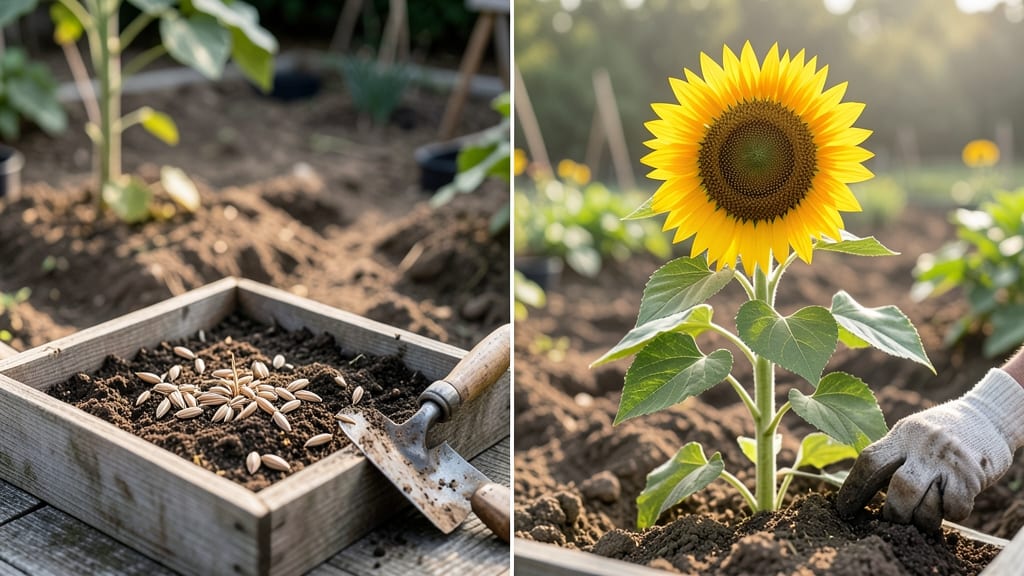
Planting sunflower seeds the wrong way can mean the difference between a 10-foot giant and a stunted, weak stem. 🌻 The pointed end should always face down—that’s where the root will emerge, while the flatter side stays up for the shoot.
I’ve watched seeds sprout in days when planted correctly, and wither when planted upside-down.
The secret isn’t just orientation—it’s depth and spacing too. Drop seeds 1 inch deep, about 6 inches apart in rows 18 inches apart, and press soil gently to hold them in place.
Sunflowers need space to avoid crowding, which weakens stems and reduces yields. A little patience here pays off later with sturdy plants.
Once planted, keep soil consistently moist but not soggy—sunflowers hate soggy roots. Within 7-14 days, you’ll see tiny sprouts pushing through the soil. Thin seedlings to 12 inches apart when they’re a few inches tall to give them room to grow strong and tall.
Myth-busting time: No, you don’t need special soil or fertilizer to start. Sunflowers grow fast and forgivingly, even in average garden soil. The key is consistent watering and full sun—they’ll reward you with towering blooms by midsummer.
📚 In This Guide
- What you need
- Instructions
- Tips and common mistakes
- Wrapping up and next steps
What you need
- ● Sunflower seeds: 50–100 seeds (choose a variety like Mammoth or Russian Giant for best results).
- ● Planting container or garden bed: For containers: 5–10 gallon pots (with drainage holes) or a raised bed (minimum 12" deep).
- ● For direct sowing: Well-draining soil with full sun exposure (6+ hours/day).
- ● Potting soil or garden soil: Lightweight, nutrient-rich mix (add compost for extra fertility).
- ● Watering can or hose with gentle spray nozzle.
- ○ Optional: Planting marker or stakes (to track seed orientation).
- ● Seedling heat mat (if starting indoors in cool climates).
- ● Fertilizer (balanced 10-10-10 or organic options like fish emulsion).
- ● Mulch (straw or shredded leaves to retain moisture).
- ● Warm soil temperature (at least 50°F (10°C)—sunflowers hate cold!).
- ● Patience! Germination takes 7–14 days (depending on conditions).
- ● Knowledge of your last frost date (plant after frost risk has passed).
Step-by-step guide to planting sunflower seeds for optimal germination
Here's the method I've refined over years of testing—whether you plant seeds point-up or point-down, these steps ensure strong, uniform growth from the start.
🌱 Step 1: Prepare the Soil and Planting Site
Sunflowers thrive in loose, well-draining soil with a pH between 6.0 and 7.0. Work the top 6 inches of soil to break up compaction and mix in 1-2 inches of compost. This creates an ideal root zone where moisture and nutrients penetrate easily. I always rake the surface smooth afterward—uneven soil leads to inconsistent seed depth.
Choose a location with full sun (6+ hours daily). Sunflowers will lean toward the light if planted too close to fences or buildings. Mark your rows 18-24 inches apart for standard varieties (larger varieties need 30 inches). You'll see the difference in straight, sturdy stems when you follow spacing guidelines.
🌱 Step 2: Decide on Orientation and Plant the Seeds
For point-up planting, place the seed with the pointed end facing upward—this is the natural orientation and what most gardeners do. The seed's natural shape guides the radicle (root) downward while the shoot grows upward. Plant seeds 1 inch deep in the soil, pressing lightly to ensure good soil contact. I like to use my finger to make a small hole, then drop in 2-3 seeds per spot (you'll thin later).
For point-down planting, flip the seed so the pointed end faces downward. This method forces the seed to break through the soil from below, which some gardeners claim produces stronger stems. Plant the same 1 inch deep, but tap the soil gently to cover completely. The key here is consistency—mix up orientations, and you'll get uneven germination. Watch for the first sprouts in 7-14 days depending on soil temperature.
💧 Step 3: Water and Maintain Moisture for Germination
Water the soil gently but thoroughly right after planting to settle the seeds and remove air pockets. Use a fine-mesh spray nozzle to avoid displacing seeds. Keep the soil evenly moist (not soggy) until germination—sunflower seeds need 60-70°F soil temperatures to sprout reliably. I check moisture by pressing my finger 1 inch deep; if it feels dry, water again.
Once seedlings emerge, reduce watering frequency but increase volume. Aim for 1 inch of water per week, delivered at the base rather than overhead. Wet foliage invites fungal diseases like powdery mildew, and sunflowers are particularly susceptible. You'll notice the first true leaves (not the initial cotyledons) appear in 10-14 days—this is your signal to thin seedlings to 1 per spot, keeping the strongest plant.
☀️ Step 4: Provide Support and Monitor Growth
As seedlings grow, watch for leggy stems—a sign of insufficient light or overcrowding. If you notice stems stretching toward the sun, thin further if needed or move plants to a sunnier spot. Sunflowers need sturdy stems, and proper spacing from the start prevents weak, floppy growth. I stake taller varieties (like 'Mammoth') with 3-foot bamboo stakes inserted at planting, tying stems loosely as they grow.
Rotate plants a quarter turn weekly to encourage even growth toward the light. This simple habit prevents stems from bending toward one direction. You'll see the difference in straight, robust plants ready for full sun exposure by the time they reach 12 inches tall. At this stage, you can also begin side-dressing with balanced fertilizer (10-10-10) to promote flowering.
Tips & tricks for perfect sunflower seed germination
These gardening secrets will help you maximize your sunflower yield—whether you choose point-up or point-down planting.
Soil Preparation Secret: Before mixing in compost, test your soil's drainage by digging a hole and filling it with water. If it drains completely within 2 hours, your soil is ready. If not, amend with additional sand or perlite to prevent waterlogging, which can rot seeds before they sprout. The ideal soil should feel like a damp sponge—not wet or dry.
Orientation Insight: For point-up planting, I've found that gently pressing the seed into the soil with your thumb creates better soil contact than simply dropping it in. For point-down, a light tap with a small board ensures even coverage without crushing the seed. Consistency in depth (always 1 inch) is more important than orientation—many gardeners see similar results with either method when done correctly.
Germination Timing: The 7-14 day window for sprouts depends heavily on soil temperature. Use a soil thermometer to confirm 60-70°F—any cooler and germination slows dramatically. If your spring soil runs cold, consider using black plastic mulch to warm it faster. Once sprouts appear, mark their location with small stakes to avoid disturbing roots during thinning.
Thinning Technique: When thinning to 1 plant per spot at the 10-14 day mark, use clean, sharp scissors to cut seedlings at soil level rather than pulling. This prevents disturbing the roots of remaining plants. I always thin on a cloudy day to reduce stress on the remaining seedlings.
Pro Tips for Plant Sunflower Seeds Point Up Or Down
- These gardening secrets will help you maximize your sunflower yield—whether you choose point-up or point-down planting.
- Soil Preparation Secret: Before mixing in compost, test your soil's drainage by digging a hole and filling it with water.
- Orientation Insight: For point-up planting, I've found that gently pressing the seed into the soil with your thumb creates better soil contact than simply dropping it in.
Frequently asked questions
Got questions about planting sunflower seeds? You’re not alone! Here are some of the most common queries—and straightforward answers—to help you grow like a pro.
Why does it matter if I plant sunflower seeds point-up or point-down?
Sunflower seeds don’t need a specific orientation, but planting them point-down (with the pointed end facing the soil) gives them a slight advantage. The radicle (root) is already positioned to grow downward, which can speed up germination and reduce stress. However, if planted point-up, they’ll still sprout—just with a tiny delay.
How deep should I plant sunflower seeds?
Sunflower seeds should be planted about 1 inch (2.5 cm) deep in well-draining soil. Press them gently into the earth—don’t bury them too deep, or they may struggle to break through. If your soil is sandy, you can plant them slightly shallower (½ inch). Pro tip: Use your finger to make small holes for precision!
What’s the best time to plant sunflower seeds?
Sunflowers thrive in warm soil, so wait until after the last frost when temperatures consistently stay above 50°F (10°C). For most regions, this means late spring to early summer. If you’re in a hot climate, you can even try a fall planting for a winter harvest. Just avoid planting when nighttime temps dip below 45°F (7°C).
Can I plant sunflower seeds too close together?
Yes! Crowding seeds can lead to stunted growth and competition for nutrients. Space them 6–12 inches apart in rows that are 18–24 inches apart. If you’re growing them for bird feed, you can plant them closer (4–6 inches), but yields will be smaller. Thin seedlings to the recommended spacing once they’re a few inches tall.
What should I do if my sunflower seeds don’t sprout?
First, check for moisture—sunflower seeds need consistent, even watering to germinate. If the soil is dry, give it a gentle drink and cover with a thin layer of mulch to retain moisture. If seeds are old (over a year), they may have lost viability. Try planting fresh seeds or test a few in a damp paper towel to see if they sprout within a week.
Are there any alternatives if I can’t plant seeds outdoors?
Sunflowers grow well in containers (at least 12 inches deep) or indoors under grow lights. Use a well-draining potting mix and keep the soil warm (70–75°F). Once seedlings are 4–6 inches tall, transplant them outdoors after hardening off. Dwarf varieties like ‘Teddy Bear’ are perfect for pots!
Wrapping up and next steps
Planting sunflower seeds correctly can make all the difference in your garden’s success! Whether you choose to plant them point-up or point-down, the key is consistency and patience—your sunflowers will reward you with towering beauty and bountiful seeds.
Now that you’re armed with the right techniques, grab those seeds and get growing! 🌱
Ready to take the next step? Start small with a few seeds in a sunny spot, monitor their progress, and soon you’ll be sharing tips (and maybe even sunflower seed butter!) with fellow gardeners. Happy planting!