
Planting
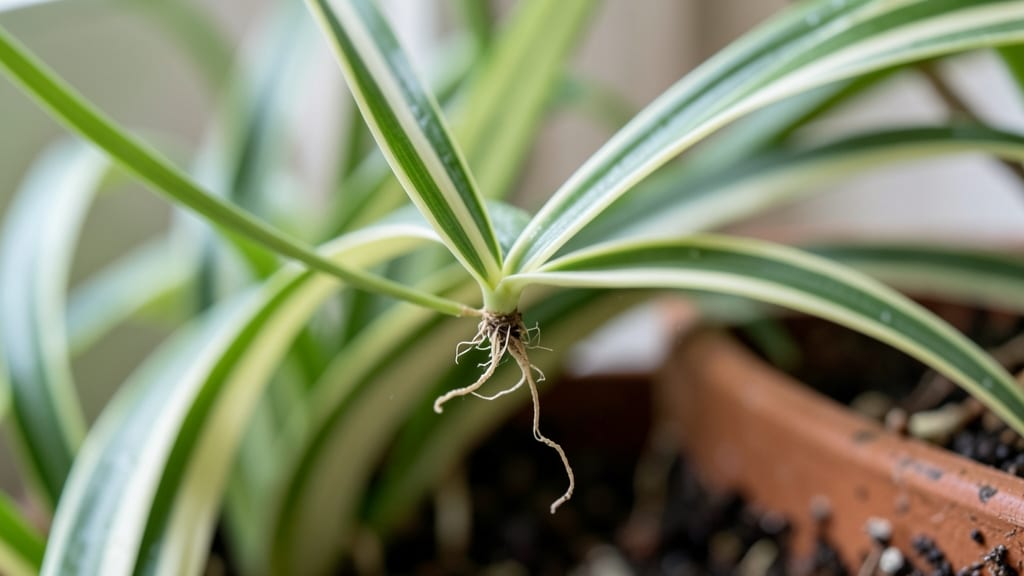
Other names for spider plant include Chlorophytum comosum, hunter’s robot, ribbon plant, or St. Bernard’s lilies, with its most common nickname—spider plant—derived from its spiderette-like offspring. Other regional names include airplane plant and spider ivy.
The spider plant's scientific name, Chlorophytum comosum, comes from its Greek roots—chloros for green and phyton for plant—highlighting its lush foliage. 🌱 The "hunter's robot" nickname stems from its ability to produce long, trailing stems that resemble robotic arms, while "St. Bernard's lilies" refers to its historical use in European monasteries.
Regional variations like "airplane plant" reflect its popularity as a low-maintenance office plant, often seen in airport lounges and corporate spaces. These names all celebrate the plant's adaptability and striking appearance.
The nickname "spider plant" originates from the tiny, spider-like offspring that dangle from its ends, a natural propagation method. This trait makes it a favorite among plant enthusiasts who appreciate its self-sustaining growth habits.
In some cultures, the plant is also called "spider ivy" due to its ivy-like leaves, though this can cause confusion with actual ivy species. Understanding these names helps gardeners identify and care for this resilient houseplant more effectively.
💡 In This Article
- Why Spider Plants Earned Their Nicknames
- How to Identify Spider Plants by Their Common Names
Why spider plants earned their nicknames
The scientific name Chlorophytum comosum reveals clues about its botanical identity. The genus Chlorophytum combines Greek roots—chloros (green) and phyton (plant)—highlighting its vibrant, chlorophyll-rich leaves. The species name comosum refers to its tufted, hair-like appearance during flowering, which resembles a 5-inch brush.
This botanical precision contrasts with its playful common names, which often stem from visual quirks rather than scientific classification.
The nickname "spider plant" originates from its distinctive propagation method. When mature, the plant produces long, arching stems called stolons, each ending with a cluster of 1-3-inch baby plants resembling tiny spiders dangling from silk threads.
These "spiderettes" are actually juvenile plants ready for repotting—a feature that captivates plant lovers. 🌿 In contrast, "hunter's robot" comes from its ability to extend these stolons like robotic arms, reaching 12-18 inches toward light sources, almost as if "hunting" for optimal growing conditions.
"Ribbon plant" describes the plant's long, 12-20-inch leaves that arch gracefully, resembling decorative ribbons. The name "St. Bernard's lilies" has historical roots—European monks in the 18th century cultivated spider plants in monasteries, particularly St. Bernard's abbey in Switzerland, where they were prized for their air-purifying qualities and resilience.
This nickname also reflects the plant's white, lily-like flowers that bloom sporadically on mature specimens.
Regional variations like "airplane plant" emerged from its popularity in modern offices and commercial spaces.
The plant's tolerance for low light conditions and infrequent watering made it ideal for airport lounges, corporate offices, and even NASA's clean air studies in the 1980s. Meanwhile, "spider ivy" confuses it with true ivy species due to its trailing growth habit, though spider plants have stiffer, sword-shaped leaves compared to ivy's lobed foliage.
Cultural significance adds another layer to these names. In Feng Shui, spider plants symbolize prosperity due to their prolific growth, while their air-purifying abilities (removing toxins like formaldehyde) earned them the nickname "nature's air purifier" in modern indoor gardening circles.
The plant's ability to thrive in 60-75°F temperatures and 40-60% humidity ranges further explains its global appeal across diverse climates.
What's fascinating is how these names reflect both scientific accuracy and creative interpretation. While Chlorophytum comosum provides the botanical foundation, nicknames like "spider plant" and "hunter's robot" celebrate the plant's dynamic growth patterns and adaptability—traits that make it a favorite among gardeners worldwide. 🌱