
Planting
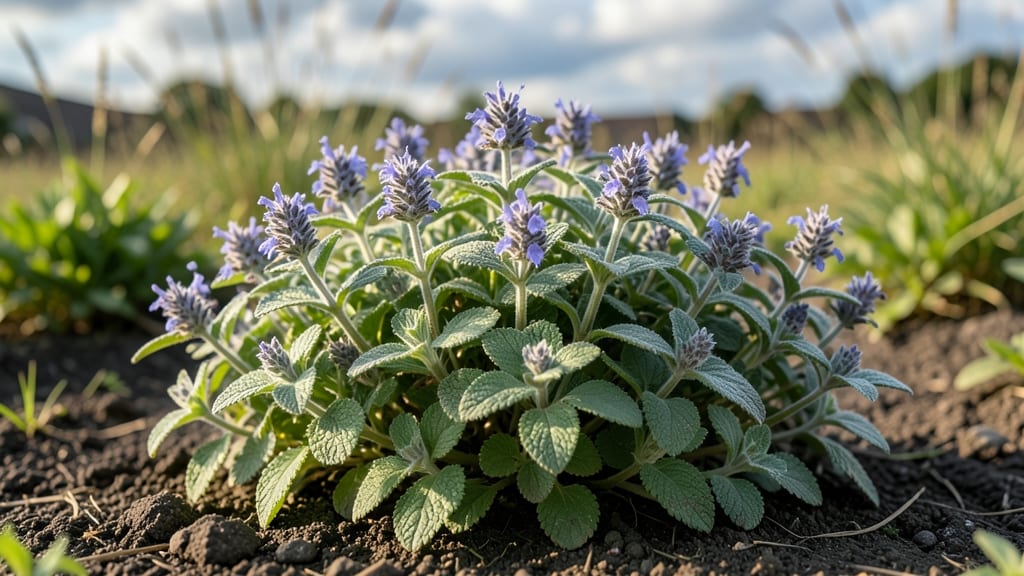
Growing the nepeta catnip plant transforms your garden into a fragrant haven for pollinators and pets alike. 🌿 This hardy perennial thrives with minimal fuss, offering silvery foliage and lavender-blue blooms that hummingbirds and bees adore—while cats may sniff but rarely roll in it (unlike its cousin, Nepeta cataria).
The key to success? Well-draining soil, bright light, and occasional deadheading to keep flowers coming.
This plant is a drought-tolerant workhorse that spreads gently over time, making it perfect for borders or rock gardens. Start with seeds in early spring or divide established clumps in fall.
Just avoid heavy clay soil—its roots despise soggy feet. Within a season, you’ll have a low-maintenance plant that rewards you with fragrance and color without the fuss.
What makes nepeta catnip special is its dual appeal: it’s a pollinator magnet while staying pet-friendly (cats mostly ignore it). The foliage releases a citrusy scent when brushed, adding another sensory layer to your garden. Plus, it’s deer-resistant—a rare win for suburban gardeners.
For best results, pair it with other pollinator favorites like lavender or coneflowers. If you’ve struggled with finicky perennials before, this one’s your foolproof fix. Let’s get those seeds in the ground!
📚 In This Guide
- What you need
- Instructions
- Tips and common mistakes
- Wrapping up and next steps
What you need
- ● Nepeta seeds or plant: Seeds: 10–20 seeds (for a small patch) or 50+ for a full garden bed
- ● OR A 4–6" potted Nepeta plant from a nursery
- ● Well-draining potting mix or garden soil: 1–2 bags (5–10 cubic feet) of light, sandy loam (amend with perlite or compost if heavy clay)
- ● Containers (if starting indoors): 4–6" pots (1–2 per seedling) with drainage holes
- ● Watering can or hose with a gentle spray nozzle
- ○ Fertilizer (optional but helpful): Balanced 10-10-10 or 5-10-10 granular fertilizer (1–2 tbsp per plant at planting)
- ○ Gloves (optional but recommended) – Nepeta can be scratchy!
- ● Trowel or small shovel for transplanting
- ● Pruners or clean scissors (for harvesting or propagation)
- ● Sunlight access: 6+ hours of full sun per day (partial shade in hot climates)
- ● Climate suitability: Hardiness zones 3–9 (check your USDA zone!)
- ● Mulch (straw or shredded bark) – Helps retain moisture and suppress weeds
- ● Plant markers – Label your Nepeta to avoid confusion with other herbs!
- ● Catnip toy or scratch pad – For happy feline visitors 😺
- ● Slow-release fertilizer tabs – Reduces maintenance
Step-by-Step guide to growing Nepeta catnip plants
Here's how to cultivate this fragrant, low-maintenance perennial that thrives in gardens and delights both pollinators and pets.
🌱 Step 1: Select and Prepare the Planting Site
Nepeta catnip thrives in full sun to partial shade, with at least 6 hours of direct sunlight daily. Choose a location with well-draining soil—this plant despises soggy roots. If your soil is heavy clay, amend it with 2-3 inches of compost mixed into the top 6 inches of soil before planting.
Loosen the soil to a depth of 12 inches to encourage root penetration. You'll see the difference immediately when planting: roots spread easily in loose soil, while compacted soil restricts growth. For containers, use a fast-draining potting mix blended with 30% perlite or sand to prevent waterlogging.
🌿 Step 2: Plant Nepeta Catnip Correctly
Space plants 12-18 inches apart for full, bushy growth. Dig holes just deep enough to accommodate the root ball without burying the crown too deeply—this is a common mistake that leads to rot. Gently tease the roots outward if they're circling tightly in the container.
Water deeply at planting to settle the soil and remove any air pockets. You'll know it's right when the soil surface looks slightly firm but not compacted. Mulch around the base with 1-2 inches of organic mulch (like shredded bark) to retain moisture and suppress weeds. Keep the mulch 2 inches away from the plant stem to prevent rot.
☀️ Step 3: Provide Consistent Care After Planting
Water newly planted catnip 1-2 times per week until established, ensuring the soil stays evenly moist but not soggy. Once rooted, reduce watering to once per week or when the top 2 inches of soil feel dry. Overwatering is the fastest way to kill this hardy perennial—it's far more forgiving of drought than excess moisture.
Fertilize lightly in early spring with a balanced, slow-release fertilizer (10-10-10) applied at half-strength. You'll see new growth within 2-3 weeks—this is your signal that the plant is thriving. Avoid high-nitrogen fertilizers, which promote leafy growth at the expense of those fragrant flowers that attract pollinators.
✂️ Step 4: Prune and Maintain for Long-Term Health
Deadhead spent flowers in late spring to encourage a second flush of blooms in early fall. Pinch back leggy stems by one-third after the first bloom cycle to promote bushier growth. The best time to prune is right after flowering, when the plant has stored enough energy for new growth.
In early spring, cut back the previous year's growth by half to make room for fresh, vigorous shoots. This rejuvenation pruning prevents the plant from becoming woody and leggy over time. You'll notice the new growth is more compact and fragrant within 4-6 weeks of pruning.
🐱 Step 5: Enjoy the Benefits and Monitor for Pests
Nepeta catnip is naturally resistant to most pests, but watch for aphids or spider mites on new growth. A strong spray of water usually dislodges them—this plant's resilience makes it low-maintenance once established. The fragrant foliage will attract cats, so plant it where they can safely enjoy it without disturbing garden beds.
Divide mature plants every 3-4 years in early spring to maintain vigor. Dig up the clump, separate into smaller sections with roots intact, and replant immediately. You'll end up with multiple healthy plants ready to fill new spaces in your garden.
Tips & tricks for perfect Nepeta catnip growth
A few simple adjustments can transform your catnip from struggling to showstopping. These tricks ensure your fragrant perennial thrives with minimal fuss.
Sunlight Strategy: That 6-hour daily sunlight minimum is non-negotiable, but here's the secret: morning sun is more valuable than afternoon. Position your catnip to catch those first rays—this prevents afternoon wilting while still giving it the full sun exposure it craves. If you're in a partial shade area, prioritize the sunniest spot in your yard, even if it means moving it later in the season.
Soil Science: The 12-inch soil loosening in Step 1 isn't just about roots—it's about creating an oxygen-rich environment. Use a garden fork to break up compacted layers, especially if you have clay soil. For containers, that 30% perlite blend is crucial: too much sand can dry out roots too quickly, while too much perlite creates air pockets that prevent moisture retention. Aim for a 60/30/10 mix of potting soil/perlite/sand for ideal drainage.
Watering Wisdom: The 1-2 times per week guideline works for most climates, but here's how to fine-tune: stick your finger 2 inches deep into the soil. If it feels dry at that depth, water thoroughly until you see moisture emerge from the drainage holes. The key is consistency—catnip hates moisture fluctuations. In containers, you'll need to water more frequently, sometimes daily in hot weather, because potting mixes dry out faster than garden soil.
Pruning Precision: When you're deadheading in late spring or doing that early spring rejuvenation cut, aim for clean angles just above leaf nodes. This encourages bushier growth and prevents disease entry points. For the one-third pinch-back after blooming, focus on the longest stems first—they're the ones competing with your plant's center for energy. You'll know you're doing it right when you see multiple side shoots forming within 2-3 weeks.
Pro Tips for Nepeta Catnip Plant
- A few simple adjustments can transform your catnip from struggling to showstopping.
- Sunlight Strategy: That 6-hour daily sunlight minimum is non-negotiable, but here's the secret: morning sun is more valuable than afternoon.
- Soil Science: The 12-inch soil loosening in Step 1 isn't just about roots—it's about creating an oxygen-rich environment.
Frequently asked questions
Is nepeta catnip safe for cats?
Yes! Nepeta catnip is completely safe for cats in moderation. It contains nepetalactone, a compound that triggers playful behavior (rolling, rubbing, chirping). Avoid commercial catnip sprays with additives, and monitor your feline for overstimulation—some cats get too hyper!
How long does it take for nepeta catnip to grow?
From seed, expect Nepeta to sprout in 10–24 days and reach maturity (ready for harvesting) in 60–90 days. Established plants thrive for years, blooming annually in spring/summer. Pro tip: Pinch back flowers to encourage bushier, catnip-rich growth!
Will nepeta catnip attract bees and butterflies?
This fragrant perennial is a pollinator magnet. Its lavender blooms lure bees, butterflies, and hummingbirds—making it a must-have for eco-friendly gardens. Just ensure it’s planted in full sun (6+ hours/day) for maximum appeal.
Can I use regular catnip instead of nepeta?
While both contain nepetalactone, Nepeta catnip is hardier, perennial, and safer for gardens (no invasive spread like commercial catnip). For cats, dried leaves from either work, but Nepeta’s scent is often preferred by felines. Try freezing fresh leaves for a longer-lasting treat!
Why isn’t my cat interested in nepeta?
Not all cats respond to catnip—about 30–50% are genetically immune! If your feline ignores it, try:
- Fresh leaves (dried can lose potency).
- Rubbing the plant on toys or scratching posts.
- Alternative herbs like silver vine or valerian.
Wrapping up and next steps
Growing nepeta catnip is a rewarding way to attract pollinators, delight your feline friends, and add a fragrant touch to your garden! 🌿 Whether you're a seasoned gardener or just starting, this hardy perennial is easy to cultivate and offers year-round benefits.
Now that you’re equipped with the know-how, why not plant a few patches this season?
Ready to take the next step? Explore our guide on companion plants or visit your local nursery to pick out varieties that thrive in your climate. Happy gardening! 🌱