
Planting
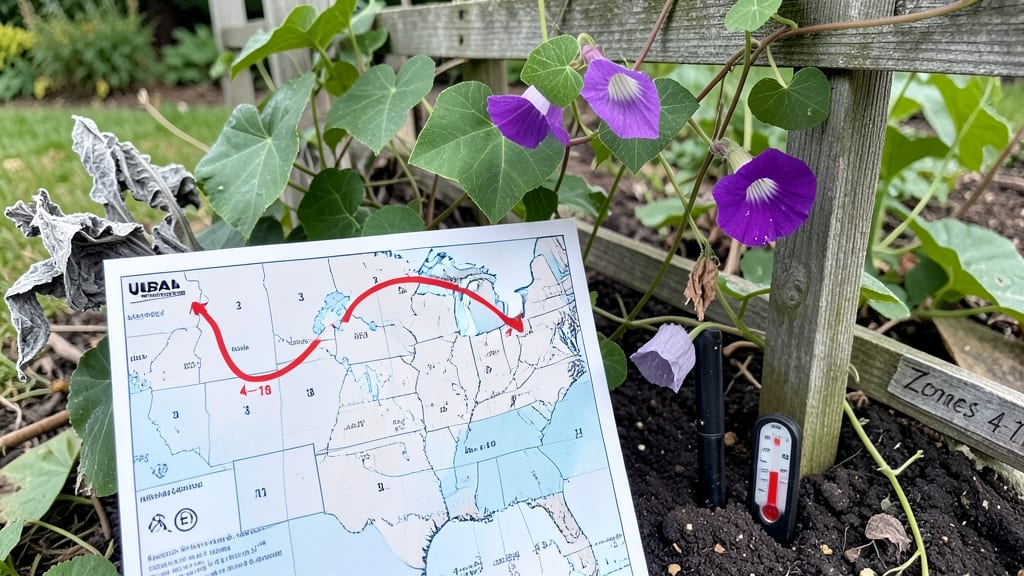
Morning glory hardiness zones span USDA zones 3 through 11, where it survives winter temperatures down to 10°F (-12°C) in dormant states—but only as an annual in colder regions. For extended resilience in marginal zones, opt for cold-tolerant varieties like Ipomoea purpurea.
Morning glory's frost tolerance comes from its ability to die back to the ground in winter while preserving its root system. 🌱 In zones 3-5, where hard freezes are common, the roots can regenerate new growth as soon as soil temperatures rise above 50°F (10°C) in spring.
This makes morning glory a reliable annual even in colder climates, though it won't overwinter like perennials. The key difference between varieties is their ability to handle early/late frosts—Ipomoea purpurea often outperforms common blue morning glory (Ipomoea nil) in these conditions.
For gardeners in zones 3-4, the best strategy is to plant seeds directly after the last frost date when soil is warm (60°F/15°C), which gives vines a head start before summer heat.
Adding 2-3 inches of mulch around the base helps insulate roots during late-season frosts, while choosing faster-maturing varieties (like 'Heavenly Blue') ensures blooms before the first hard freeze. The trade-off? These cold-hardy types may produce slightly smaller flowers than tropical varieties.
💡 In This Article
- How Morning Glory Survives Cold Temperatures
- Best Morning Glory Varieties for Cold Climates
How morning glory survives cold temperatures
Morning glory's cold survival strategy relies on its geophytic growth habit—storing energy in its roots while sacrificing above-ground foliage during frost.
When temperatures drop below 32°F (0°C), the leaves and vines wilt and turn brown, but the root system remains dormant yet alive, protected by a natural antifreeze-like compound called proline that prevents cellular damage.
This protein accumulates in the roots during fall, acting like a biological antifreeze to maintain membrane integrity even at 10°F (-12°C).
The regrowth trigger happens when soil temperatures consistently stay above 50°F (10°C) for 3-5 days in spring. At this point, the roots begin synthesizing new shoots, with growth rates accelerating at 60°F (15°C)—the ideal temperature for seedling emergence.
This explains why morning glory thrives in zones 3-11: the roots can endure winter's harshest cold, while the aboveground parts regenerate when conditions become favorable. 🌱 The difference between varieties like Ipomoea nil (common blue morning glory) and Ipomoea purpurea (tropical morning glory) lies in their root depth and proline production—purpurea develops deeper roots that access warmer soil layers, giving it an edge in marginal zones.
What most gardeners overlook is how soil moisture affects frost tolerance. Well-drained soil with 2-3 inches of organic mulch prevents root desiccation during winter, while soggy conditions can trigger rot.
In zones 3-5, where ground freezes are common, morning glory's survival depends on this balance—roots need moisture to stay active but not so much that they suffocate. This is why planting in raised beds or slightly elevated areas can extend blooming by 2-3 weeks compared to flat-ground plantings.
Another critical factor is vernalization—the plant's need for a cold period to trigger flowering. Morning glory seeds germinate best at 70-80°F (21-27°C), but the resulting vines won't bloom until they've experienced 4-6 weeks of temperatures below 50°F (10°C).
This explains why late-summer plantings in warm zones may produce fewer flowers: the plant skips its cold requirement. In colder zones, this mechanism ensures blooms align with late spring/early summer when pollinators are most active.
For visual comparison, imagine two morning glory plants side by side: one with 6-inch-deep roots (Ipomoea nil) and another with 12-inch roots (Ipomoea purpurea). The deeper-rooted variety can access soil 10°F warmer during winter, explaining why it often survives 2-3°F colder minimum temperatures.
This root-depth advantage is why purpurea varieties dominate in zones 3-4, where shallow-rooted plants might fail entirely.
The trade-off? Deeper roots mean slower initial growth in spring. Gardeners in zones 5-7 often see Ipomoea nil outpace purpurea by 3-4 weeks in early-season blooms, but the tropical varieties compensate with longer vines and more frost-resistant foliage.
The choice comes down to whether you prioritize early color (nil) or extended resilience (purpurea).