
Planting
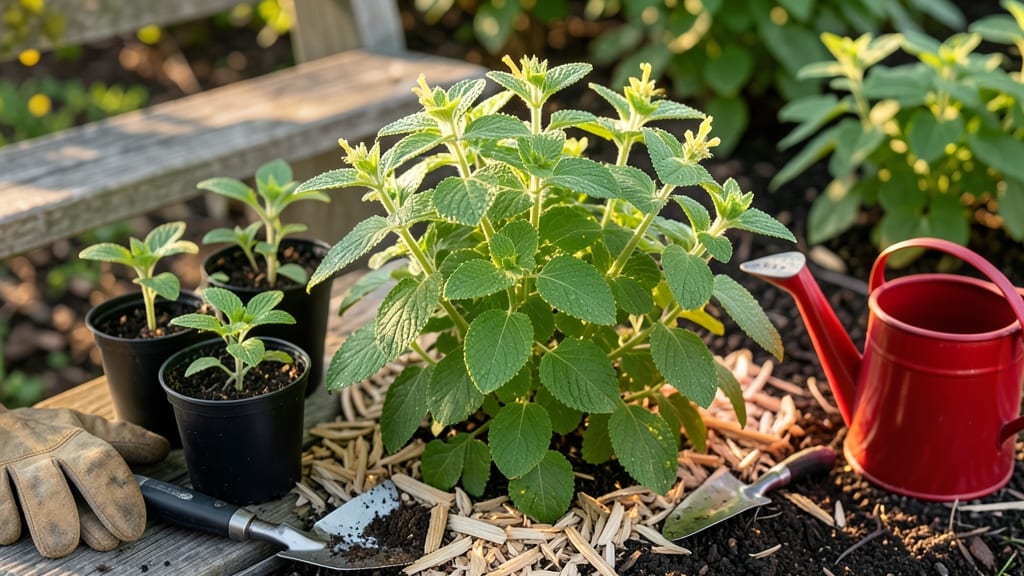
A lemon balm planting guide means instant fragrance and pollinators in your garden. 🌿 The secret to thriving lemon balm starts with well-draining soil and a sunny spot—this hardy perennial spreads fast once it gets settled.
I’ve grown it for years, and the key is giving it room to roam (or contain it if you prefer neat borders). You’ll need 3-4 hours of sunlight daily and moist but not soggy soil.
Lemon balm grows from seeds or cuttings, but cuttings root faster—just stick a stem in water for a week, and you’re ready to plant. Spacing matters: 18-24 inches apart for in-ground planting or a 5-gallon container for patio growing. Water lightly after planting to help roots establish without drowning them.
By midsummer, you’ll have lush, lemon-scented foliage that bees adore. The plant self-seeds easily, so you’ll likely get more than you bargained for unless you contain it. Pinch back flowers to encourage leaf growth, and harvest regularly to keep it bushy and productive.
Common mistakes? Overcrowding and neglecting to control its spread. Lemon balm thrives in zones 3-9, making it one of the most forgiving perennials for beginners. With the right setup, you’ll enjoy fresh leaves for tea, pest-repelling foliage, and a garden that smells like sunshine.
📚 In This Guide
- What you need
- Instructions
- Tips and common mistakes
- Wrapping up and next steps
What you need
- ● Lemon balm seeds or nursery plants: Seeds: 1–2 packets (500–1,000 seeds per packet) for a small patch, or 3+ packets for larger planting.
- ● OR 3–6 healthy nursery starts (potted plants, 4"–6" pots).
- ● Well-draining soil: 1–2 bags of garden soil or compost mix (50 lbs each, depending on bed size).
- ● Sunlight: A spot with partial shade to full sun (4–6 hours of sunlight daily).
- ● Watering can or hose: With a gentle spray nozzle for consistent moisture.
- ○ Gloves (optional but recommended): To protect hands from soil and mild sap.
- ● Mulch: Straw or shredded leaves (1–2 bags) to retain moisture and suppress weeds.
- ● Organic fertilizer: Balanced 10-10-10 or compost tea (1–2 applications per season).
- ● Pruning shears: For harvesting and shaping plants.
- ● Containers (if growing in pots): 12"–18" diameter pots with drainage holes (2–4 pots for multiple plants).
- ● Companion plants: Basil, mint, or marigolds to deter pests and enhance growth.
Step-by-step instructions for planting lemon balm
Here’s how to establish this hardy perennial with minimal fuss—just follow these precise steps.
🌱 Step 1: Choose the Perfect Planting Spot
Lemon balm thrives in partial shade to full sun, but it tolerates 4-6 hours of direct sunlight daily. I always pick a location with well-draining soil—this plant hates soggy roots. If your soil is heavy clay, amend it with 2-3 inches of compost before planting to improve aeration and fertility.
Check the site’s moisture level by digging a 6-inch hole and feeling the soil. It should feel slightly damp but not wet. Lemon balm spreads aggressively, so give it 18-24 inches of space between plants or contain it in a 12-inch deep container if you prefer controlled growth.
🪴 Step 2: Prepare the Soil and Plant
Loosen the soil in the planting area to a depth of 12 inches, breaking up any compacted layers. Mix in a 1 cup of balanced organic fertilizer (10-10-10) per planting hole to give your lemon balm a nutrient boost. This ensures strong root development right from the start.
Dig a hole twice as wide as the root ball but only as deep as the container it came in. Gently remove the plant from its pot, tease the roots if they’re circling, and place it in the hole so the top of the root ball sits level with the surrounding soil. Press the soil firmly around the roots to eliminate air pockets.
💧 Step 3: Water Deeply and Mulch
Water the newly planted lemon balm deeply until the soil is 2-3 inches moist below the surface. This encourages roots to grow downward rather than staying shallow. I like to use a soaker hose or watering wand to avoid disturbing the soil around the roots.
Apply a 2-inch layer of organic mulch—like shredded bark or straw—around the base of the plant, keeping it 2 inches away from the stem. Mulch helps retain moisture, suppresses weeds, and regulates soil temperature. Replenish the mulch layer as it breaks down over the season.
☀️ Step 4: Monitor Growth and Encourage Pollinators
Lemon balm grows quickly, so you’ll see new leaves appearing within 2-3 weeks. Once the plant reaches 6 inches tall, it’s ready to attract pollinators. The fragrant foliage draws bees, butterflies, and hummingbirds—just what you want in a pollinator-friendly garden.
Pinch back the tips of new growth in early summer to encourage bushier, more compact plants. This also prevents the plant from becoming leggy. If you notice yellowing leaves, it’s often a sign of overwatering—let the soil dry out slightly between waterings.
✂️ Step 5: Prune and Maintain for Long-Term Health
Cut back the plant by one-third in early spring to promote fresh, vigorous growth. This is also the time to divide established clumps if they’ve outgrown their space. Simply dig up the root ball, separate it into 3-4 inch sections, and replant.
Harvest leaves as needed throughout the growing season, but avoid taking more than one-third of the plant at a time. This ensures the plant stays healthy and continues producing new growth. In fall, cut back the foliage to 4 inches tall and add a light layer of compost to prepare for winter.
Tips & tricks for perfect lemon balm planting
Here's what nobody tells you about getting lemon balm to thrive from day one.
Soil Prep Secret: Before amending clay soil with 2-3 inches of compost as instructed, I like to add a handful of perlite or coarse sand to the mix. This creates tiny air pockets that prevent compaction, which is especially important for lemon balm's aggressive root system. The roots will thank you with faster establishment and better drought tolerance.
Planting Depth Matters: When placing your lemon balm in the hole, make sure the top of the root ball sits exactly level with the surrounding soil—no deeper, no shallower. Burying too deep can cause stem rot, while planting too high leaves roots exposed, which dries them out. A simple visual trick is to use a pencil to mark the root ball's top before planting.
Watering Wisdom: After your deep watering to 2-3 inches below the surface, I recommend setting up a simple drip irrigation system or soaker hose for the first two weeks. This keeps moisture consistent without risking overwatering from overhead sprinklers. Lemon balm is drought-tolerant once established, but young plants need steady moisture to develop strong roots.
Pollinator Power-Up: To maximize your lemon balm's pollinator appeal, plant it near other nectar-rich flowers like borage, lavender, or coneflowers. The combination creates a "pollinator buffet" that keeps beneficial insects visiting all season. I've noticed hummingbirds become regular visitors when lemon balm is paired with bee balm in my garden.
Pro Tips for Lemon Balm Planting Guide
- Here's what nobody tells you about getting lemon balm to thrive from day one.
- Soil Prep Secret: Before amending clay soil with 2-3 inches of compost as instructed, I like to add a handful of perlite or coarse sand to the mix.
- Planting Depth Matters: When placing your lemon balm in the hole, make sure the top of the root ball sits exactly level with the surrounding soil—no deeper, no shallower.
Frequently asked questions
Got questions about growing lemon balm? You’re not alone!
Here are answers to the most common queries to help you cultivate this fragrant, easy-care perennial like a pro.
When is the best time to plant lemon balm?
Lemon balm thrives when planted in early spring or early fall—just as the soil warms up (around 60°F) but before summer heat arrives. This gives roots time to establish before extreme temperatures. If you’re in a mild climate, you can even plant in late spring, but avoid frost or scorching sun.
Can lemon balm grow in containers or do I need a garden bed?
Lemon balm adapts well to containers, pots, or garden beds. Use a pot at least 12 inches wide and deep with drainage holes, and fill it with well-draining potting mix. Containers are great for urban growers—just place them in full sun to partial shade and keep the soil moist. Pro tip: Prune regularly to prevent overcrowding!
Why isn’t my lemon balm flowering, and should I care?
Lemon balm focuses on leaf growth first, so flowering may take a year or two. If it blooms, lightly pinch off flowers to redirect energy to foliage (which is what you’re likely growing it for!). However, flowers attract pollinators—so if you love bees and butterflies, let some bloom naturally. No stress! It’s still thriving.
How do I keep pests like aphids or deer away from my lemon balm?
Lemon balm is generally pest-resistant, but aphids or deer might still bother it. For aphids, spray with a soapy water solution (1 tsp mild soap per quart of water). To deter deer, plant near strong-smelling herbs like rosemary or lavender, or use a physical barrier like chicken wire. Bonus: The plant’s natural fragrance often repels pests on its own!
Is lemon balm invasive? Will it spread uncontrollably?
Yes, lemon balm is mildly invasive—it spreads via underground runners and self-seeds. To control it, plant in containers or a designated bed with clear boundaries. If it escapes, simply pull up unwanted shoots regularly. Many gardeners embrace its spreading nature for ground cover, but be mindful if you’re in a small space!
Wrapping up and next steps
Planting lemon balm is a rewarding way to add beauty, fragrance, and eco-friendly benefits to your garden! 🌿 Whether you're attracting pollinators, improving soil health, or simply enjoying its citrusy scent, this hardy perennial is a fantastic choice.
Now that you’re armed with the right materials, techniques, and tips, it’s time to roll up your sleeves and get growing.
Ready to take the next step? Start by marking your planting spots—whether in containers, garden beds, or along pathways—and watch your lemon balm thrive in no time! Happy gardening! 🌱