
Planting
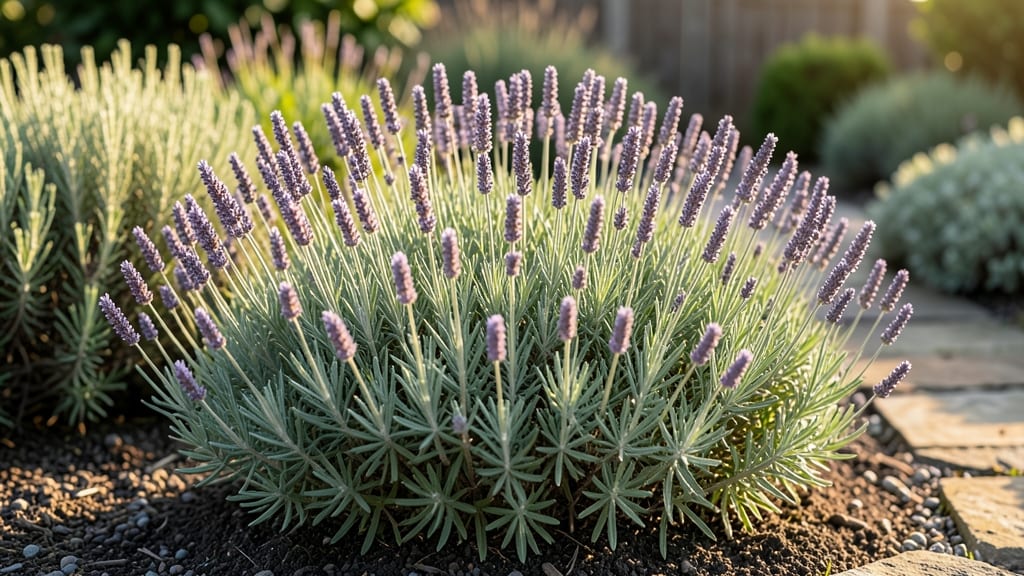
Planting lavender hedge spacing between 18 and 36 inches is the difference between a fragrant, bushy border and a patchy, underperforming mess.
Struggling to create a fragrant, full lavender hedge? The secret isn’t just in the plants—it’s in the spacing. Get the math wrong, and you’ll end up with gaps, weak growth, or overcrowded stems that struggle to thrive.
Lavender 🌿 thrives when given room to breathe, but too much space means wasted soil and a less dense hedge. In Zone 6a, where spring planting kicks off in March, spacing becomes even more critical—crowded plants compete for water and nutrients, while those too far apart leave unsightly gaps.
Below, I break down the exact spacing rules for different lavender varieties, how to adjust for mature size, and the simple tricks to ensure your hedge stays lush, fragrant, and easy to maintain for years.
Optimal lavender hedge spacing by variety and growth habits
Creating a fragrant lavender hedge starts with understanding the spacing requirements for each variety. Unlike uniform shrubs, lavender comes in three main types—English, French, and Spanish—each with distinct growth habits that dictate how close you can plant them.
The wrong spacing leads to overcrowded stems or gaps that let weeds take over, so let’s break down the science behind it.
All lavender thrives in full sun and well-draining soil, but their mature widths vary dramatically. English lavender, like 'Hidcote' or 'Munstead', grows wider (up to 3 feet) than French lavender ('Grosso' or 'Provence'), which maxes out at 2 feet. Spanish lavender ('Papillon') stays compact at 1.5 feet wide.
These differences mean your spacing math changes based on the type you choose.
Here’s the critical rule: space plants 18–36 inches apart at planting, but adjust based on mature width and your desired hedge density. For example, French lavender can handle 18-inch spacing for a dense look, while English lavender needs 30–36 inches to avoid competition. Poor drainage or clay soil?
Wider spacing (up to 4 feet) prevents root rot.
Why does soil drainage matter so much? Lavender roots rot quickly in soggy soil, and overcrowding worsens this. If your garden has heavy clay, space plants 4 feet apart and mix in gravel or compost to improve airflow.
For sandy soil, you can tighten spacing to 24 inches since water drains faster.
Another factor? Pruning habits. English lavender needs annual pruning after flowering, which encourages bushier growth and justifies wider spacing. French lavender, however, shears back naturally and can handle closer planting. Spanish lavender, with its woody stems, benefits from 18-inch spacing to prevent stem breakage.
Pro tip: Measure your hedge area first. For a 6-foot-wide hedge, divide by the mature width of your lavender type. For example, English lavender (3 feet wide) needs 2 plants per foot, while French lavender (2 feet wide) fits 3 plants per foot.
Skimping on space now means thinning later, which disrupts the hedge’s uniform look.
What if you mix varieties? Stick to one type for a cohesive hedge. English and French lavender can coexist if spaced 3 feet apart, but their different flowering times may create uneven color.
For a year-round fragrance, plant French lavender (summer bloom) alongside Spanish lavender (spring/fall), spacing them 2 feet apart.
Remember: Lavender hedges take 2–3 years to fill in. Rushing spacing leads to stunted growth or dead centers.
Start with the widest spacing recommended for your type, then adjust after the first year if growth is slower than expected. Patience pays off with a hedge that’s dense, fragrant, and long-lasting.
For a quick visual guide, sketch your hedge layout on graph paper, using squares to represent spacing. This helps avoid triangular gaps or uneven edges. And always plant on a slightly elevated mound to improve drainage—even a 2-inch rise makes a difference in heavy soil.
Now you’re ready to plant with confidence! The right spacing turns a row of lavender into a lush, fragrant hedge that’s the envy of the neighborhood. Happy planting! 🌿
How to calculate spacing for your lavender hedge layout
Creating a lush, fragrant lavender hedge starts with precise spacing calculations. Unlike many plants, lavender thrives when given room to breathe and mature—crowding leads to weak stems and poor fragrance.
The key is balancing immediate visual density with long-term growth potential, while accounting for your chosen variety’s mature width.
Most gardeners focus only on the initial plant spacing, but the real secret lies in adjusting for pruning requirements and soil drainage. Poor spacing decisions often result in uneven growth, where some plants outpace others, creating gaps.
Let’s break this down into simple, actionable steps to ensure your hedge stays full and fragrant for years.
Use a tape measure to determine the length and height of your desired hedge. For example, a 6-foot-long hedge with 3-foot-tall plants will need different spacing than a 10-foot hedge.
Select a variety with the right mature width:
- English Lavender: 24–36 inches apart
- French Lavender: 18–24 inches apart
- Spanish Lavender: 12–18 inches apart
Divide your hedge length by the spacing interval. For a 6-foot hedge with 24-inch spacing, you’ll need 3 plants (6 feet ÷ 0.5 feet = 12 intervals, but round up for even coverage).
If you plan to prune annually, reduce spacing by 20% to account for future growth. For example, 24-inch spacing becomes 19 inches for pruned hedges.
Test your soil’s drainage. If it’s clay-heavy, increase spacing by 10% to prevent root rot. Amend soil with sand or gravel if needed.
Use stakes or spray paint to mark planting spots. Step back frequently to check for even distribution—aim for a uniform grid pattern.
Once you’ve marked your spots, dig holes twice as wide as the root ball but only as deep. This encourages root expansion without burying the crown. Water deeply after planting to settle the soil and reduce air pockets around the roots.
Remember, lavender hedges look best when pruned lightly in late spring to encourage bushiness. If you’ve spaced plants too closely, you’ll notice stunted growth within the first year—so err on the side of slightly wider spacing for long-term success.
With the right spacing, your hedge will reward you with years of fragrant blooms and a polished, natural look. 🌿✂️