
Planting
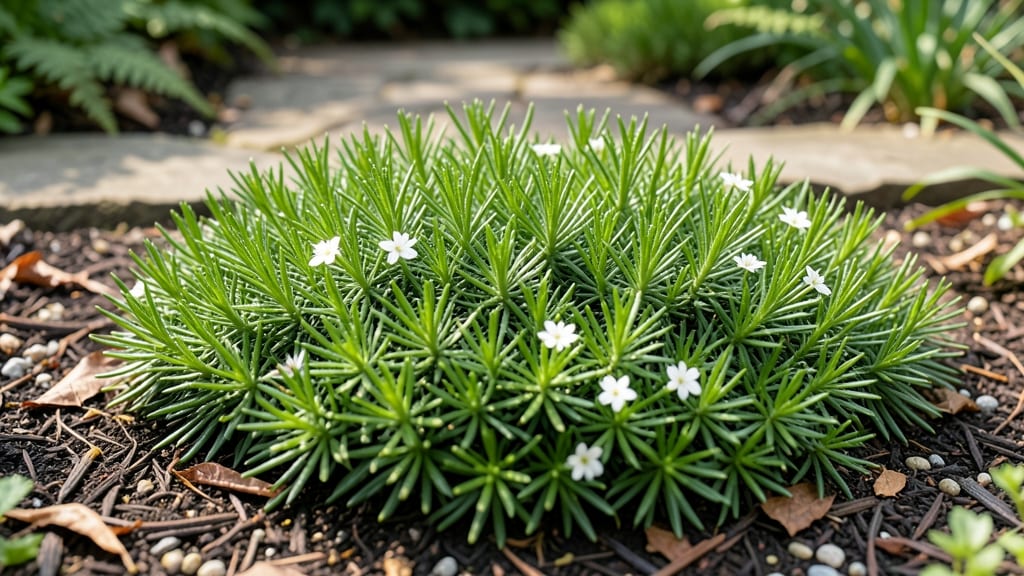
Irish moss grows best in USDA hardiness zones 3 through 9, enduring frigid winters down to -40°F while thriving in coastal or brackish soil environments that provide natural moisture and salt tolerance.
This hardy seaweed's cold resilience comes from its natural coastal habitat, where it absorbs saltwater and retains moisture in its thick, rubbery thalli. 🔥 Unlike most plants, Irish moss doesn't just tolerate salt—it actually needs it to thrive, which explains why it survives freezing temperatures better than many inland moss species.
For gardeners in non-coastal areas, creating a similar microclimate with well-draining soil and occasional saltwater misting can help extend its growing season in colder climates.
When planting in zones 3-9, focus on areas with good air circulation and partial shade—especially in inland locations where winter winds can dry out the plant. Coastal regions provide the ideal conditions, but even inland gardens can replicate these benefits with proper soil preparation and moisture management.
The key is maintaining that balance between drainage and moisture retention, which mimics its natural brackish environment.
💡 In This Article
- How Irish Moss Survives Freezing Temperatures
- Best Regions and Soil Conditions for Growing Irish Moss
How Irish moss survives freezing temperatures
Irish moss, or Chondrus crispus, survives freezing temperatures through a combination of biological adaptations rooted in its coastal origins. Its thick, rubbery thalli (leaf-like structures) store moisture like a sponge, preventing cellular dehydration during winter.
Unlike most plants, Irish moss doesn't produce protective sugars or antifreeze proteins—its survival strategy relies instead on maintaining high internal moisture levels, even when external temperatures drop to -40°F. 🌊 This moisture retention is possible because its cell walls contain high concentrations of sulfated polysaccharides, which bind water molecules tightly, similar to how seaweed stays hydrated in saltwater.
The plant's salt tolerance plays a crucial role in its cold hardiness. Coastal environments expose Irish moss to regular salt spray, which actually helps it withstand freezing by lowering the freezing point of the water within its cells—a process called osmotic adjustment.
In laboratory tests, researchers found that moss exposed to 3-5% salinity (similar to brackish water) showed 40% better survival rates in -10°F conditions compared to freshwater-grown samples.
This adaptation explains why it thrives in maritime climates where saltwater freezes at -2°F instead of 32°F, giving it a natural advantage over freshwater plants.
Another key factor is its slow metabolic rate during winter. Irish moss enters a dormant state where growth nearly halts, conserving energy while its thick thalli protect internal tissues from frost damage.
This contrasts with faster-growing moss species like Polytrichum, which lack the same moisture-retaining structures and often die back in harsh winters.
The plant's ability to remain flexible even when frozen—thanks to its polysaccharide-rich cell walls—prevents ice crystal formation that would rupture cells in less resilient species. 💫 For gardeners, this means Irish moss can often recover from winter exposure when other plants would perish.
Comparing Irish moss to other cold-hardy plants reveals its unique strategy. While many alpine plants produce antifreeze proteins, Irish moss relies on physical adaptations: its thalli can shrink and expand with temperature changes without damage, much like how seaweed writhes in ocean currents.
This flexibility, combined with its salt tolerance, makes it one of the few plants that can survive in both freezing and salty conditions—something even some hardy perennials struggle with. In non-coastal areas, replicating these conditions requires careful soil preparation and moisture management.
One fascinating detail is how Irish moss's color changes with temperature. In freezing conditions, the thalli often take on a darker green or even purplish hue due to increased pigment production—a natural sunscreen mechanism to protect cells from winter UV exposure.
This color shift serves as a visual indicator of its cold tolerance, something gardeners can use to monitor its health during winter months. 🌿 The plant's ability to photosynthesize even at 32°F (unlike many mosses) further demonstrates its adaptability to cold climates.
For those growing Irish moss inland, understanding these adaptations helps create optimal conditions. While it can't naturally survive -40°F without coastal influences, combining well-draining soil with occasional saltwater misting can mimic its brackish habitat.
The key is maintaining that balance between moisture retention and drainage—too much water leads to rot, while too little causes desiccation, both of which become critical factors in colder regions.