
Planting
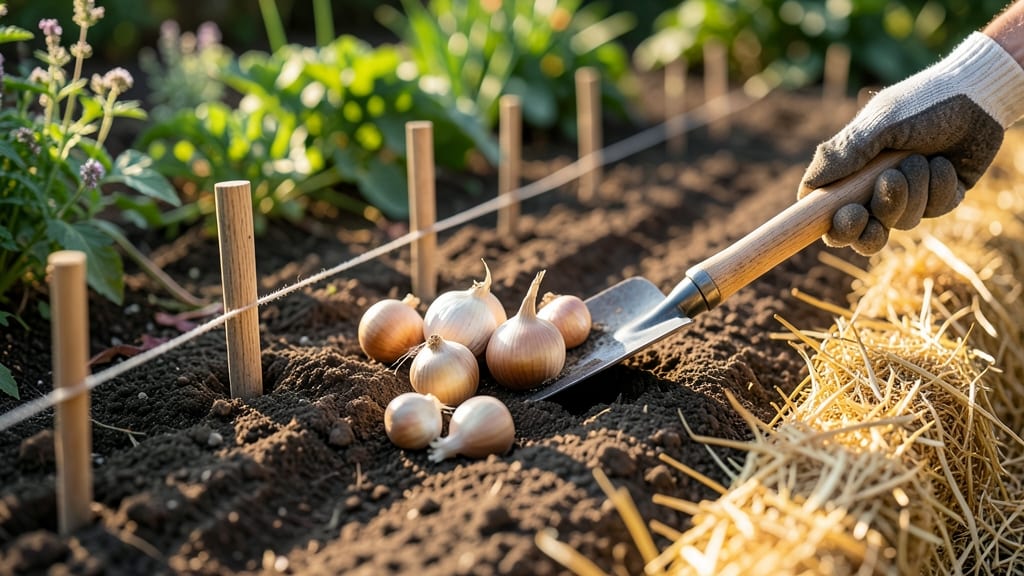
Planting onion sets in the ground transforms your garden into a fragrant, flavorful powerhouse—no green thumbs required. 🌱 I’ve turned my patchy spring soil into a reliable onion harvest by following a few simple steps that even my first attempt nailed.
The secret lies in timing, spacing, and a little soil prep that makes all the difference between scraggly stalks and plump, sweet bulbs.
Start by loosening the soil to a depth of 6 inches—this lets roots spread without fighting compaction. Scatter sets 1-2 inches apart in rows 12 inches apart, pressing them just deep enough so the top third peeks above soil level.
Plant in cool spring weather (40-60°F) when the ground is workable but not soggy—this ensures strong starts before summer heat arrives.
After planting, water gently to settle the soil, then mulch with straw to keep moisture even and deter weeds. You’ll see green shoots in 7-10 days, and by midsummer, you’ll be harvesting onions that taste 100 times better than store-bought.
The best part? These sets grow faster and more reliably than seeds, so you’ll have homegrown onions in just 90 days—no waiting around.
For extra insurance, side-dress with compost tea every 4-6 weeks to boost flavor and size. Avoid overwatering once bulbs form—they’ll split if the soil stays too wet. Trust me, once you taste your first homegrown onion, you’ll never buy them again. Here’s to that first harvest!
📚 In This Guide
- What you need
- Instructions
- Tips and common mistakes
- Wrapping up and next steps
What you need
- ● Onion sets: 10–20 sets per person (or per 10 sq ft of garden space). Choose certified disease-free sets for best results.
- ● Garden soil: Well-draining, loose soil with a pH of 6.0–7.0. Amend with compost if your soil is heavy or clay-like.
- ● Fertilizer: Balanced 10-10-10 or 5-10-10 fertilizer (1–2 tbsp per planting hole).
- ○ Optional starter fertilizer: High-phosphorus (e.g., 10-20-10) for faster root growth.
- ● Watering can or hose: With a gentle spray nozzle for even moisture distribution.
- ● Garden gloves: To protect your hands from soil and sharp onion edges.
- ○ Garden twine or stakes (optional but helpful): For marking rows if needed.
- ● Mulch: Straw or grass clippings to retain moisture and suppress weeds.
- ● Row cover or shade cloth: To protect young plants from pests or harsh sun.
- ● Soil tester kit: To check pH and nutrient levels before planting.
- ● Knee pad or small stool: For comfortable kneeling while planting.
Step-by-step instructions for planting onion sets in the ground
Here’s my foolproof method for planting onion sets—timing and soil prep make all the difference.
🌱 Step 1: Choose the Right Time and Location
Onion sets thrive when planted 4-6 weeks before your last frost date—this gives roots time to establish before active growth begins. I aim for early spring when soil temperatures hover around 45-50°F. Avoid planting too early; cold, wet soil slows root development and invites rot.
Select a sunny spot with at least 6 hours of direct sunlight daily. Onions tolerate partial shade but produce smaller bulbs. Test your soil’s drainage—onions hate soggy roots. If your garden sits in a low spot, raise beds or plant on mounds to prevent waterlogging. A soil pH between 6.0 and 7.0 is ideal; test and amend with lime if needed.
🌱 Step 2: Prepare the Soil for Optimal Growth
Two weeks before planting, loosen the soil to a depth of 12 inches with a broadfork or tiller. Break up compacted layers so roots can penetrate easily. Mix in 2-3 inches of well-aged compost to enrich the soil without overwhelming onions with nitrogen—too much greens up foliage at the expense of bulb size.
Spread a balanced 10-10-10 fertilizer at the rate of 1 pound per 100 square feet and work it into the top 6 inches. Avoid fresh manure; it can burn tender onion roots. If your soil is heavy clay, blend in sand or perlite to improve drainage. The goal is loose, crumbly soil that holds moisture but drains freely.
💧 Step 3: Plant Onion Sets at the Correct Depth and Spacing
Plant onion sets 2 inches deep, pointed end up, in rows spaced 12 inches apart. I use a dibble or my finger to make holes—pushing them in too deep delays bulb formation, while shallow planting exposes them to drying winds. Space individual sets 4-6 inches apart in the row; closer spacing works for green onions, but bulbing varieties need room to swell.
Cover the sets lightly with soil and firm gently around the base. Water immediately after planting to settle the soil and eliminate air pockets. Keep the area consistently moist (not soggy) until roots establish—about 2-3 weeks. You’ll know it’s working when green shoots emerge in 7-14 days. If sets dry out before sprouting, soak the soil again.
☀️ Step 4: Maintain Moisture and Monitor for Pests
Onions need 1 inch of water per week, either from rainfall or irrigation. I water deeply once a week rather than daily shallow watering to encourage deep root growth. Use a drip irrigation system or soaker hose to keep foliage dry; wet leaves invite fungal diseases like onion rust. Water in the early morning so foliage dries quickly.
Watch for onion flies and thrips—common pests that lay eggs near the base of plants. Handpick damaged leaves or apply neem oil spray as a preventive. Mulch with straw or grass clippings after shoots reach 4 inches tall to suppress weeds and retain moisture. Avoid synthetic mulches that may harbor pests.
✂️ Step 5: Harvest and Cure for Storage
Onion sets mature when neck leaves yellow and flop over, usually 100-120 days after planting. Gently dig up bulbs with a fork, being careful not to pierce them. Let them dry in the sun for 1-2 hours, then cure in a well-ventilated, shady spot for 2-3 weeks. This hardens the skins and prevents rot during storage.
Trim roots to 1 inch and remove outer layers if they’re damaged. Store cured onions in a cool (40-50°F), dry place with good airflow. Properly cured onions keep for 6-8 months. If you notice any bulbs softening or sprouting during storage, they’ve absorbed too much moisture—reduce humidity immediately.
Tips & tricks for perfect onion set planting
Timing and soil prep are the real game-changers when growing onions from sets—here's how to nail both.
Timing Secret: That 4-6 week window before your last frost isn't just arbitrary—it's when soil temperatures consistently reach 45-50°F. I test this by sticking a thermometer in the ground at planting depth. If it's colder, wait another week. Cold soil prevents roots from establishing properly, and you'll end up with stunted bulbs or rot. Trust me, I learned this the hard way after losing an entire batch to soggy soil in early spring.
Soil Preparation Insight: The two-week soil prep isn't just about loosening—it's about creating the perfect crumbly texture. I've found that adding 2-3 inches of compost (not manure) works wonders for onion growth. Too much nitrogen from fresh manure makes onions bolt to seed rather than forming bulbs. For heavy clay soils, mix in sand or perlite—this improves drainage without changing the soil structure too dramatically. The goal is soil that holds moisture like a sponge but drains like a sieve.
Planting Depth Visual: Getting that 2-inch depth right is crucial. I use a simple trick: hold the onion set between my thumb and forefinger—it should just fit with about 1/4 inch showing above soil level. Too shallow and they'll dry out; too deep and they'll struggle to form bulbs. Think of it like planting potatoes—just enough to cover but not bury completely.
Harvest Readiness: The 100-120 day maturity window can feel like forever, but there's a telltale sign: when the neck leaves turn yellow and flop over like a bow. This happens naturally when the bulb has fully formed and is ready to harvest. I've found that harvesting at this stage gives me the best storage life—wait too long and the skins become papery and brittle.
Pro Tips for Plant Onion Sets In The Ground
- Timing and soil prep are the real game-changers when growing onions from sets—here's how to nail both.
- Timing Secret: That 4-6 week window before your last frost isn't just arbitrary—it's when soil temperatures consistently reach 45-50°F.
- Soil Preparation Insight: The two-week soil prep isn't just about loosening—it's about creating the perfect crumbly texture.
Frequently asked questions
Got questions about planting onion sets? You’re not alone—gardeners often wonder about timing, spacing, and troubleshooting. Here are answers to the most common queries to help you grow like a pro!
When is the best time to plant onion sets?
Plant onion sets in early spring (as soon as the soil is workable, usually 2–4 weeks before your last frost date). For cooler climates, you can also plant in fall (6–8 weeks before the first frost). Avoid planting too early—they’ll bolt in cold soil.
How far apart should I space onion sets?
Space sets 4–6 inches apart in rows 12–18 inches apart. This gives roots room to spread and reduces competition. If growing for green onions, you can plant them closer (2–3 inches apart) for a quicker harvest.
What do I do if my onion sets sprout before planting?
Don’t worry! If your sets sprout before planting, simply trim the greens to 2–3 inches and plant them immediately. This prevents stress and encourages strong root growth. Keep them in a cool, dark place until planting day to slow further sprouting.
Can I plant onion sets in containers or raised beds?
Onion sets thrive in containers (at least 6 inches deep) or raised beds. Use well-draining soil and ensure pots have drainage holes. Just follow the same spacing rules—4–6 inches apart—and avoid overcrowding.
How do I protect onion sets from pests?
Onion sets are vulnerable to onion flies, slugs, and rodents. Use row covers early in the season, apply organic slug bait, or plant near garlic or chives (natural pest deterrents). Mulch with straw to keep soil moist and discourage pests.
Wrapping up and next steps
Planting onion sets is a simple yet rewarding way to grow flavorful, homegrown onions with minimal fuss! By choosing the right variety, preparing your soil, and spacing them properly, you’ll set yourself up for a bountiful harvest—whether you’re a beginner or a seasoned gardener. 🌱
Now that you’re ready to dig in, why not take the next step? Plan your garden layout or explore companion planting tips to maximize your onion sets’ growth. Happy gardening—your future meals (and taste buds) will thank you!