
Planting
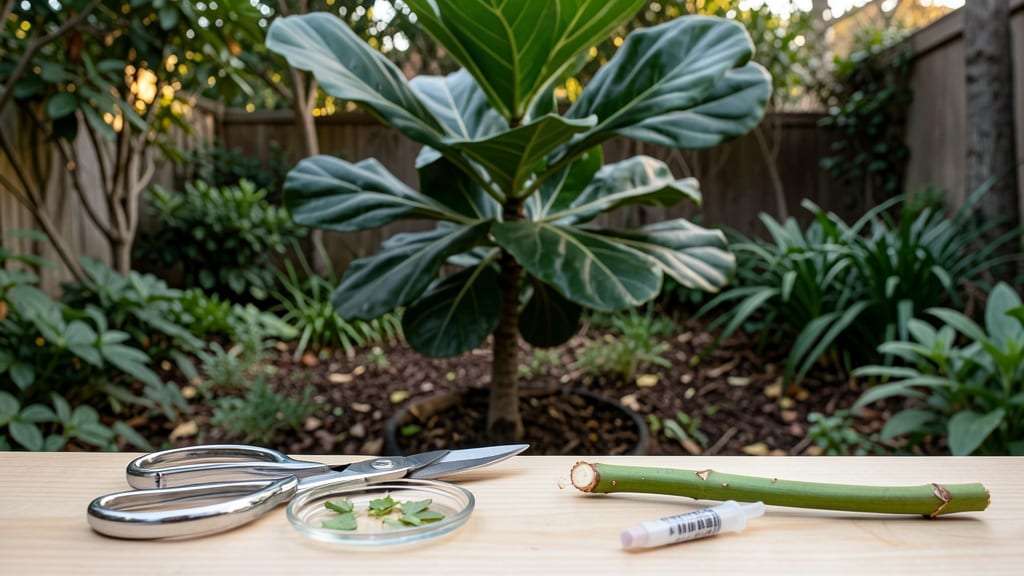
Cutting a fiddle leaf fig isn’t just pruning—it’s the secret to bushier plants and free new growth. ✂️ I’ve turned leggy, sad-looking figs into thriving, multi-stemmed beauties with just a few sharp cuts and a little patience. The best part?
You’ll end up with baby plants to share (or keep for yourself). Start by gathering clean pruners, rubbing alcohol, and rooting hormone—though I’ll show you how to skip the last one if you’re in a hurry.
The ideal time is spring or early summer when the plant’s energy is high, but even a winter trim can work if you’re gentle.
Look for stems just above a leaf node (that’s where new growth will sprout), and make your cut at a 45-degree angle to maximize surface area for roots.
Once you’ve snipped, you’ve got two easy options: water propagation (place cuttings in jars of water) or soil propagation (stick them in moist potting mix). I prefer water first—it’s faster to see if they’re rooting, and you can transplant later.
Within 2-4 weeks, you’ll spot tiny roots forming, and your original plant will start filling out with fresh, compact growth. This method works for any fiddle leaf fig, whether it’s a single stem or a full bush.
The key is consistency—keep humidity up, avoid overwatering, and watch your plant transform from sparse to stunning. Ready to give it a try?
Root Causes of Overgrowth
Understanding why your fiddle leaf fig (Ficus lyrata) needs pruning is the first step to keeping it healthy—and preventing future stress. Overgrowth isn’t just about aesthetics; it’s often a sign of underlying issues.
Let’s break down the scientific and environmental triggers that push your plant to outgrow its space, energy, or balance.
Fiddle leaf figs are light-hungry—they crave bright, indirect sunlight (think 6–8 hours daily) to fuel photosynthesis. When deprived, they stretch unnaturally in a phenomenon called etiolation. Here’s what’s happening:
- Chlorophyll Deficiency: Without enough light, leaves produce less chlorophyll, leading to pale, elongated stems and weak leaves. The plant "reaches" for light, sacrificing compact growth for survival. - Energy Mismanagement: Stretched stems require more energy to support themselves, diverting resources from root and leaf development.
This weakens the plant’s structural integrity over time. - Leaf Scorch Risk: Paradoxically, direct sun after prolonged shade can cause leaf burn (brown crispy edges), forcing the plant to shed damaged foliage and focus on new growth—often in erratic, leggy patterns.
Actionable Fix: Rotate your plant every 2–3 weeks to ensure even light exposure. If natural light is insufficient, supplement with a grow light (12–14 hours/day) positioned 12–18 inches away.
Fiddle leaf figs are drought-tolerant—their thick, waxy leaves store water, but soggy soil triggers a cascade of problems that force overgrowth:
- Root Rot and Oxygen Deprivation: Overwatering (or poor drainage) causes roots to suffocate, starving them of oxygen.
The plant responds by prioritizing above-ground growth to maximize light capture, even if it means sacrificing root health. - Nutrient Leaching: Excess water flushes essential nutrients (like nitrogen and potassium) from the soil, leaving the plant malnourished.
It compensates by growing larger, fewer leaves to absorb what’s left. - Weak Structural Support: Rot weakens the root system, making stems top-heavy and prone to snapping. The plant may produce excessive side shoots to stabilize itself.
Actionable Fix:
- Test soil moisture: Stick your finger 2–3 inches deep—water only if it’s dry.
- Upgrade pots: Use terracotta or pots with drainage holes to prevent waterlogging.
- Aerate roots: If repotting, mix in perlite or orchid bark (20–30%) for better drainage.
Fiddle leaf figs thrive in stable conditions (65–85°F / 18–29°C) with 40–60% humidity. Fluctuations force the plant into survival mode, often manifesting as uncontrolled growth spurts:
- Cold Drafts: Temperatures below 55°F (13°C) shock the plant, slowing photosynthesis. It reacts by shedding leaves and focusing energy on new, fast-growing shoots to recover. - Low Humidity: Dry air causes leaf edges to crisp, mimicking drought stress.
The plant responds by producing smaller, thicker leaves (a water-conservation tactic) or elongated stems to minimize surface area. - Heat Stress: Temperatures above 90°F (32°C) can scorch leaves, prompting the plant to shed damaged foliage and redirect energy to vigorous but weak new growth.
Actionable Fix:
- Use a humidifier or place the pot on a pebble tray with water.
- Avoid AC vents or drafty windows—keep the plant in a consistent microclimate.
- Mist leaves (early morning only) to simulate tropical humidity, but avoid wetting the crown.
Fiddle leaf figs are moderate feeders—too much (or too little) fertilizer throws them off balance, leading to uncontrolled growth patterns:
- Excess Nitrogen: Over-fertilizing (especially with high-nitrogen formulas) triggers leafy but weak growth. The plant produces large, soft leaves that can’t support their own weight, causing stems to bow or snap. - Phosphorus/Potassium Deficiency: These nutrients are critical for root and flower development.
Without them, the plant may prioritize stem elongation over robust foliage, leading to leggy, sparse growth. - Micronutrient Starvation: Lack of magnesium (for chlorophyll) or iron (for leaf color) causes yellowing between veins (chlorosis), forcing the plant to shed old leaves and focus on new, pale or stunted growth.
Actionable Fix:
- Fertilize lightly: Use a balanced 20-20-20 or 10-10-10 fertilizer once every 4–6 weeks in spring/summer. Stop fertilizing in fall/winter.
- Flush the soil: Every 3–4 months, water thoroughly to leach excess salts from the root zone.
- Diagnose deficiencies: Yellow leaves? Test soil pH (ideal: 6.1–6.5) and amend with Epsom salt (magnesium) or chelated iron if needed.
When roots circumnavigate the pot (a sign of being root-bound), the plant hits a physical growth ceiling. Its response? Aggressive above-ground expansion to escape the confined space.
- Root Competition: Crowded roots compete for water and nutrients, stressing the plant. It reacts by sending up multiple stems to maximize light exposure. - Limited Anchorage: Roots can’t stabilize the plant, leading to top-heavy growth and stem collapse.
The plant may produce aerial roots or thicker stems to compensate. - Sudden Growth Spurts: After repotting, you might see a temporary growth explosion as roots adjust to new space—this is normal, but pruning leggy stems helps redirect energy.
Actionable Fix:
- Repot every 2–3 years or when roots circle the pot.
- Upgrade pot size: Choose a container 1–2 inches larger in diameter (not height) to encourage root spread, not depth.
- Prune before repotting: Trim 1/3 of leggy stems to reduce stress during the transition.
Hidden invaders like spider mites, mealybugs, or fungal infections sap your plant’s energy, forcing it to grow rapidly to compensate—often at the expense of health.
- Sap-Sucking Pests: Mites and bugs pierce leaves, reducing photosynthesis by 30–50%. The plant responds by producing smaller, clustered leaves or elongated stems to offset lost energy. - Fungal Infections: Root rot or powdery mildew block nutrient uptake.
The plant may shed leaves and shoot out weak, pale new growth as it tries to recover. - Bacterial Leaf Spot: Causes dark lesions that prevent leaves from photosynthesizing efficiently. The plant aborts damaged leaves and focuses on new, often deformed growth.
Actionable Fix:
- Inspect leaves weekly: Look for webbing, cottony masses, or sticky residue (honeydew).
- Treat early: Use neem oil (for pests) or copper fungicide (for mildew). Isolate infected plants to prevent spread.
- Improve airflow: Space plants 2–3 inches apart and avoid overcrowding to reduce humidity-related fungal risks.
Revive & Propagate Your Fiddle Leaf Fig
When your fiddle leaf fig 🌿 shows signs of distress—whether from overgrowth, disease, or damage—pruning isn’t just about aesthetics; it’s a lifeline to healthier growth. Below, we’ve mapped out practical fixes for common issues, paired with prevention tips to keep your plant thriving long-term.
Follow these steps to cut, propagate, and protect your fiddle leaf fig like a pro!
Cause: Too much shade, lack of light, or rapid growth stretching for sunlight. Fix:
- Trim strategically 🌱—Cut just above a leaf node (where leaves grow) using clean, sharp pruners (sterilized with rubbing alcohol).
- Propagate cuttings 🌿:
- Place 4–6-inch cuttings in water (change weekly) or moist sphagnum moss.
- Keep in bright, indirect light (no direct sun) and maintain humidity with a plastic bag.
- Roots should appear in 2–4 weeks—then repot in well-draining soil.
- Fertilize lightly 🌱 after repotting to encourage new growth.
Prevention:
- Rotate your plant quarter-turn weekly for even light exposure.
- Supplement with a grow light if natural light is insufficient.
Cause: Soggy soil, poor drainage, or fungal/bacterial infections. Fix:
- Assess the roots 🔍—Gently remove the plant from its pot. Healthy roots are firm and white; mushy or black roots = rot.
- Prune damaged foliage ⚰️—Snip yellow/brown leaves at the base with sterilized scissors.
- Repot in fresh soil 🏺:
- Use a well-draining mix (60% potting soil, 30% perlite, 10% orchid bark).
- Choose a pot 1–2 inches larger with drainage holes.
- Adjust watering 💧—Water only when the top 1–2 inches of soil are dry. Avoid letting it sit in water.
Prevention:
- Never let your plant sit in saucers of water—empty excess after watering.
- Aerate soil with a fork if it compacts over time.
Cause: Dry air, stress, or poor hygiene attracting pests. Fix:
- Isolate the plant 🛑 to prevent spreading.
- Wipe leaves 🧼 with a damp cloth dipped in neem oil solution (1 tsp neem oil + 1 quart water).
- Prune infested areas 🪒—Cut off heavily affected leaves and dispose of them (don’t compost!).
- Quarantine new plants 🏝️ for 2 weeks before introducing them to your collection.
Prevention:
- Mist leaves 2–3 times weekly or use a humidifier.
- Inspect new plants before bringing them home.
Cause: Sudden temperature swings or direct afternoon sun. Fix:
- Move to indirect light ☀️—East or north-facing windows are ideal.
- Trim scorched leaves 🔥 at the base to redirect energy to healthy growth.
- Acclimate gradually 🌱—If moving outdoors, introduce to shade first, then partial sun over 1–2 weeks.
Prevention:
- Avoid cold drafts (AC vents, open windows in winter).
- Use sheer curtains to filter harsh sunlight.
Cause: Inconsistent watering or poor soil quality. Fix:
- Check soil moisture 💧—Stick your finger 1–2 inches deep; if dry, water thoroughly.
- Fertilize lightly 🌿—Use a balanced liquid fertilizer (diluted to half strength) every 4–6 weeks in spring/summer.
- Repot if root-bound 🏺—Circling roots or soil pushing through drainage holes = time to upgrade pots.
Prevention:
- Stick to a watering schedule (every 7–10 days, adjusting for season).
- Use organic matter like worm castings to enrich soil.
Pro Tip: 💡 Always sterilize your tools before and after pruning to prevent disease spread. A quick wipe with 70% isopropyl alcohol does the trick!
Frequently asked questions
Can I cut my fiddle leaf fig in winter?
It's best to avoid heavy pruning in winter when the plant is in its dormant phase. Light trimming to remove dead or damaged leaves is fine, but major cuts should wait until spring or early summer when growth resumes. If you must prune in winter, keep it minimal to avoid stressing the plant.
How do I know where to make the cut on a stem?
Look for the leaf node—this is the bump on the stem where leaves grow. Make your cut just above this node at a 45-degree angle. This ensures new growth will sprout from the node below. Never cut below a node or you'll remove the growth point forever.
Can I propagate my fiddle leaf fig without rooting hormone?
While rooting hormone can speed up the process, it's not required. Simply place your cuttings in water (keeping the node submerged) and change the water weekly. Most cuttings will develop roots in 2-4 weeks. For soil propagation, use moist sphagnum moss instead.
What should I do with my original plant after cutting?
After pruning, your original plant will focus energy on filling out its remaining structure. Keep it in bright, indirect light and maintain normal watering. You should see new growth from the nodes below your cuts within 4-6 weeks. This is when your plant will start looking bushier and healthier.
How many cuttings can I take from one plant?
Never take more than 1/3 of the plant's foliage at once. For a mature fiddle leaf fig, this typically means 2-3 healthy cuttings. Taking too many stems at once stresses the plant. Space your pruning sessions 3-4 weeks apart if you need to propagate multiple cuttings.