
Planting
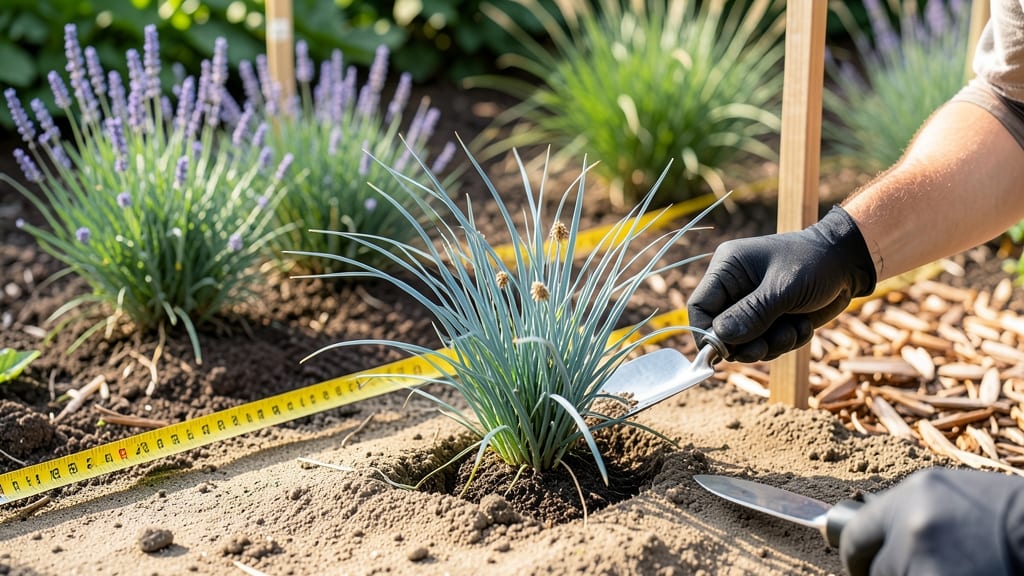
Planting Karl Foerster grass 18–24 inches apart 🌿 is the secret to letting its bold, upright blades shine without turning your garden into a dense, tangled mess.
Too close, and you’ll end up with a clump that looks like a single plant—no air circulation, no drama. Too far apart, and you’ll lose that wow factor of a structured, sun-loving border. The right spacing turns this grass into the star of the show in full-sun gardens.
This isn’t just about numbers—it’s about giving your Karl Foerster Grass room to breathe and grow while keeping its signature upright form. Whether you’re lining a driveway or filling a mass planting, the spacing makes all the difference in how it performs over time.
Below, I’ll break down the exact spacing you need, how to adjust for different garden styles, and why skipping this step can turn your dream planting into a frustrating disappointment.
Optimal Karl Foerster Grass spacing for clumping growth in full sun gardens
Karl Foerster Grass (Festuca glauca 'Karl Foerster') creates stunning vertical accents in full sun gardens, but its clumping growth habit requires precise spacing to prevent overcrowding while maximizing its dramatic arching foliage. Unlike spreading grasses, this variety stays contained, making proper spacing essential for airflow and long-term health.
The golden rule for Karl Foerster Grass is planting 18-24 inches apart—this range gives each plant room to develop its 3-foot mature width without competing for nutrients. Tighter spacing leads to thin, weak growth, while wider gaps reduce the visual impact you’re aiming for.
🌿
| Planting Scenario | Spacing (Inches) | Purpose | Visual Effect |
|---|---|---|---|
| Borders & Edging | 18-20" | Creates clean, structured lines | Tight, uniform appearance |
| Mass Plantings | 22-24" | Allows full foliage development | Dramatic, textured swaths |
| Specimen Plantings | 30-36" | Showcases individual plant shape | Bold focal point |
| Drought Conditions | 24-30" | Reduces competition for water | Healthier clumps |
| Rich, Fertile Soil | 18-20" | Supports denser growth | Lush, full appearance |
For border plantings, stick to the 18-20 inch range—this creates a neat, linear look perfect for defining garden edges. When using Karl Foerster Grass as a mass planting, increase spacing to 22-24 inches to let each clump reach its 3-foot width without merging into one another.
In specimen plantings, where you want to highlight individual plants, space them 30-36 inches apart. This spacing transforms them into architectural focal points that command attention in perennial beds or near patios.
🌳
Your climate zone also influences spacing needs. In hot, dry regions (USDA Zones 7-10), increase spacing to 24-30 inches to reduce competition for water. In cooler, wetter zones (Zones 3-6), the standard 18-24 inch range works perfectly.
One common mistake is treating Karl Foerster Grass like a spreading grass—its clumping habit means it won’t fill in gaps naturally. If you plant too closely, you’ll end up with thin, leggy clumps that flop over from poor air circulation.
Pro tip: Use a string line and stakes when planting to ensure even spacing. For large plantings, consider dividing the area into 3-foot grids to maintain consistency.
✂️
5 Critical factors that determine your Karl Foerster Grass spacing needs
When planning your Karl Foerster Grass planting, spacing isn't one-size-fits-all. This dramatic ornamental grass responds differently based on five key factors that directly impact its growth and visual impact.
Understanding these variables ensures your plants thrive while maintaining their signature upright form and blue-green foliage. Let's break down what truly matters for optimal spacing.
The first factor to consider is the mature plant width. Karl Foerster Grass typically reaches 18-24 inches wide at maturity, but this can expand to 3 feet in ideal conditions.
This clumping habit means plants won't spread aggressively like some grasses, but they do need room to develop their full structure without competing for nutrients. Tight spacing leads to weak, leggy growth that loses its architectural appeal.
Standard spacing: 18-24" apart for clumping habit
Border plantings: 12-18" for tighter looks
Mass plantings: 24-36" for full visual impact
Poor soil: 24-36" spacing needed
Average soil: 18-24" spacing ideal
Rich soil: 12-18" for denser growth
Full sun (6+ hrs): 18-24" spacing
Partial shade: 24-36" spacing
Dappled light: 36+" spacing
Zones 5-7: 18-24" spacing
Zones 8-9: 24-36" spacing
Zones 10+: 36+" spacing
Specimen plant: 36+" spacing
Border plant: 12-18" spacing
Ground cover: 9-12" spacing
Your local climate zone plays a surprising role in spacing decisions. In cooler northern climates (USDA zones 5-7), you can plant Karl Foerster Grass 18-24 inches apart because growth is slower. However, in warmer southern zones (8-9), the same plants may need 24-36 inches of space to prevent competition.
The extra heat accelerates growth, making tighter spacing a recipe for weak, floppy stems that lose their architectural form.
Finally, consider your garden design intentions. If you're using Karl Foerster Grass as a specimen plant to create dramatic focal points, give each clump 3 feet or more of space. For border plantings along walkways or foundations, 12-18 inches creates a neat, contained look.
And if you're aiming for ground cover in sunny areas, you can space them as close as 9 inches apart, though this requires more frequent maintenance to prevent overcrowding.
Remember that proper spacing isn't just about aesthetics—it's about plant health. When Karl Foerster Grass plants are too close, they compete for water, nutrients, and sunlight, leading to pale foliage, weak stems, and increased susceptibility to diseases like fungal infections.
The right spacing ensures each plant gets the air circulation it needs to maintain its signature upright form and vibrant color throughout the growing season. 🌿