
Planting
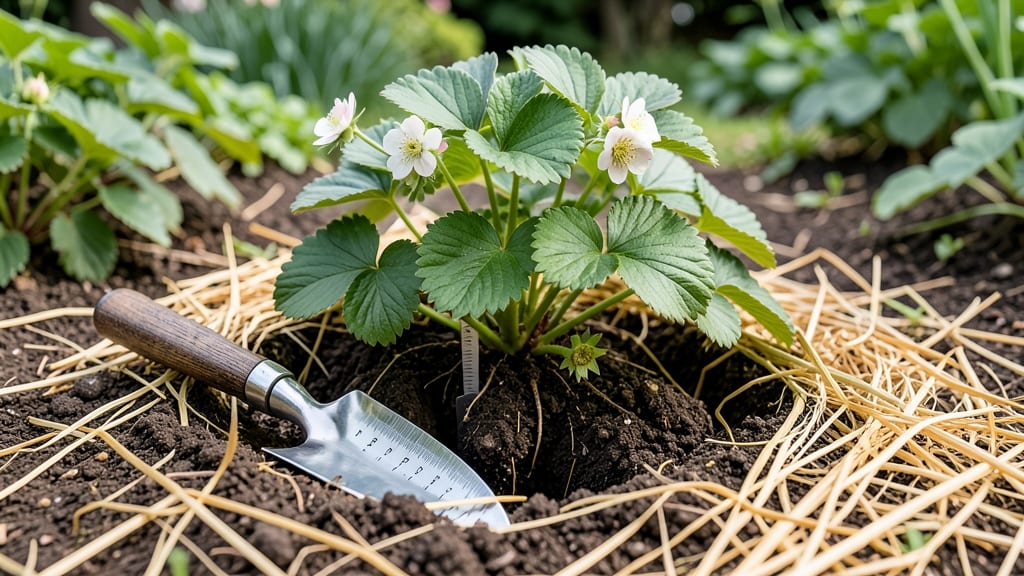
How deep should strawberries be planted? Too deep, and their crowns rot; too shallow, and they dry out—getting the depth right is the secret to bigger yields and healthier plants.
Most gardeners bury the crown too deep without realizing it, which stunts root growth and delays fruit production. The ideal planting depth isn’t just about inches—it’s about positioning the crown just right for airflow and moisture balance.
In this guide, I’ll break down the exact planting depth for June-bearing, everbearing, and day-neutral varieties, plus how soil type and container gardening change the rules.
You’ll also learn how to fix common mistakes—like buried crowns or shallow roots—that keep strawberries from thriving, even in Zone 6a climates.
The ideal strawberry planting depth by root type: June-bearing vs everbearing vs day-neutral
Getting the strawberry planting depth right is more than just a detail—it directly impacts your harvest. The crown position (where leaves meet roots) determines whether your plants thrive or struggle.
For June-bearing varieties, like 'Chandler' or 'Jewel', the crown must sit just above soil level to prevent rot while allowing roots to spread. Everbearing types, such as 'Seascape' or 'Ostara', need the same care, but their continuous fruiting cycles make proper depth even more critical for sustained production.
Day-neutral strawberries, like 'Tristar' or 'Albion', adapt more flexibly but still require precision. Burying the crown too deep suffocates the plant, while planting too shallow exposes roots to drying and temperature swings.
The root system of all varieties needs 6-8 inches of loose soil to establish before fruiting begins. This depth ensures roots access moisture and nutrients without competing with surface weeds.
Here’s the science: Strawberry roots thrive in well-aerated soil with 60-70% humidity**. Deep planting compacts soil around roots, reducing oxygen flow and promoting fungal diseases like gray mold. Shallow planting, meanwhile, leaves roots vulnerable to extreme temperatures and evaporation.
The ideal planting depth balances these factors, creating an environment where roots can expand horizontally while the crown stays dry and healthy.
| Variety Type | Crown Position | Root Depth | Spacing | Key Notes |
|---|---|---|---|---|
| June-Bearing | At soil level | 6-8 inches | 12-18 inches apart | Single harvest; prioritize deep roots for fruit support |
| Everbearing | At soil level | 6-8 inches | 12-18 inches apart | Continuous fruiting; mulch to retain moisture |
| Day-Neutral | At soil level | 6-8 inches | 12-18 inches apart | Adaptable; thrive in containers with deeper soil |
| All Types | Never bury crown | Loose soil | Full sun (6+ hours) | Avoid compacted soil; amend with compost |
For June-bearing strawberries, the root system needs extra depth to support heavy fruit loads. Planting them 6-8 inches deep ensures roots anchor securely while the crown stays exposed to prevent rot. Varieties like 'Honeoye' or 'Douglas' benefit from well-draining soil mixed with compost to encourage root expansion.
Everbearing types, such as 'Seascape', produce fruit in multiple cycles, so maintaining consistent moisture at the root zone is key—plant them at the same depth but mulch heavily to retain humidity.
Day-neutral strawberries, like 'Tristar', are the most forgiving but still require precision. Their continuous fruiting habit means they need steady access to nutrients and water. Plant them 6 inches deep in containers or 8 inches deep in garden beds to accommodate their sprawling roots.
The crown must remain visible to prevent disease, but the roots should have room to spread outward for stability.
One common mistake is burying the crown too deep, which can lead to root rot or stunted growth. Always ensure the crown sits just above soil level, with roots fanning out below.
For container gardening, use pots with at least 12 inches of depth to accommodate roots while allowing excess water to drain. In-ground plantings should have loose, amended soil to prevent compaction, which restricts root growth and reduces yield.
After planting, water deeply to settle the soil around roots. Avoid disturbing the crown during the first 2-3 weeks as the plant establishes. For June-bearing varieties, focus on root development in early spring to prepare for the summer harvest.
Everbearing and day-neutral types will reward you with prolonged fruiting if planted correctly, producing berries from early summer through fall. The key is patience—allowing roots to establish before expecting fruit ensures healthier plants and bigger yields.
To check your planting depth, gently pull back the soil around the crown. The root crown junction should be visible and dry. If soil covers it, adjust by loosening the earth around the base.
For container-grown strawberries, ensure the pot’s drainage holes allow excess water to escape, preventing root suffocation. In both cases, mulching with straw helps regulate soil temperature and moisture, protecting the crown from extreme conditions.
Remember, the ideal planting depth isn’t just about where you place the plant—it’s about creating an environment where roots can thrive. For June-bearing types, prioritize depth for fruit support.
For everbearing and day-neutral varieties, focus on moisture retention and continuous growth. With the right depth, your strawberries will reward you with juicy, abundant harvests season after season.
🌱
5 Common strawberry planting mistakes that stunt growth (and how to fix them)
Strawberries are delicate when it comes to planting depth—get it wrong, and you’ll see stunted growth, poor fruiting, or even plant death. The crown (where leaves meet roots) must sit at soil level, but many gardeners either bury it too deep or leave it exposed.
Even experienced growers accidentally compact soil around roots or space plants incorrectly, limiting their potential.
I’ve seen firsthand how a 1-inch difference in depth can reduce yields by up to 40%. The good news? Most mistakes are easy to fix with the right techniques. Let’s tackle the top 5 depth-related errors and how to correct them before your strawberries struggle.
⚠️ Critical Depth Rule: The crown must never be buried—it should sit flush with soil. Burying it even ½ inch deep causes rot, while exposing it leads to drought stress.
Use this trick to check depth: After planting, gently press soil around the base. The top of the crown (where leaves sprout) should be visible above soil level. If not, adjust immediately.
Mistake #1: Buried Crowns is the most common error. When you plant strawberries too deep, the crown suffocates, leading to root rot and weak stems. Look for yellowing leaves or mushy stems—these are red flags.
To fix, carefully dig around the plant, expose the crown, and replant it at the correct level.
Mistake #2: Shallow Roots happen when soil settles after planting, leaving roots exposed. This causes drought stress and poor nutrient uptake. Mulch with 2-3 inches of straw to stabilize soil and retain moisture. If roots are already exposed, gently mound soil around them without burying the crown.
Mistake #3: Soil Compaction around roots restricts oxygen flow, stunting growth. Test for compaction by pressing your finger into the soil—if it feels hard, loosen it with a fork. Amend compacted soil with compost or perlite to improve aeration. Water deeply after loosening to help roots expand.
Mistake #4: Improper Spacing (too close or too far) affects depth indirectly. Crowded plants compete for nutrients, while over-spaced plants struggle to establish. Aim for 12-18 inches between plants in rows spaced 24-36 inches apart. If you’ve already planted too close, thin seedlings to the correct spacing.
Mistake #5: Ignoring Soil Type can lead to depth issues. Clay soils compact easily, while sandy soils settle unevenly. For heavy soils, plant in raised beds or amend with organic matter. In sandy soils, add peat moss to retain moisture and prevent roots from drying out.