
Planting
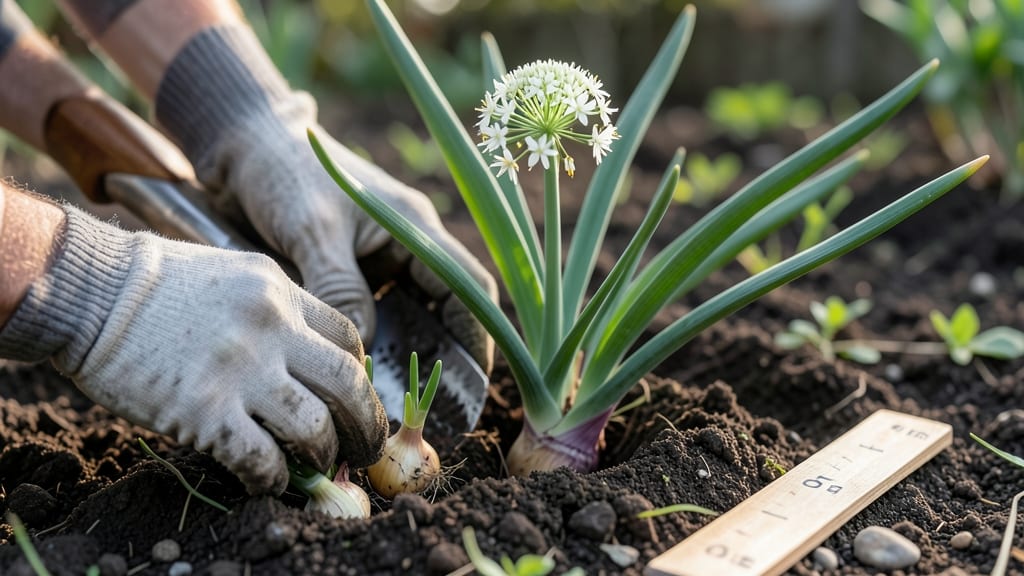
How deep do onions need to grow for that perfect, plump bulb? The answer might surprise you if you’ve ever ended up with small, tough bulbs instead of the sweet, flavorful harvest you expected 🧅 — and it’s all about getting the depth just right.
Struggling to grow plump, flavorful onions? The secret might be hiding just beneath the soil surface—literally. Planting onions at the wrong depth can stunt growth, reduce yield, and leave you with bitter, undersized bulbs. But how deep should you bury them for perfect harvests?
Most gardeners assume deeper means better, but onions actually need just enough soil to anchor their roots while leaving plenty of bulb exposed to sunlight. This balance is critical for sweetness and size, especially in Zone 6a where spring planting kicks off in March.
In this guide, I’ll break down the exact planting depth for sets, seeds, and transplants, plus how to adjust for your soil type and climate.
You’ll learn why 1/2-inch depth works for sets but seeds need a slightly different approach, and how to fix common mistakes before they ruin your crop.

Ideal onion planting depth by variety: bulb vs green onions
Onions are one of those versatile vegetables where a small mistake in planting depth can turn a promising crop into a disappointing one.
Whether you're growing yellow onions, red onions, or green onions, the depth at which you plant them directly impacts bulb size, flavor development, and even disease resistance.
For example, planting onion sets too deep can lead to small, tough bulbs, while planting them too shallow may result in weak stems that flop over.
Green onions, also known as scallions, have different requirements than their bulb-forming cousins. They thrive when planted just ½ inch deep, allowing their tops to grow quickly for harvest.
Meanwhile, bulb onions need slightly more depth—typically 1 inch deep—to encourage strong root development and larger bulbs. Understanding these differences is key to maximizing your harvest.
For yellow onions, which are the most common for storage, aim for a planting depth of 1 inch. This depth encourages the bulb to expand underground while allowing the green tops to reach sunlight for photosynthesis.
If you're growing in heavy clay soil, you might plant them slightly deeper—up to 1½ inches—to prevent the bulbs from sitting too close to the surface and rotting.
When it comes to red onions, the depth remains similar at 1 inch, but their spacing can be slightly tighter—around 3-4 inches apart—since they’re often harvested fresh rather than stored. The shallower spacing helps prevent competition for nutrients, which can lead to smaller bulbs.
In hot climates, planting red onions even shallower (½ inch) can help delay bolting, the process where onions flower prematurely and produce seeds instead of bulbs.
White onions, often used in cooking, follow the same 1-inch depth rule but tolerate slightly drier conditions than yellow onions. This makes them a great choice for gardeners in drought-prone areas or those who prefer a hands-off watering approach. Their spacing can mirror yellow onions at 4-6 inches apart, giving them room to develop robust bulbs without overcrowding.
Green onions, or scallions, are the outliers in the onion family when it comes to planting depth. Since they’re harvested for their leafy greens rather than bulbs, they only need to be planted ½ inch deep.
This shallow depth allows their tops to grow quickly and stay tender. You can even sow them in containers or pots for a continuous harvest by cutting the greens just above the soil line every few weeks.
If you're planting onion sets—which are essentially young onion bulbs—you’ll want to bury them slightly deeper than seeds, around 1-1½ inches. The pointy end should face upward, and the roots should be covered with soil.
In cold climates, planting them deeper (up to 2 inches) can protect them from frost heave, where freezing and thawing cycles push plants out of the soil.
The soil temperature at planting time also plays a role in depth adjustments. Cooler soils (40-50°F) can slow germination, so planting slightly deeper (up to
How to adjust planting depth for soil type and climate
Your onion planting depth isn't one-size-fits-all—it depends on your soil type and local climate. In sandy soil, onions need deeper planting to anchor roots before they dry out, while heavy clay requires shallower placement to prevent waterlogging.
Even your climate zone plays a role: cooler regions may need slightly deeper planting for better bulb development.
Let’s break down how to adjust planting depth for optimal root growth and disease prevention. The standard ½-inch depth works for most gardeners, but tweaks can make all the difference in bulb size and flavor intensity.
For example, in hot, dry climates, planting just slightly deeper helps retain moisture, while humid areas benefit from shallower depths to reduce fungal risks.
⚠️ CAUTION: Planting onions too deep can lead to rotten bulbs or stunted growth, while planting too shallow exposes roots to extreme temperatures and pests. Here’s how to adjust for your specific conditions:
⚠️ Critical Depth Adjustments for Onions
❌ Avoid: Planting onion sets or seeds deeper than 1 inch in clay soil—this suffocates roots and causes rot. ❌ Planting shallower than ¼ inch in sandy soil risks drying out roots before they establish.
✅ Do: Adjust depth by ¼ inch based on soil texture—deeper in sand, shallower in clay. In hot climates, bury seeds ½ inch deeper to retain moisture; in cool climates, keep depth standard to prevent chilling.
💡 Pro Tip: Loosen soil around the planting hole to improve drainage, especially in compacted clay. Use a mix of compost and sand to balance heavy soils naturally.
For sandy soil, which drains too quickly, plant onion sets or seeds ⅔ inch deep instead of the standard ½ inch. The extra depth gives roots time to establish before the soil dries out.
In contrast, clay soil holds too much moisture, so reduce depth to ¼ inch and amend the area with organic matter like compost or peat moss to improve aeration.
Climate also dictates adjustments. In hot, arid regions (like USDA Zones 8-10), plant onions ½ inch deeper to shield bulbs from drying winds and intense sun.
Conversely, in cool, wet climates (like Zones 3-5), stick to the standard depth or go slightly shallower to prevent fungal diseases like onion smut or neck rot.
If you’re growing green onions (scallions) for harvest before bulb formation, plant them just ¼ inch deep—they thrive with minimal soil coverage. For bulb onions, however, consistency is key: maintain a uniform depth across your garden to ensure even growth and maturity.
Finally, always water thoroughly after planting to settle the soil around roots. In sandy soils, follow up with a mulch layer (like straw) to lock in moisture, while in clay soils, avoid mulching too heavily to prevent water pooling.
These small tweaks can boost your onion yield by up to 30%! 🌱