
Planting
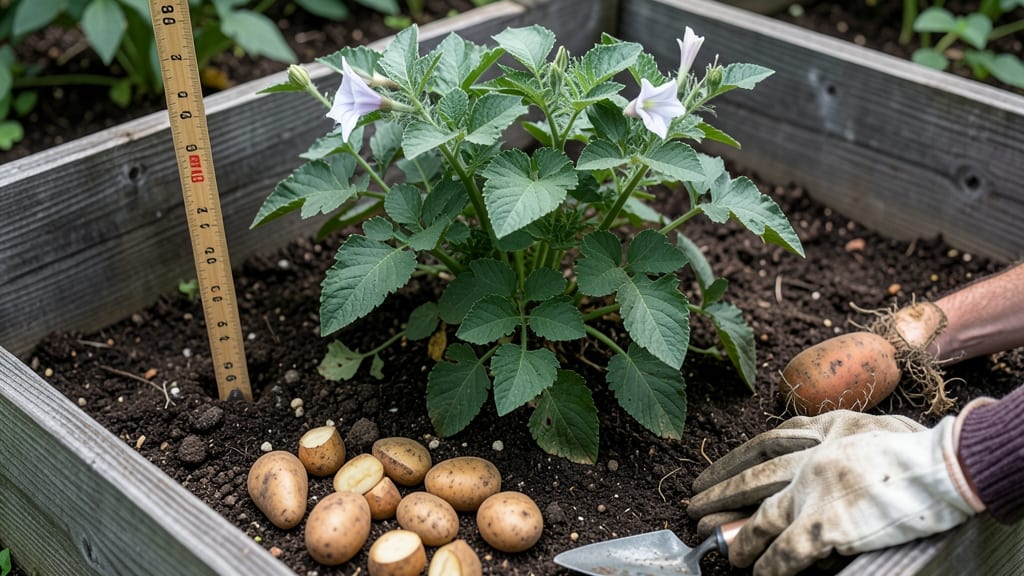
A raised bed for potatoes should be at least 12 inches deep to give those spuds the room they need to grow—any less, and you risk stunted tubers or wasted effort.
Picture this: you’ve spent weeks nurturing your 🥔 plants, only to dig up a harvest that barely fills a lunchbox. That’s the heartbreak of shallow beds, where roots hit hardpan or the sides before they’ve had a chance to bulk up.
The good news? With the right depth and a few smart tricks, you can turn that disappointment into a bumper crop—even in tight spaces.
Why does depth matter so much? Potatoes need 6–12 inches of soil below the surface to develop properly, and raised beds let you control that environment. Too shallow, and you’re fighting for every inch of growth; too deep, and you might be overcomplicating things.
The secret lies in balancing science with practicality—whether you’re working with a 6-foot plot or a 4x8-foot box.
In this guide, I’ll break down the ideal depth, how to maximize yield in limited space, and the common mistakes that leave gardeners digging up disappointment instead of dinner. Let’s get those potatoes growing right!
Optimal raised bed depth for potatoes: science-backed guidelines
Potatoes thrive in raised beds because they demand well-draining soil and room to expand underground. The science is clear: tubers need at least 12 inches of soil depth to develop properly, but most gardeners achieve peak yields with 18 inches.
This depth range accommodates the primary tuber zone (6–12 inches below the surface) while allowing space for secondary growth and root development.
Shallow beds (<10 inches) stunt tuber growth, forcing potatoes to compete for nutrients in limited space. Meanwhile, beds deeper than 24 inches risk waterlogging and rot, especially in clay-heavy soils. The sweet spot balances aeration, drainage, and tuber expansion—critical for both yield and disease resistance.
Here’s why depth matters: Potatoes grow underground tubers that form along the stem nodes. In a 12-inch bed, you’ll harvest smaller but adequate yields, while an 18-inch bed maximizes size and quantity.
Heirloom varieties like ‘Yukon Gold’ or ‘Russian Banana’ benefit most from deeper beds due to their larger tuber sizes.
| Depth Requirement | Tuber Growth Zone | Yield Impact | Best For |
|---|---|---|---|
| 12 inches | Primary tubers (6–12") | Moderate (smaller tubers) | Container growing, small plots |
| 18 inches | Primary + secondary tubers (6–18") | Maximum yield (large tubers) | Heirloom varieties, high yields |
| 24+ inches | Deep secondary tubers (12–24") | Risk of rot, poor drainage | Only for sandy soils (avoid clay) |
Soil science confirms that potato roots need loose, aerated soil to prevent compacted zones that restrict tuber growth. In raised beds, this means avoiding heavy amendments like clay or unbroken compost layers. Instead, mix in coarse sand or perlite to improve drainage while retaining moisture.
For heirloom varieties like ‘Kennebec’ or ‘Fingerling’, consider exceeding the standard 18-inch depth to accommodate their larger growth habits. These varieties often produce tubers deeper than 12 inches, so a 20–24-inch bed (with proper drainage) can double your harvest.
Just ensure the bottom layer isn’t waterproof—use landscape fabric or rocks to prevent rot.
Disease resistance improves with deeper beds because excess moisture has fewer pathways to reach tubers. In shallow beds, Blight or Scab spread faster due to poor airflow. A 12-inch minimum reduces these risks, while 18 inches adds a buffer against fungal infections.
Always pair depth with mulching to keep soil temperatures stable and moisture consistent.
Pro tip: If your raised bed is only 10 inches deep, opt for early-maturing varieties like ‘Red Norland’ (70–90 days) and use succession planting to maximize space. For deeper beds, prioritize loose soil mixes with 50% compost and 30% peat moss to encourage tuber formation.
Remember, the depth of your raised bed directly correlates with your harvest size. While 12 inches is the absolute minimum, 18 inches is ideal for most gardeners. For heirlooms or sandy soils, 20–24 inches can be worth the extra effort—just monitor drainage closely to avoid soggy tubers.
🥔
Space-saving techniques for shallow raised beds (under 12 inches)
When space is limited, growing potatoes in shallow raised beds (8–10 inches deep) can still yield a harvest—but it requires smart planning. The key is choosing fast-maturing varieties and using techniques like succession planting or vertical training to maximize your yield without sacrificing quality.
This approach works best for small-scale gardens or urban containers where depth is constrained.
Potatoes like ‘Yukon Gold’ or ‘Red Pontiac’ are excellent choices because they mature in 70–90 days, allowing you to harvest before tubers outgrow the limited soil volume. However, you’ll need to harvest early and avoid storing these potatoes long-term, as their size will be smaller than in deeper beds.
Trade-offs include reduced storage life and potential lower yields per plant, but the space savings often make it worthwhile.
- 1. Choose fast-maturing varieties: Opt for early-season potatoes like ‘Red Norland’ (70 days) or ‘Kennebec’ (80 days) to ensure tubers don’t outgrow the bed.
- 2. Use succession planting: Plant two crops per year by staggering seeds every 2–3 weeks. Harvest the first batch early, then replant the bed for a second harvest.
- 3. Train vines vertically: Use cattle panels or trellises to guide vines upward, leaving more room for tubers below. This also improves airflow, reducing disease risk.
- 4. Layer soil with compost: Mix in high-quality compost or aged manure to boost nutrient density. This compensates for the limited root space and encourages faster tuber growth.
- 5. Avoid deep-digging varieties: Skip heirloom or late-season potatoes like ‘Russian Banana’ or ‘Purple Viking,’ as they need deeper soil to develop large tubers.
For vertical training, install a trellis or wire frame along one side of the bed. As the potato plants grow, gently weave the vines upward to save space. This method also reduces disease pressure by improving airflow around the foliage.
Pair this with drip irrigation to keep the soil consistently moist without overwatering, which can lead to rot in shallow beds.
If you’re using a shallow bed for storage potatoes, focus on harvesting new potatoes (small, tender tubers) when they’re 1–2 inches in diameter. These can be eaten fresh and won’t require long-term storage.
For example, ‘Finnish Yellow’ or ‘Adirondack Blue’ are great for early harvests and thrive in compact spaces. Just be prepared to harvest frequently to prevent overcrowding.
One trade-off of shallow beds is limited soil volume, which can stress plants during dry spells. To mitigate this, mulch the surface with straw or grass clippings to retain moisture and regulate soil temperature.
Avoid organic mulches like wood chips, as they can deplete nitrogen and compete with your potatoes for nutrients. Instead, use inorganic mulches like landscape fabric or pebbles if organic options aren’t available.
Finally, avoid shallow beds entirely if you’re growing potatoes for long-term storage or large tubers. Varieties like ‘Sweet Potato’ (yes, they’re different!) or ‘Russian Banana’ need 12+ inches of soil to reach their full potential.
For these, invest in a deeper bed or stick to container growing with larger pots (at least 18 inches deep). When in doubt, prioritize yield over space-saving for varieties that demand deeper roots.