
Planting
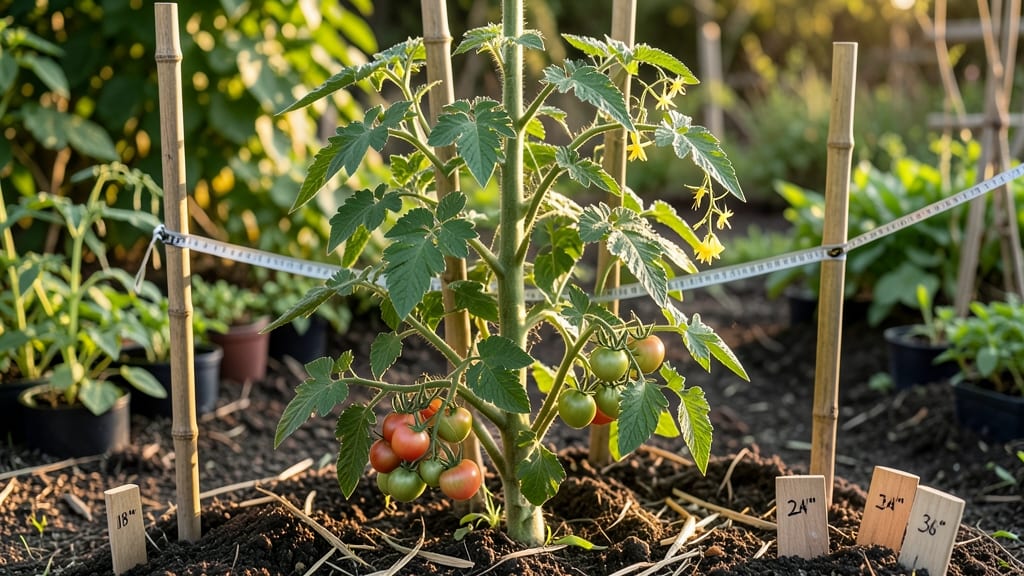
A tomato plant spacing chart is your roadmap to avoiding crowded vines and wasted harvests—whether you’re squeezing plants into containers or stretching them across a garden bed.
Picture this: you’ve just planted your 🍅 seedlings with big dreams of bushels of tomatoes, only to watch them compete for sunlight and air. That’s the cost of guessing spacing instead of following proven layouts.
In Zone 6, where spring planting kicks off around April 15, the right spacing makes all the difference between a few sad fruits and a vine heavy with ripe tomatoes. This guide cuts through the confusion with clear measurements for determinate and indeterminate varieties.
You’ll learn how to space plants for maximum yield—whether you’re working with 5-gallon pots or a sprawling garden bed—plus how to adjust for wind, sunlight, and even companion plants.
Tomato plant spacing chart: optimal distances for containers vs. garden beds
Getting your tomato plant spacing right can mean the difference between a handful of fruits and a bountiful harvest. Whether you're working with 5-gallon pots or a sprawling raised garden bed, proper spacing ensures good air circulation and sunlight exposure—both critical for healthy plants.
I’ve grown tomatoes for over 15 years, and I’ve learned that even small adjustments in spacing can dramatically improve yield and reduce disease risks.
Determinate and indeterminate tomatoes have different spacing needs. Determinate varieties, like Roma or Celebrity, grow to a fixed height and produce fruit all at once, while indeterminate types, such as Sungold or Brandywine, keep growing and producing until frost.
This difference affects how much room each plant needs to thrive. Let’s break down the best spacing for both types in containers and garden beds.