
Planting
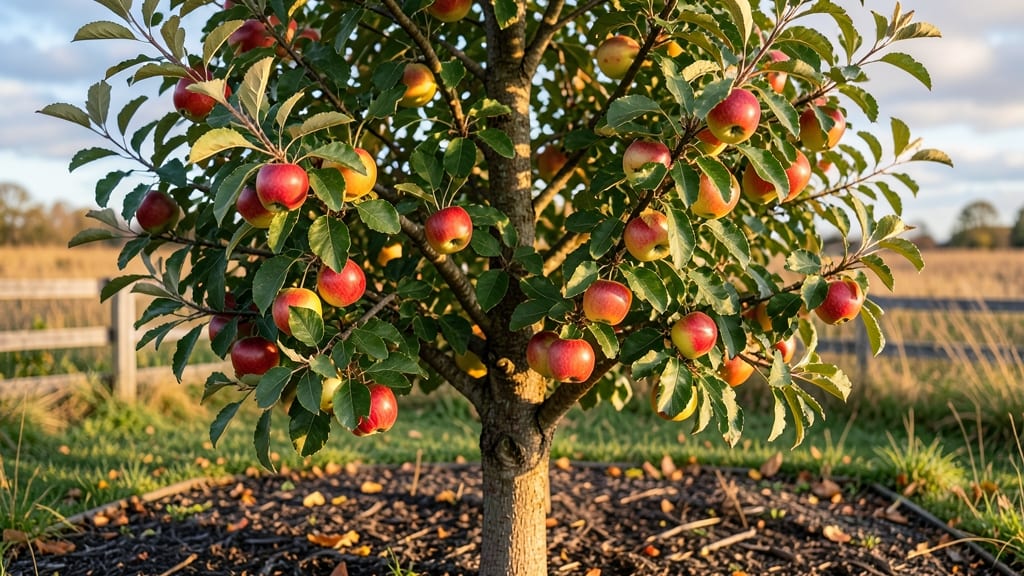
Honeycrisp apples grow best in USDA Zones 4-8, where cold winters and warm summers create the perfect climate for flavor development. Plant in early spring or fall, space trees 15-20 feet apart, and use well-draining soil with full sun exposure for maximum fruit production.
Honeycrisp apples need those cold winters to accumulate enough chill hours (500-1,000) for proper dormancy, while warm summers help sweeten the fruit. 🍏 In colder northern zones like Zone 4, you'll want to plant slightly earlier in spring to avoid late frosts, while Zone 8 growers can extend planting into early fall.
The key is matching your local climate to the tree's dormancy needs—too little chill results in poor fruit set, while excessive heat can stress the plant.
Another critical factor is soil temperature—roots need to warm up before planting, which varies by zone. For example, Zone 4 gardeners should wait until soil reaches 50°F (10°C), while Zone 8 can plant when soil hits 60°F (15°C).
Mulching with straw or wood chips helps regulate temperature extremes, especially in Zone 5 and below, where winter protection becomes essential.
💡 In This Article
- Honeycrisp Apple Climate Requirements by USDA Zone
- Zone-Specific Honeycrisp Apple Planting Timeline
Honeycrisp apple climate requirements by USDA Zone
The Honeycrisp apple's success hinges on chill hours—the cumulative time below 45°F (7°C) during winter. This variety needs 500-1,000 chill hours annually to break dormancy properly. In Zone 4, winters easily exceed 1,000 hours, while Zone 8 borders the minimum threshold.
Without enough chill, buds fail to open, leading to sparse fruit production. The sweet-tart flavor also develops best with these cold winters followed by warm summers that accelerate sugar conversion in the fruit.
Summer heat tolerance varies by zone. Honeycrisp thrives in Zones 5-7, where daytime highs reach 85-95°F (29-35°C) but nights dip below 60°F (15°C). In Zone 8, prolonged heat above 95°F (35°C) can stress trees, causing sunburn on fruit or leaf drop.
Meanwhile, Zone 4 gardens benefit from cooler summers, reducing pest pressure like codling moths while maintaining crisp, juicy flesh. The tree's shallow root system also needs consistent moisture—drought stress in Zone 6+ can reduce yields by up to 30%.
Frost sensitivity is another critical factor. Young trees in Zones 4-5 require protection from late spring frosts (28°F/-2°C), which can kill blossoms. Use frost cloths or row covers for 2-3 weeks after bloom.
In Zone 8, early fall frosts may prematurely halt fruit ripening, so harvest timing becomes crucial. Soil temperature matters too—roots need 50°F (10°C) minimum to establish before planting, with Zone 4 soils warming slower than Zone 8 by 2-3 weeks.
Here’s how zones differ in practice:
- Zone 4: Plant in early May when soil reaches 50°F (10°C); use thick mulch (4-6 inches) to insulate roots
- Zone 5-6: Ideal planting window is April-May; prune in late winter to remove frost-damaged branches
- Zone 7-8: Can plant until early November; monitor for heat stress with drip irrigation during dry spells
The Honeycrisp’s thick, crisp skin also responds to seasonal light cycles. In northern zones (4-5), shorter summer days trigger earlier fruit maturation, while southern zones (7-8) may need hand-thinning to prevent overcrowded, smaller apples.
The tree’s natural resistance to apple scab (a fungal disease) improves in cooler, humid Zone 5-6 climates, reducing chemical sprays needed.
For best results, test your local chill hours using a chill hour calculator—many state agricultural extensions offer this tool. If you’re in Zone 9+, consider dwarf varieties or microclimate adjustments (like shade cloth) to mimic Zone 8 conditions.
The payoff? Honeycrisp’s signature juicy, honey-sweet crunch develops fully only with these precise climate cues.