
Planting
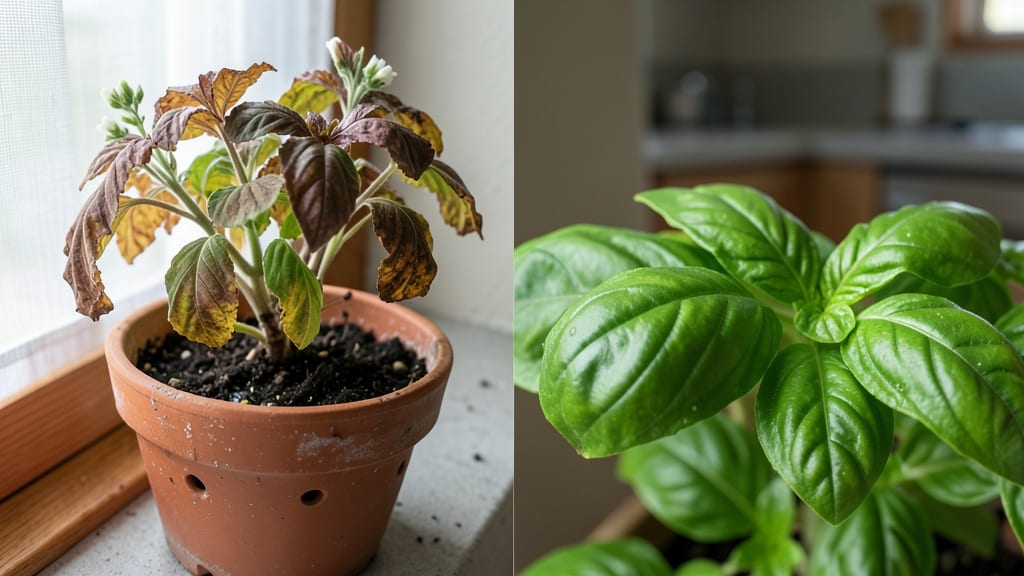
Brown leaves on your basil plant don’t mean it’s a lost cause—just a cry for help. 🌿 I’ve nursed back dozens of basil plants from crispy edges to lush green growth, and the fixes are simpler than you’d think.
The key is identifying whether your plant is thirsty, sunburned, or fighting off pests before the damage spreads.
Most brown leaves start with one of three culprits: underwatering (leaves crisp at the edges), overwatering (yellowing with mushy stems), or too much sun (bleached or scorched patches). Pests like aphids or spider mites also leave behind sticky residue or tiny webs.
Check the stems, undersides of leaves, and soil moisture before jumping to conclusions—your basil’s symptoms will tell you exactly what it needs.
Within 48 hours of adjusting care, you’ll see improvement: new leaves unfurling, crisp edges softening, or pests vanishing. The secret is consistency—water when the top inch of soil feels dry, move pots to 4-6 hours of morning sun, and spray with neem oil if pests are the culprit.
Your basil will bounce back faster than you expect.
Here’s the best part: once you fix the issue, your basil will grow twice as fast and produce even more leaves for pesto. Prevention is easy—just monitor soil moisture, rotate pots occasionally, and keep an eye out for early signs of stress.
Your kitchen’s fresh herb supply is about to get a whole lot greener.
Root Causes of Basil Leaf Browning
When your basil plant starts showing brown leaves, it’s often a cry for help from the plant itself. Understanding the underlying causes is the first step to saving your herb garden.
Below, we break down the most common reasons why basil leaves turn brown—from environmental stressors to care mistakes—and what’s really going on at the cellular level.
Basil thrives in moist but well-drained soil. When roots sit in soggy conditions, they struggle to absorb oxygen, leading to root rot. This disrupts nutrient uptake, causing leaves to yellow or brown at the edges before wilting entirely.
Why it happens:
- Oxygen deprivation: Waterlogged soil forces roots to suffocate, triggering anaerobic conditions. Roots release ethylene gas (a stress hormone) as a survival response, which accelerates leaf browning.
- Nutrient lockout: Excess water flushes away essential minerals like magnesium and calcium, leading to deficiencies that manifest as brown, crispy edges.
- Fungal infections: Stagnant moisture invites pathogens like Pythium or Phytophthora, which clog root vessels and block water/nutrient flow.
🔍 How to spot it: Check the soil—if it’s damp more than 1–2 inches down or smells musty, drainage is the issue. Brown leaves often start at the bottom of the plant and spread upward.
Basil loves sunlight, but too much direct heat—especially in afternoon sun—can scorch leaves. Brown, papery patches or bleached edges are classic signs of sunburn, where chlorophyll breaks down from excessive UV exposure.
Why it happens:
- Photosynthesis overload: Basil’s leaves absorb more light energy than they can process, generating reactive oxygen species (ROS). These molecules damage cell membranes, causing oxidative stress and browning.
- Water loss acceleration: Heat increases transpiration rates, drying out leaf edges faster than roots can replenish moisture. This leads to necrosis (dead tissue).
- Heat shock proteins: While basil produces protective proteins to handle heat, prolonged stress exhausts these defenses, leading to visible browning.
🌡️ Pro tip: If your basil is in a hot, reflective environment (like a concrete patio), provide afternoon shade or use a light shade cloth (30–50%) to filter harsh rays.
Basil’s tender leaves are prone to physical damage from wind or osmotic stress caused by salt accumulation (from tap water, fertilizers, or soil amendments). Both issues disrupt the cuticle layer, the leaf’s protective waxy coating.
Why it happens:
- Cuticle damage: Wind abrasion or salt crystals crystallize on leaf surfaces, creating tiny wounds. These gaps allow water to evaporate rapidly and pathogens to enter, leading to brown, dry patches.
- Ion imbalance: Excess salt in soil disrupts root function, preventing uptake of potassium and calcium. Without these minerals, cells lose structural integrity, causing marginal scorching.
- Oxidative damage: Salt stress triggers a burst of ROS, similar to sunburn, but from cellular dehydration rather than light.
💡 Fix it:
- Move potted basil to a sheltered spot or use a windbreak (like a mesh screen).
- Flush soil with rainwater or distilled water to dilute salt buildup. Repeat monthly if using tap water.
- Avoid fertilizing during hot, dry periods—stick to balanced, organic fertilizers (like fish emulsion) diluted to half-strength.
Brown leaves can also signal an insect infestation or fungal/bacterial infection. Common culprits include spider mites, aphids, or downy mildew, which weaken the plant’s ability to photosynthesize.
Why it happens:
| Pest/Disease | Mechanism | Leaf Symptoms |
|---|---|---|
| Spider mites | Pierce cells to feed on sap, disrupting chlorophyll and causing stippling (tiny brown dots). Severe infestations lead to bronzing (leaves turn coppery-brown). | Fine webbing on undersides; brown, dry patches between veins. |
| Aphids | Inject toxic saliva while feeding, curling leaves and transmitting viruses. Heavy feeding causes leaf desiccation (browning from water loss). | Sticky residue ("honeydew"); black sooty mold (a fungal growth on honeydew). |
| Downy mildew (Peronospora belbahrii) | Fungal spores clog stomata (leaf pores), blocking gas exchange. Infected cells undergo programmed cell death, turning brown and crispy. | Yellow-brown spots on top; purple-gray fuzz on undersides in humid conditions. |
🔥 Early action: Isolate affected plants immediately. Wipe leaves with neem oil solution (1 tsp neem oil + 1 quart water + dash of soap) for pests. For mildew, apply copper fungicide or a baking soda spray (1 tsp baking soda + 1 quart water + few drops of oil) every 7–10 days.
Basil is a tender annual and cannot tolerate frost or cold drafts. Sudden temperature drops (below 50°F/10°C) disrupt enzyme activity in leaves, leading to chilling injury.
Why it happens:
- Cell membrane damage: Cold temperatures cause lipid layers in cell membranes to stiffen and rupture, leaking electrolytes and water. This triggers oxidative stress, turning leaves brown.
- Photosynthesis shutdown: Cold slows RuBisCO enzyme activity (critical for carbon fixation), starving cells of energy. Leaves lose turgor pressure
Quick Fixes for Reviving Basil
Brown leaves on your basil don’t mean the end of your herb garden—often, they’re just a sign that your plant needs a little TLC. With the right approach, you can nurse it back to health and keep those fragrant leaves thriving.
Below are practical, step-by-step solutions tailored to the most common causes, plus tips to prevent future stress.
If your basil’s leaves are yellowing, wilting, or turning brown and mushy, overwatering is likely the culprit. Basil hates soggy roots, which can lead to root rot and fungal infections.
How to Fix It:
- 🔥 Stop Watering Immediately – Let the soil dry out completely before watering again.
- 🍳 Check the Roots – Gently remove the plant from its pot and inspect the roots. If they’re dark, mushy, or smell foul, trim away the affected parts with sterilized scissors (⏰ use rubbing alcohol to clean them).
- 👨🍳 Repot in Fresh Soil – Use a well-draining potting mix (add perlite or sand if yours is too dense). Choose a pot with drainage holes—no exceptions!
- 🥘 Water Only When Needed – Stick your finger 1 inch into the soil; water only if it’s dry. Basil prefers bottom-watering (place the pot in a tray of water for 10-15 minutes, then drain excess).
💡 Prevention Tip:
- Never let basil sit in standing water—empty saucers after watering.
- Group basil with herbs that love similar care (like oregano or thyme) to avoid overwatering mistakes.
Brown, crispy edges or leaves that feel dry and papery? Your basil is either thirsty or sunburned from too much direct heat.
How to Fix It:
- 💧 Give It a Deep Drink – Water thoroughly until it drains from the bottom. Basil loves moisture but hates soggy soil, so balance is key.
- 🌡️ Adjust Light Exposure – If outdoors, move your basil to partial shade (especially in peak afternoon sun). Indoor basil? Rotate the pot weekly for even light.
- 🎯 Mist the Leaves – Lightly spray water on the foliage in the morning to boost humidity (basil thrives in 50-70% humidity).
- ✨ Prune Damaged Leaves – Snip off brown or crispy leaves with clean scissors to redirect energy to new growth.
💡 Prevention Tip:
- Water in the morning so leaves dry quickly, reducing fungal risk.
- Use a self-watering pot if you tend to forget watering schedules.
Basil is a tender annual—it hates cold drafts, sudden temperature drops, or harsh winds, which can cause leaves to turn brown and brittle.
How to Fix It:
- 🏡 Move It Indoors or to Shelter – If temps drop below 50°F (10°C), bring potted basil inside near a sunny window or under grow lights.
- 🛡️ Shield from Wind – Place basil in a protected spot (like a patio corner shielded by a fence or trellis).
- 🌡️ Avoid Cold Drafts – Keep it away from AC vents, open windows, or doors—sudden chills shock the plant.
- 🔥 Warm Up the Soil – If repotting, use warm soil (not hot) to avoid stressing the roots.
💡 Prevention Tip:
- Hardening off basil gradually if moving it from indoors to outdoors (acclimate over 5-7 days).
- Use a cloche or row cover for outdoor basil in early spring or fall.
Brown, speckled, or holey leaves? Pests like spider mites, aphids, or whiteflies (or diseases like powdery mildew) can stress basil.
How to Fix It:
- 🔍 Identify the Problem – Check the undersides of leaves for tiny bugs, webbing, or white powdery spots.
- 🍳 Remove Infested Leaves – Snip off heavily damaged leaves and dispose of them (don’t compost if pests are present).
- 👨🍳 Treat with Natural Remedies:
- For Soft-Bodied Pests (Aphids, Whiteflies): Spray with neem oil solution (1 tsp neem oil + 1 tsp mild soap + 1 quart water). Reapply every 3-5 days.
- For Spider Mites: Wipe leaves with a damp cloth or spray with water to knock them off. Repeat daily until gone.
- For Fungal Issues (Powdery Mildew): Spray with baking soda mix (1 tsp baking soda + 1 quart water + a drop of soap).
- ⏰ Quarantine Affected Plants – Keep basil separate from other herbs until fully recovered.
💡 Prevention Tip:
- Inspect new plants before bringing them home.
- Encourage beneficial insects (like ladybugs) by planting marigolds or dill nearby.
Brown, yellowing leaves with brown tips? Your basil might be starving or burning from too many nutrients.
How to Fix It:
- 📊 Test Your Soil – Use a simple soil test kit to check pH (ideal: 6.0-7.0) and nutrient levels.
- 🍽️ Feed Lightly – Use a balanced, water-soluble fertilizer (like 10-10-10) diluted to half strength. Fertilize every 4-6 weeks in growing season.
- 🥗 Avoid Over-Fertilizing – Too much salt or chemicals burn roots, causing browning. Always water before fertilizing.
- 🌿 Boost Organic Matter – Mix in compost or worm castings for a slow-release nutrient boost.
💡 Prevention Tip:
- Flush the soil every few months by watering heavily to rinse out excess salts.
- Use fish emulsion or seaweed extract for a gentle, natural nutrient boost.
- 🌱 Prune Regularly – Pinch off the top sets of leaves to encourage bushier growth and prevent stress.
- 🍃 Harvest Often – Picking leaves stimulates new growth and prevents the plant from becoming overcrowded.
- 🌞 Rotate the Pot – Ensures even light exposure so basil doesn’t lean or develop uneven browning.
With these fixes, your basil should bounce back in 1-2 weeks—just give it the right care, and you’ll be back to harvesting fresh leaves for your favorite dishes! 🍝🌿
Frequently asked questions about brown leaves on basil
Why do basil leaves turn brown at the edges first?
Brown edges usually signal underwatering or salt buildup from tap water or fertilizer. When roots can't supply enough moisture, leaf edges dry out first due to high transpiration rates. Check soil moisture by sticking your finger 1 inch deep—if dry, water thoroughly. For salt issues, flush soil with rainwater or distilled water monthly.
Can I still use basil with brown leaves for cooking?
Yes! Only remove the completely brown or mushy leaves—healthy green parts are perfectly safe to use. Brown edges from underwatering are harmless, while leaves with yellowing or black spots (from overwatering or disease) should be discarded. Always wash leaves before using to remove any pest residue or soil particles.
How quickly should basil recover after fixing the issue?
With proper care, you'll see improvement in 3-7 days. New leaves should emerge within 1-2 weeks if you've addressed the root cause (like adjusting watering or treating pests). For severe cases (like root rot), recovery may take 2-3 weeks. Monitor soil moisture and light exposure daily during this time for best results.
Is it better to prune brown leaves or leave them?
Always prune brown leaves immediately—they drain energy from healthy growth. Use clean scissors to snip at the stem base, not tearing. For large brown patches, cut back to healthy green growth. Pruning also encourages bushier growth and prevents fungal spread. Just avoid removing more than 1/3 of the plant at once.
Why does my indoor basil get brown leaves faster than outdoor plants?
Indoor basil struggles with low humidity (below 50%) and inconsistent light. Air conditioning and heating systems dry out leaves faster, while artificial lighting often lacks the full spectrum needed. Boost humidity with a pebble tray or misting, and supplement natural light with a grow light if needed. Rotate the pot weekly for even growth.