
Plants
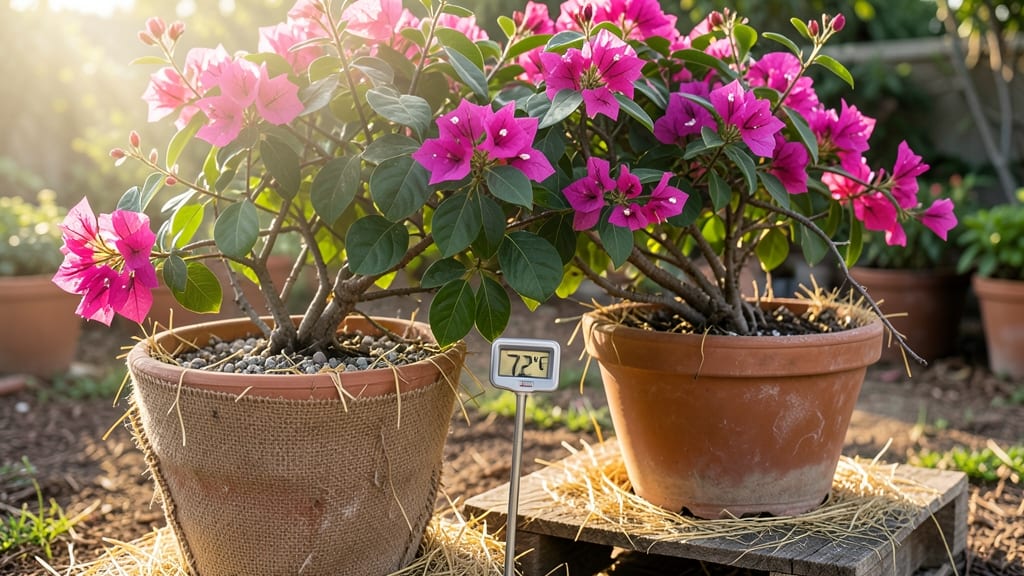
Growing bougainvillea in Zone 6 demands winter protection because this tropical plant thrives only in USDA zones 9–11, where temperatures stay above 20°F (-6.7°C). Use containers for easy movement, apply thick mulch, or cover with frost blankets to safeguard roots and stems from cold damage.
Zone 6's winters drop well below bougainvillea's 20°F (-6.7°C) tolerance, so without protection, even mature plants face irreversible damage. 🌡️ The key is creating a microclimate—whether through containers (which you can wheel indoors) or ground-level insulation.
I've seen gardeners in similar climates use straw bales around the base combined with burlap wraps for stems, which adds an extra 5–10°F of protection. The goal is to mimic the plant's natural tropical conditions, where consistent warmth prevents dormancy-related stress.
For in-ground plants, focus on the root zone first—6+ inches of mulch (like shredded leaves or pine straw) acts as a thermal blanket.
If you're growing in containers, move them to a sheltered spot against a south-facing wall before the first frost, then wrap the pots in bubble wrap or insulated sleeves.
Remember, stems are more resilient than leaves, so don't panic if the foliage blackens—new growth will emerge once temperatures rise again.
💡 In This Article
- Understanding Bougainvillea’s Cold Sensitivity in Zone 6
- Step-by-Step Winter Care for Potted and In-Ground Bougainvillea
Understanding bougainvillea’s cold sensitivity in Zone 6
Bougainvillea hails from Brazil’s coastal regions, where temperatures rarely dip below 50°F (10°C), making it ill-equipped for Zone 6’s harsh winters. The plant’s leaves contain water-filled cells that freeze at 28–32°F (-2 to 0°C), causing cellular rupture and irreversible damage.
When temperatures drop below 20°F (-6.7°C), even the woody stems—though more resilient—can suffer dieback, as the vascular system struggles to transport nutrients through frozen tissues. 🌡️
The plant’s survival mechanism relies on dormancy, but Zone 6’s prolonged cold prevents proper recovery. Unlike hardy perennials, bougainvillea lacks natural antifreeze proteins (found in cold-tolerant species like roses) to protect cellular structures.
Frost first attacks the delicate bracts—the vibrant paper-like structures we mistake for flowers—which blacken and crisp within hours. The true flowers (tiny tubular blooms) are more resilient but still vulnerable to prolonged exposure below 15°F (-9.4°C).
Root systems face the greatest threat, as soil conducts cold more efficiently than air. When ground temperatures fall below 32°F (0°C), roots can’t absorb water or nutrients, leading to dehydration stress.
This is why mulching with 4–6 inches of organic matter (like straw or leaves) becomes critical—it insulates roots by trapping 30–40% more heat than bare soil. In containers, the entire root ball freezes faster, which is why pot insulation (like bubble wrap) adds an extra 5–8°F of protection.
What most gardeners overlook is how wind exacerbates cold damage. Bougainvillea’s thin stems lose heat 30% faster in windy conditions, similar to how a wet towel freezes quicker than a dry one.
This is why positioning plants against south-facing walls or using windbreaks (like burlap screens) can mean the difference between survival and loss. The plant’s tropical origins also mean it lacks the waxy cuticle layer found on cold-hardy species, making it more susceptible to frost desiccation.
Here’s the science behind the damage: Frost causes ice crystals to form in plant cells, rupturing membranes and releasing toxic compounds. In bougainvillea, this process triggers a chain reaction where affected leaves release ethylene gas—a plant hormone that accelerates senescence (aging).
Within 24–48 hours of a hard freeze (15°F/-9.4°C), you’ll see wilting, then browning, as the plant’s energy shifts from growth to survival mode. The good news? The woody stems often regenerate new growth in spring, but severe cold can kill the plant back to the ground.
To visualize the impact, imagine bougainvillea’s leaves as thin plastic wrap: they hold moisture well in warmth but shatter when frozen. The stems, though tougher, are like rubber bands—flexible but prone to cracking under prolonged cold stress.
This is why pruning back damaged stems in late winter (before new growth) helps redirect the plant’s energy into recovery rather than repairing dead tissue. 🌱