
Plants
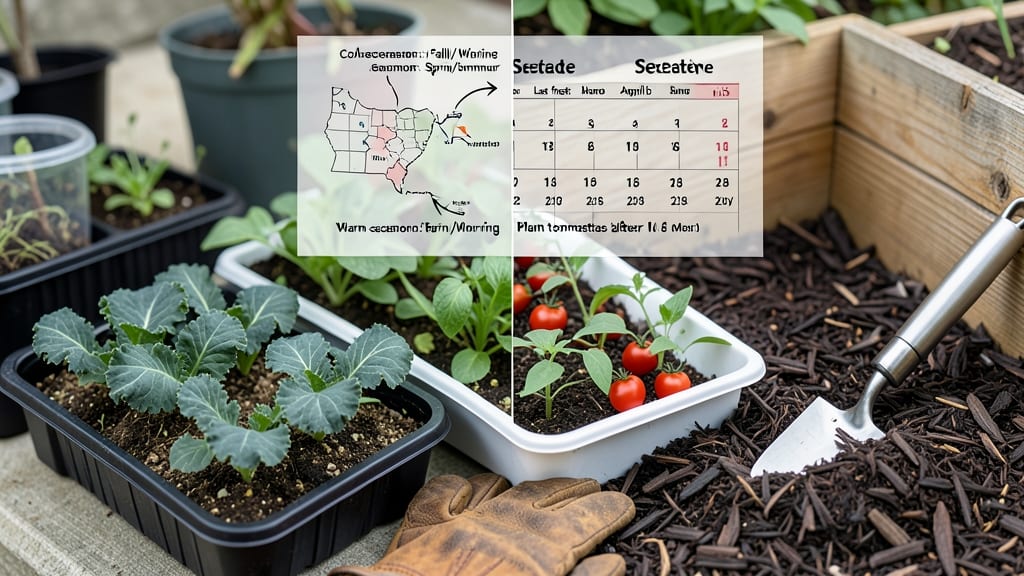
To plant in Seattle, time your garden based on last frost dates: sow cool-season crops like kale and spinach in early March, wait until after mid-May for heat-loving plants such as tomatoes and peppers, and opt for fall bloomers like chrysanthemums in late September. Coastal areas may push these windows 2-4 weeks earlier.
Seattle's maritime climate creates unique planting opportunities, but timing is everything.
The USDA Zone 8a/8b average last frost date around May 15 sets the baseline, though your microclimate could shift this by weeks. 🌱 For instance, urban heat pockets like South Seattle often let you plant warm crops 10-14 days earlier, while sheltered valleys may extend fall planting into October.
Always check soil temperatures—60°F+ for warm-season starts—and consider row covers to push boundaries safely.
Pro tip: Use the 10-14 day rule after last frost before planting heat-sensitive crops. This buffer accounts for late frosts that can still occur in May. For coastal gardeners, monitor Puget Sound's warming effects—areas like Bainbridge Island sometimes see 2-3 weeks earlier planting windows for both spring and fall crops.
💡 In This Article
- Seattle’s Frost Dates and Planting Windows by Season
- Microclimate Adjustments for Seattle Gardens
Seattle’s frost dates and planting windows by season
Seattle’s planting calendar revolves around its USDA Zone 8a/8b classification, where the average last spring frost typically occurs around May 15, though this can vary by ±7 days annually.
The key mechanism here is the 10-14 day buffer rule: after the last frost, wait this period before planting warm-season crops like tomatoes or peppers.
This accounts for late frosts that can still hit Seattle in early June, especially in higher-elevation areas like Queen Anne or Magnolia. 🌿 The Puget Sound’s maritime influence moderates temperatures, creating a longer growing window—coastal areas like Bainbridge Island often see last frosts 2-3 weeks earlier than inland zones.
Cool-season crops like lettuce, spinach, and peas thrive when planted in early March, taking advantage of Seattle’s mild winters. These plants tolerate light frosts down to 25°F, but avoid sowing too early—soil temperatures below 40°F slow germination.
Warm-season vegetables, however, demand patience: tomatoes and peppers need soil temperatures above 60°F for consistent germination, which usually aligns with late May to early June in most of Seattle.
Historical data shows that 1998 and 2012 had unusually late frosts (June 5), while 2016 and 2020 saw early last frosts (May 1), highlighting the need for flexibility.
Fall planting in Seattle leverages the city’s extended growing season. Flowers like pansies and kale can be sown as early as late September, with some hardy varieties (e.g., ‘Winterbor’ kale) surviving until December.
The first frost in Seattle usually arrives around November 15, but sheltered microclimates—like urban heat islands in South End—can delay this by 1-2 weeks.
For precise timing, use a soil thermometer: aim for 50°F+ for cool-season crops in fall to ensure strong root development before winter sets in.
Seattle’s maritime climate creates microclimatic pockets where frost dates shift dramatically. For example, the University of Washington campus (Zone 8b) averages last frosts 5 days earlier than nearby Ballard (Zone 8a), due to urban heat retention.
Coastal areas benefit from the Puget Sound’s heat retention, allowing gardeners in West Seattle or Vashon Island to plant warm crops 10-14 days earlier than inland zones. Conversely, higher elevations like Snoqualmie Valley may experience frosts 1-2 weeks later than downtown.
To maximize your planting window, consider row covers (like floating row tunnels) to extend spring planting by 3-4 weeks or protect fall crops from early frosts. These lightweight fabrics trap heat, raising soil temperatures by 5-10°F—critical for warm-season starts in May.
For example, ‘Sweet 100’ tomatoes planted under row covers in early May can yield fruit 2 weeks earlier than unprotected plants. Always monitor local forecasts, as Seattle’s frost patterns can shift due to La Niña (later frosts) or El Niño (earlier frosts) cycles.
For data-driven planning, consult the Seattle Tilth’s frost calendar or use the National Weather Service’s historical frost maps. These tools show that while the 30-year average last frost is May 15, recent decades have seen a trend toward earlier frosts—likely due to climate change.
Adjust your schedule accordingly, and always have backup row covers on hand for unpredictable late frosts. 🌱