
Planting
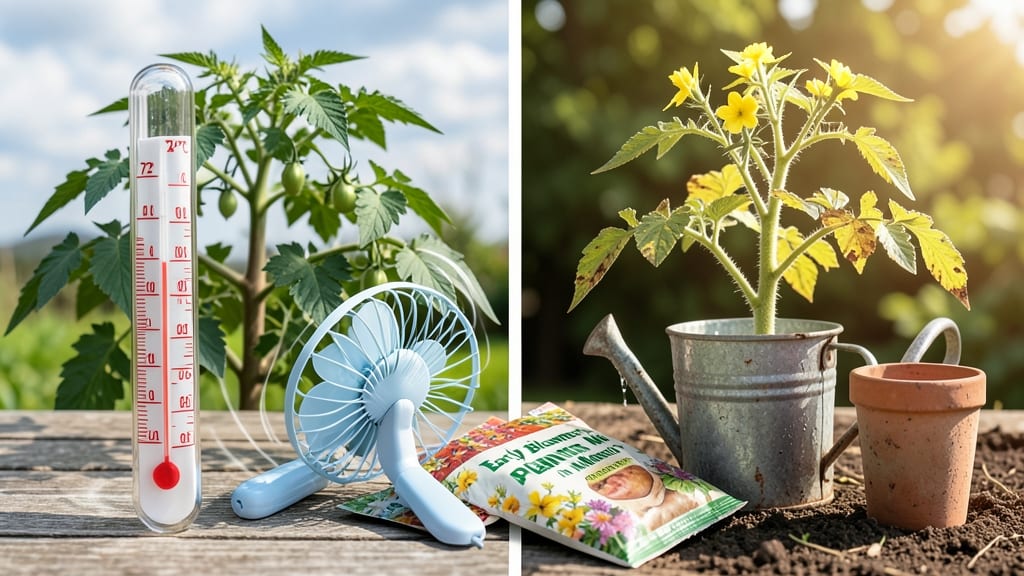
Your tomato plants are throwing the flowers too early—that’s the last thing you want when you’re dreaming of beefsteak-sized fruit. 🌱 The problem usually boils down to heat, light, or the wrong variety, but the good news?
You can still steer those plants toward bigger harvests with a few simple tweaks.
First, check your variety—some tomatoes are bred to bolt early, especially if you planted heat-sensitive types too soon. Then, adjust light exposure: too much sun in spring can trick plants into flowering prematurely.
Move them to partial shade or extend the season with shade cloth until nighttime temps stay above 55°F.
Pruning is your secret weapon here. Snip off those early flowers like they’re weeds—it sounds brutal, but it forces the plant to focus on building a sturdy stem and more leaves.
Within a few weeks, you’ll see stronger growth, and when the real heat arrives, you’ll get bigger, later blooms that produce heavier fruit.
This works for both garden beds and containers, and it’s especially useful if you’re in a warm climate where spring arrives early. The key is patience—your tomatoes will thank you with a harvest that’s worth the wait.
Early Blooming Triggers Explained
Understanding why your tomato plant is flowering too early is half the battle—because once you know the cause, you can take targeted action to delay those blooms and give your plant time to build strength. Let’s break down the science behind premature flowering, so you can troubleshoot like a pro.
---
Tomatoes are tropical plants at heart, and they love warmth—but not too much. When daytime temperatures soar above 85°F (29°C) or nighttime temps stay above 70°F (21°C), your plant may think it’s time to reproduce fast.
This triggers early flowering as a survival mechanism to set fruit before the heat becomes lethal.
Why it happens: - Excessive heat disrupts photosynthesis, causing the plant to prioritize flowering over foliage growth. - Rapid temperature swings (e.g., hot days, cool nights) can confuse the plant’s internal clock, signaling it’s time to bloom. - Short-day plants (like some heirloom tomatoes) may respond to longer daylight hours by flowering prematurely.
Actionable fix: - Provide shade cloth (30-50%) during peak afternoon heat. - Use mulch (straw or black plastic) to keep soil temps stable. - Opt for heat-tolerant varieties like ‘Heatmaster’ or ‘Solar Fire’ if you’re in a hot climate.
---
When tomato plants get too much of a good thing—whether it’s nutrients, space, or water—they can go into overdrive and flower early. Think of it like a teenager hitting puberty too soon: too many resources at once can trigger rapid maturation.
Why it happens: - Excess nitrogen (N) in fertilizer promotes leafy growth but can also spur early blooming if not balanced with phosphorus (P) and potassium (K). - Root-bound plants (in pots or crowded beds) experience stress, which can trigger flowering as a survival response. - Overwatering leads to weak roots and poor nutrient uptake, causing the plant to prioritize reproduction over growth.
Actionable fix: - Switch to a balanced fertilizer (e.g., 5-10-10 or 3-4-6) to reduce nitrogen dominance. - Prune lower leaves to improve airflow and reduce stress. - Repot or transplant if roots are crowded, giving the plant more space to grow.
---
Tomatoes are short-day plants, meaning they flower in response to daylight hours rather than temperature alone. If your plant experiences longer days (14+ hours of light) too early in the season, it may interpret this as a signal to bloom—even if it’s not yet strong enough.
Why it happens: - Early spring planting in regions with long summer days can trick tomatoes into flowering prematurely. - Artificial light sources (like grow lights left on too long) can extend daylight hours unnaturally. - Genetic predisposition—some varieties (like determinate tomatoes) are more prone to early flowering than others.
Actionable fix: - Delay planting until after your last frost date when nights are cooler. - Use blackout curtains or shade at night to reduce daylight exposure if needed. - Choose indeterminate varieties (like ‘Better Boy’ or ‘Cherokee Purple’) for slower, more controlled flowering.
---
Tomatoes are thirsty plants, and inconsistent watering—whether too much or too little—can send mixed signals to the plant, prompting early flowering as a stress response.
Why it happens: - Drought stress causes the plant to conserve energy by focusing on reproduction. - Overwatering leads to root suffocation, which can trigger flowering as a last-resort survival tactic. - Inconsistent moisture (e.g., dry spells followed by heavy watering) confuses the plant’s growth cycle.
Actionable fix: - Water deeply 1-2 times per week (1-2 inches per week) to keep soil evenly moist. - Use drip irrigation to avoid wetting leaves, reducing disease risk and stress. - Mulch heavily to retain moisture and regulate soil temperature.
--- Pro Tip: 💡 If your plant is already flowering early, don’t despair! You can still prune suckers and flowers to redirect energy into foliage growth. Just be patient—your tomatoes will thank you with bigger, healthier fruit later in the season.
Quick Fixes to Delay Blooming
Now that you understand why your tomato plant is flowering too early, let’s tackle the solutions—tailored to the root cause. Whether it’s heat stress, poor nutrition, or environmental triggers, these fixes will help reset your plant’s growth cycle for stronger, more productive vines.
And don’t worry, most fixes are simple and require minimal tools!
---
If your plant is reacting to heat or cold snaps, the goal is to stabilize its environment. Tomatoes thrive in daytime temps of 70–85°F (21–29°C) and nighttime temps above 55°F (13°C). Early flowering often means the plant is under stress—let’s correct that.
#### 🔥 Step 1: Provide Shade During Heatwaves - Use shade cloth (30–50% coverage) to filter harsh sunlight, especially in afternoons (2 PM–6 PM) when temps peak. - Alternative: Move potted tomatoes to a shadier spot (e.g., under a patio awning or near a north-facing wall). - Pro Tip: 💡 If you don’t have shade cloth, draping a light sheet or old fabric over the plant works in a pinch!
#### 🥶 Step 2: Protect from Cold Snaps - Cover plants at night with frost blankets or row covers if temps drop below 55°F (13°C). - Avoid plastic—it traps moisture and can cause rot.
Use breathable fabric instead. - For potted plants: Move them to a garage or sheltered porch temporarily.
#### ⏰ Step 3: Extend the Growing Season - Start indoors (6–8 weeks before last frost) if you’re in a short-season climate.
Use grow lights to control light exposure. - Use black plastic mulch to warm soil faster in spring, but remove it if temps exceed 90°F (32°C) to prevent overheating.
Prevention Tip: 🌡️ Monitor your local heat advisories and frost dates. Tomatoes need consistent warmth—don’t rush planting!
---
Early flowering can signal too much nitrogen or a phosphorus/potassium (P/K) push. Let’s balance the nutrients for leafy growth first, then fruit later.
#### 🍳 Step 1: Adjust Fertilizer Ratios - Stop high-nitrogen fertilizers (like lawn fertilizer or blood meal) immediately.
These encourage leaves but delay fruit set. - Switch to a balanced or low-nitrogen fertilizer (e.g., 5-10-10 or 10-10-10) to support root and stem development. - For organic growers: Use compost, worm castings, or fish emulsion (low in N) instead of manure.
#### 👨🍳 Step 2: Prune Existing Flowers (If Needed) - Remove the first few flower clusters (if they’ve already formed) to redirect energy to roots and stems. - How to prune: Use clean scissors or fingers to pinch off small buds/flowers. Don’t wait until they open! - Pro Tip: ✨ Save the seeds from these early flowers if you want to preserve the variety.
#### 🥗 Step 3: Boost Potassium & Phosphorus (Later) - Once the plant is well-established (4–6 weeks after transplanting), introduce potassium-rich fertilizers (like banana peel tea or wood ash) to strengthen stems and prepare for fruit. - Avoid phosphorus-heavy fertilizers (like bone meal) early on—they promote flowering too soon.
Prevention Tip: 📊 Test your soil before planting. Tomatoes prefer pH 6.2–6.8 and moderate nutrients. Over-fertilizing is a common mistake!
---
Tomatoes need 10–12 hours of sunlight daily, but too much light too soon can trigger early flowering. Let’s optimize their light conditions.
#### 🔦 Step 1: Gradually Increase Sunlight - If seedlings are in low light, move them slowly to full sun over 7–10 days to avoid shock. - For indoor starts: Use grow lights on a timer (14–16 hours/day) to simulate long days.
#### 🌿 Step 2: Avoid Overcrowding - Space plants 18–24 inches apart (for determinate varieties) or 24–36 inches (for indeterminate). - Thin seedlings if they’re competing for light—weak, leggy plants flower early.
#### 🌅 Step 3: Use Reflective Surfaces - Place white reflective mulch or mirrors around plants to bounce light onto leaves, encouraging even growth.
Prevention Tip: 🎯 Plant at the right time! Avoid transplanting too early—wait until nighttime temps stay above 55°F (13°C).
---
Fluctuating moisture levels can stress plants into flowering early. Let’s keep them consistently hydrated but not soggy.
#### 💧 Step 1: Water Deeply & Regularly - Water at the base (not leaves) early in the day to prevent fungal issues. - Aim for 1–1.5 inches per week, adjusting for rain. - Avoid wetting foliage to prevent blossom end rot (a common issue with early fruit).
#### 🌊 Step 2: Use Mulch to Stabilize Soil Temp - Apply 2–3 inches of mulch (straw, grass clippings, or wood chips) to retain moisture and prevent temperature swings. - Pro Tip: 🌡️ Mulch also keeps roots cool in hot climates, reducing stress.
#### 🚰 Step 3: Avoid Overhead Watering - Drip irrigation or soaker hoses are best—they deliver water directly to roots without wetting leaves. - If using a hose, use a gentle spray and water in the morning so leaves dry quickly.
Prevention Tip: ⏰ Stick to a watering schedule—tomatoes hate dry spells followed by sudden soaking.
--- If your plant is already heavily flowered and you’ve tried everything, don’t panic—you can still save it for next season by: 1. Harvesting seeds from the early flowers (if you want to keep the variety).
2. Taking cuttings of healthy stems (6+ inches long) and rooting them in water for next year. 3. Composting the current plant and starting fresh with a later transplant date.
--- Remember: 🌱 Patience is key! Tomatoes need 60–85 days to mature—rushing them leads to weak plants. By adjusting light, nutrients, and temperature, you’ll encourage stronger vines and better fruit later in the season. Happy growing! 🍅✨
Frequently asked questions
Why do my tomato plants keep flowering too early even with proper care?
Early flowering often happens when plants experience rapid temperature swings or unpredictable daylight changes. Some varieties are genetically programmed to bolt early, especially if they're determinate types. Even with good care, heat stress above 85°F (29°C) or cool nights below 55°F (13°C) can trigger premature blooming as a survival response.
Can I still get a good harvest if my tomatoes flowered early?
Yes! While early flowers may produce small fruit, you can still get a great harvest by pruning off the first few flower clusters to redirect energy to the plant's main stem. This forces stronger growth that will produce larger, healthier fruit later in the season. Just be patient—it may take 2-3 weeks to see new growth.
What's the best way to prune early flowers without hurting the plant?
Use clean scissors or simply pinch off small flower buds with your fingers—no need for harsh pruning. Focus on removing small buds rather than open flowers to minimize stress. Prune in the morning when the plant is hydrated, and avoid removing more than 20-30% of the plant's foliage at once to prevent shock.
Are there specific tomato varieties that resist early flowering?
Yes! Look for indeterminate varieties like 'Better Boy', 'Cherokee Purple', or 'Solar Fire' which are bred to handle heat better. These types also produce fruit over a longer season. For cooler climates, try 'Stupice' or 'Glacier'—both are bred to delay flowering until temperatures stabilize.
How can I tell if my tomato plant is getting too much nitrogen?
Excess nitrogen causes dark green, lush leaves but weak stems and early flowering. Check for yellowing lower leaves (a sign of over-fertilization) and small, weak flowers. Switch to a balanced fertilizer (5-10-10 ratio) and reduce applications to every 3-4 weeks instead of weekly.