
Planting
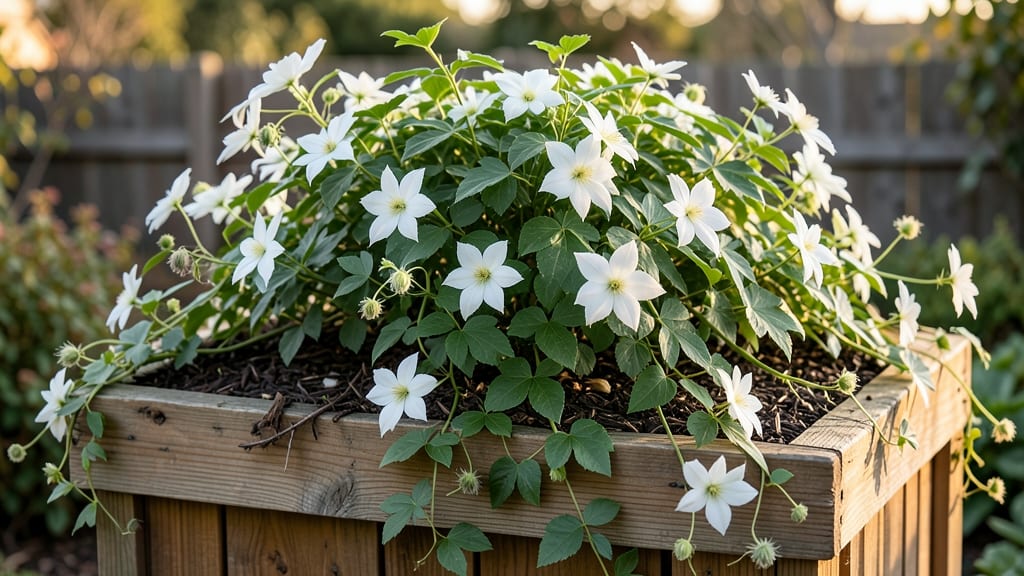
Sweet Autumn clematis grows best in USDA zones 4 through 9, handling temperatures down to -30°F (-34°C) but needing winter protection in colder areas. For optimal growth, plant it in well-draining soil with sturdy support, giving it partial shade to full sun while shielding from harsh afternoon rays.
The hardiness of Sweet Autumn clematis comes from its thick, woody stems that survive deep freezes, while its roots store energy for spring regrowth. 🌿 In zones 4-6, I always mulch heavily around the base and use burlap wraps to shield vines from harsh winds—this extra care helps it bounce back stronger each year.
Coastal areas often push the zone limits higher due to milder winters, while inland regions may need microclimate adjustments like planting near south-facing walls or under deciduous trees for summer shade.
This variety's vigorous growth makes it perfect for trellises or arbors, but its cold tolerance varies slightly based on soil drainage and winter moisture levels.
I've seen it thrive in zone 5 gardens with proper protection, while zone 3 gardeners should consider container planting or greenhouse overwintering for the most reliable results.
💡 In This Article
- Understanding Sweet Autumn Clematis Cold Hardiness
- Best Regions and Microclimates for Planting Sweet Autumn Clematis
Understanding Sweet Autumn clematis cold hardiness
Sweet Autumn clematis (Clematis terniflora) earns its reputation for cold resilience thanks to its unique biological adaptations. The plant develops thick, woody stems that can withstand temperatures down to -30°F (-34°C) because its vascular system slows water transport during winter, preventing freeze damage.
Unlike herbaceous clematis varieties that die back to the ground annually, Sweet Autumn's permanent stems act as energy reserves, allowing it to regrow rapidly in spring. This woody structure is what pushes its hardiness into USDA zone 4 territory, where many gardeners successfully cultivate it with minimal winter care.
The root system plays an equally crucial role in survival. Sweet Autumn clematis roots extend deep into the soil, accessing moisture and nutrients that remain stable even when surface temperatures drop.
Studies show these roots can tolerate soil temperatures as low as 20°F (-7°C) without permanent damage, thanks to natural antifreeze compounds produced during dormancy.
However, when soil freezes completely (below 10°F (-12°C)), root activity halts entirely, which is why well-draining soil is critical—preventing waterlogged roots that could freeze and rot during harsh winters. 🌱
What most gardeners don't realize is how the plant's growth cycle affects its cold tolerance. Sweet Autumn clematis enters dormancy later than many perennials, often continuing to produce flowers into October. This delayed dormancy means it's more vulnerable to early frost damage in zones 4-5.
To mitigate this, I recommend pruning back any late-season growth by mid-October in colder regions, which helps the plant redirect energy to root development rather than above-ground growth. In zones 6-9, this isn't necessary, but the practice can extend the plant's lifespan by 2-3 years in marginal climates.
Temperature extremes create another challenge: rapid temperature swings. Sweet Autumn clematis struggles when daytime temperatures rise above 70°F (21°C) followed by nights dropping below 32°F (0°C). These fluctuations cause cellular damage in the stems, leading to dieback.
This is why gardeners in zone 4 should avoid planting in exposed locations—microclimates with consistent cold (like north-facing slopes) provide better protection.
The plant's natural response is to produce thicker bark layers in subsequent years, gradually increasing its cold resistance by up to 5°F (3°C) per growing season in optimal conditions.
For those pushing the limits in zone 3, the key is understanding the plant's recovery mechanisms. Sweet Autumn clematis can regenerate from the base even if the stems are damaged, but this requires well-mulched soil (4-6 inches of organic matter) to insulate the crown.
I've seen it recover from -35°F (-37°C) with proper mulching, though the recovery process takes 2-3 years and often results in smaller vines initially. The trade-off is worth it for gardeners who want that signature late-summer fragrance and abundant seed heads.
One fascinating aspect is how Sweet Autumn clematis handles snow cover. Unlike many plants that suffer from snow mold or stem breakage, this variety thrives under 6-12 inches of snow because its flexible stems bend rather than snap.
The snow acts as an insulator, maintaining a stable 32-35°F (0-2°C) environment around the stems—ideal for dormancy. This is why it performs exceptionally well in northern climates like Minnesota and upstate New York, where snow cover provides natural winter protection that's difficult to replicate with artificial methods.