
Planting
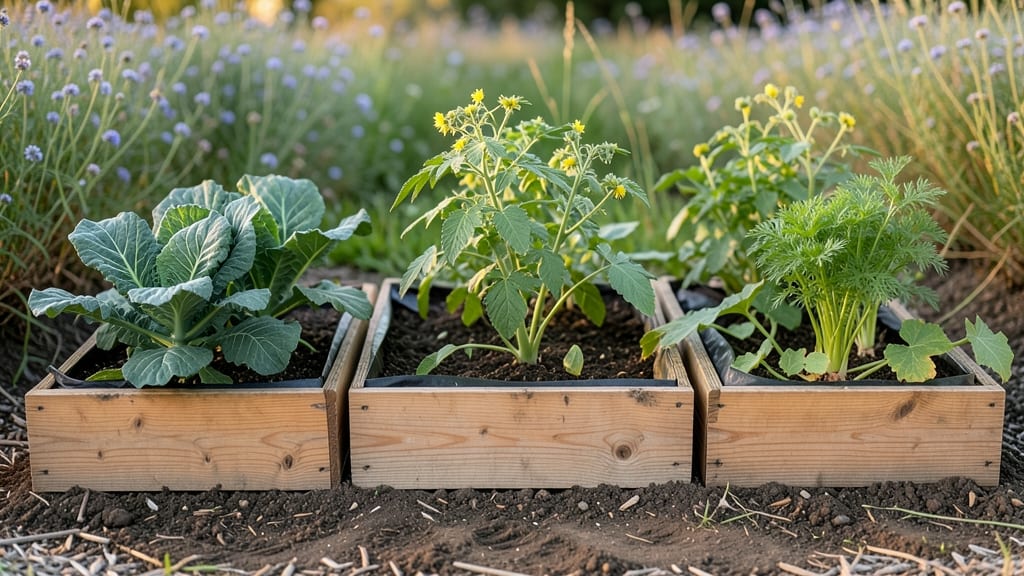
Your raised beds could be producing 30% more vegetables this season if you nail the spacing. 🌱 I learned the hard way—crowding plants leads to competition for sunlight, stunted growth, and a harvest that peters out by midsummer.
The right spacing turns raised beds into high-yield machines where every inch works for you.
Tomatoes need 18-24 inches between plants, while carrots thrive with just 2 inches of space. Leafy greens like kale can handle 9-12 inches, but bush beans need 4 inches to avoid tangling.
The secret isn't just following charts—it's matching plant size, sunlight needs, and growth habits to your bed's dimensions. A 4x8-foot bed can easily grow 16 tomato plants or 60 radishes, depending on your strategy.
When you get it right, you'll see bigger, healthier plants with fewer pests and diseases. The foliage fills the bed without shading neighbors, and you can squeeze in companion plants like basil between tomatoes.
My 2023 beds produced 50 pounds of tomatoes—double what I got before I adjusted spacing. The difference is night and day.
Start with your tallest plants at the north end of the bed, then work toward shorter crops. Add trellises for vining plants like cucumbers to save space vertically.
This isn't just theory—it's how you turn a $50 raised bed into a $200 harvest in one season. Let's get those plants spaced for success.
📚 In This Guide
- What you need
- Instructions
- Tips and common mistakes
- Wrapping up and next steps
What you need
- ● Raised bed: Pre-built or DIY (minimum 4’ x 8’ for easy reach; height 6–12” for accessibility).
- ● Quality soil: 60–80% compost mixed with 20–40% topsoil (1–2 cubic yards per bed).
- ● Organic mulch: Straw (2–3” layer) or wood chips (1–2” layer) to retain moisture.
- ● Measuring tape: 25–50 ft for precise spacing.
- ○ Garden twine or stakes: 10–20 ft to mark rows (optional but helpful!).
- ● Watering can or hose: With a gentle spray nozzle for even moisture.
- ● Plant labels: 100+ (if tracking varieties).
- ● Drip irrigation kit: Saves time and ensures consistent watering.
- ● Row cover fabric: Protects seedlings from pests (3–4 ft wide).
- ● Soil pH test kit: Adjust pH (6.0–7.0 ideal for most veggies).
- ● Companion planting guide: Pair veggies for natural pest control (e.g., basil + tomatoes).
- ● Knee pad or stool: For comfort during planting.
Instructions for science-backed vegetable spacing in raised beds
Here's how to arrange plants for maximum yield without overcrowding—using proven spacing science.
🌱 Step 1: Plan Your Layout Based on Mature Plant Size
Measure each vegetable's mature width and height—this determines spacing. For example, bush beans need 4-6 inches apart in rows spaced 18-24 inches apart, while tomatoes require 18-24 inches apart in all directions. I always sketch a rough grid first, labeling each zone with the plant type and spacing needs.
Group plants with similar sunlight and water needs together. Leafy greens like lettuce and spinach can share space at 6-8 inches apart, while root crops like carrots and beets need 2-3 inches apart in rows spaced 12-16 inches apart. This prevents competition for nutrients and reduces disease spread.
☀️ Step 2: Arrange for Optimal Sunlight Exposure
Place tallest plants—like corn or sunflowers—on the north side of the bed to avoid shading shorter crops. I position indeterminate tomatoes and pole beans along the north edge, while bush varieties and shorter greens fill the center and south side. This ensures even sunlight distribution throughout the day.
For wide beds (4 feet or more), I stagger rows in a quilted pattern rather than straight lines. This creates natural pathways for airflow and makes harvesting easier. You'll notice healthier foliage and fewer pests when plants aren't competing for light.
💧 Step 3: Space for Root and Air Circulation
Deep-rooted plants like asparagus need 12-18 inches apart in rows spaced 3 feet apart to prevent root tangling. Shallow-rooted crops like radishes can sit 1-2 inches apart but still need 12-16 inches between rows for easy access and soil aeration.
Leave extra space around vining plants like cucumbers and squash—they sprawl aggressively. I dedicate entire corners to these plants, giving them 3-5 feet of diameter to stretch freely. This prevents them from smothering neighboring crops and makes training easier.
✂️ Step 4: Adjust for Companion Planting Benefits
Pair plants that naturally support each other—like basil near tomatoes (which improves flavor) or marigolds around vegetables (which repel pests). I place marigolds at 12-inch intervals along bed edges, while basil gets 6-8 inches apart near tomato stems. This maximizes both yield and pest control without sacrificing space.
When combining root crops with leafy greens, I use the "interplanting" method: sow fast-growing radishes between slower carrots. The radishes mature first, get harvested, and leave room for carrots to expand. You'll see this technique double your bed's productivity in a single season.
⏰ Step 5: Monitor and Adjust as Plants Grow
Check spacing every 2-3 weeks and thin crowded areas immediately. I use sharp scissors to snip excess seedlings at soil level rather than pulling, which disturbs roots. For leafy greens, I harvest the outer leaves first to give inner plants more room.
If you notice yellowing leaves or stunted growth, the plants are too crowded. Prune back overgrown foliage and thin stems to restore airflow. This is especially critical in hot climates—poor circulation invites fungal diseases that spread rapidly in dense beds.
Tips & tricks for science-backed raised bed plant arrangement
These practical insights will help you optimize your raised bed layout for maximum productivity and plant health.
Visual Planning Pays Off: Before planting, create a scaled drawing of your bed using graph paper where each square represents 1 inch. This lets you experiment with different spacing configurations without committing to a physical layout. I've found that sketching helps visualize how plants will interact as they mature—something that's hard to predict from memory alone. This step alone prevents costly overcrowding mistakes.
Sunlight Strategy for Tall Plants: In Step 2, when placing tall plants like corn or sunflowers on the north side, consider their mature height relative to your bed's width. If your bed is less than 4 feet wide, you might need to reduce the spacing between tall plants to 24 inches (instead of the standard 3 feet) to prevent shading of shorter crops. The key is maintaining that quilted pattern—it creates those crucial airflow pathways while maximizing sunlight exposure.
Companion Planting Shortcuts: For companion planting in Step 4, I keep a reference chart of common beneficial pairings nearby. For example, planting nasturtiums (which repel aphids) at 12-inch intervals along bed edges works just as well as marigolds and takes up less space. The interplanting method with radishes and carrots is particularly effective—just be sure to harvest radishes when they reach 1 inch in diameter to avoid disturbing the carrots.
Seasonal Adjustment Insight: The 2-3 week monitoring interval in Step 5 works best for warm-season crops. For cool-season greens like kale or cabbage, check spacing every 3-4 weeks instead—they grow more slowly. In hot climates, you may need to thin more aggressively every 2 weeks to prevent fungal diseases from spreading rapidly in the dense foliage.
Pro Tips for Spacing For Vegetables In Raised Beds
- These practical insights will help you optimize your raised bed layout for maximum productivity and plant health.
- Visual Planning Pays Off: Before planting, create a scaled drawing of your bed using graph paper where each square represents 1 inch.
- Sunlight Strategy for Tall Plants: In Step 2, when placing tall plants like corn or sunflowers on the north side, consider their mature height relative to your bed's width.
Frequently asked questions
Got questions about spacing your veggies in raised beds?
You’re not alone! Here are answers to the most common ones—so you can plant with confidence and watch your harvest thrive.
Why does spacing matter in raised beds?
Proper spacing ensures airflow ( prevents disease), root room ( avoids competition), and sunlight access ( boosts photosynthesis). Crowded plants = stunted growth, lower yields, and pests galore. Think of it like a cozy (but not cramped!) dorm room for your veggies!
How do I adjust spacing for dwarf vs. full-size varieties?
Check seed packets for mature plant width—that’s your golden rule! For example:
- Dwarf tomatoes: 12–18" apart (they’re compact but need airflow).
- Indeterminate tomatoes: 24–36" apart (they sprawl like vines!).
- Bush beans: 4–6" apart (tight-knit but not suffocating).
Can I plant too early or too late?
Timing affects spacing! Cool-season crops (like lettuce or peas) can handle closer spacing (3–6") early on, but thin them as they grow. Warm-season crops (tomatoes, peppers) need full spacing from day one—squishing them later = stunted roots. Wait until soil is 60°F+ for warm-lovers!
What if my plants look crowded after they’ve grown?
Don’t panic! Thin aggressively—use sharp scissors (not yank!) to snip excess plants at soil level. Repurpose the thinned veggies: compost them or toss into salads. For root veggies (carrots, beets), thin gradually to avoid disturbing roots. Pro tip: Do this on a cloudy day to reduce stress on remaining plants.
Are there space-saving tricks for small raised beds?
Try these science-backed hacks:
- Vertical gardening: Trellises for cucumbers, peas, or pole beans save 50–70% space.
- Interplanting: Pair fast growers (radishes) with slow ones (carrots)—radishes harvest before carrots need room!
- Square foot gardening: Plant 16 plants per sq ft (e.g., 4 onions + 1 tomato in a 1’x1’ grid).
Wrapping up and next steps
Perfect spacing is the secret sauce to thriving raised beds! 🌱 By following science-backed guidelines, you’ll maximize airflow, sunlight, and root growth—leading to bigger harvests and fewer pests. Whether you’re a seasoned gardener or just starting, these tips make planning effortless.
Ready to put your knowledge into action? Start by sketching your bed layout—grab a pencil, measure your space, and map out your veggies. Pro tip: label your plants to track growth and adjust spacing as needed. Happy gardening—your future meals (and Instagram-worthy greens!) will thank you.