
Planting
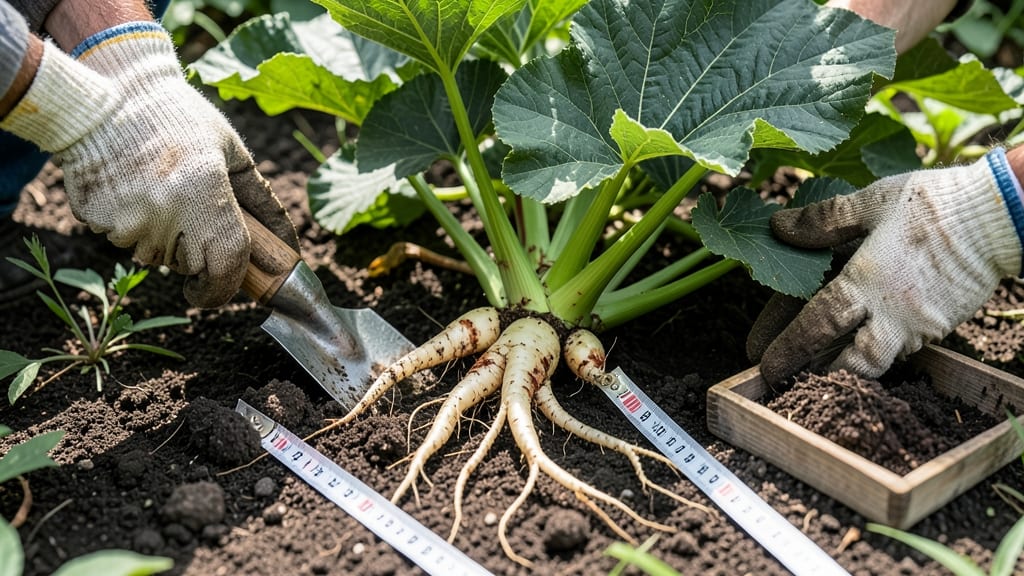
Optimal rhubarb root planting depth for maximum growth
When planting rhubarb crowns, the depth of the roots determines how well your plants establish and thrive. Unlike many vegetables, rhubarb roots are delicate and require precise placement to avoid rot or stunted growth.
The ideal depth sits between 2 to 4 inches below the soil surface, striking a balance that promotes strong root systems while allowing easy access to nutrients and moisture.
This depth range ensures the rhubarb crown remains partially exposed, preventing suffocation from overburied roots. At the same time, it protects the roots from extreme temperature fluctuations and drying out.
Think of it as a sweet spot where the plant can focus energy on leaf and stalk production rather than struggling to survive.
Here’s why this depth matters: rhubarb roots need consistent moisture but can’t tolerate waterlogged soil. Planting too deep risks anaerobic conditions, while shallow planting leaves roots vulnerable to drying or frost damage. The 2-4 inch guideline aligns with the plant’s natural growth habits and maximizes yield potential.
🌱 Key Takeaway: Rhubarb Root Planting Depth
Soil temperature also plays a critical role in planting depth. Rhubarb roots thrive in soil that’s at least 40°F (4°C)—warmer than many gardeners realize. If you plant too early in cold climates, roots may struggle to establish before frost returns.
Aim for spring planting after the last frost, when soil temperatures consistently stay above this threshold.
Moisture levels are equally important. After planting, keep the soil consistently moist (not soggy) for the first 4-6 weeks to encourage root growth. A deep soak weekly is ideal, especially in hot climates where evaporation is rapid.
Mulching around the base with 2-3 inches of compost or straw helps retain moisture and regulates soil temperature.
Let’s talk about the rhubarb crown itself—the part where the roots meet the stalks. When planted correctly, the crown should sit just 1 inch below the soil surface, with roots fanned out below.
This positioning allows the crown to photosynthesize slightly, supporting early growth while roots establish. If buried too deep, the crown can suffocate; if too shallow, it’s prone to drying.
For container gardening, the same depth rules apply, but use a pot with drainage holes and well-draining soil mix. Plant the crown at the surface level of the container’s soil, then fill around it. Containers dry out faster, so monitor moisture closely and water more frequently than in-ground plants.
One common misconception is that deeper planting equals stronger roots. In reality, rhubarb roots are shallow-feeding and don’t need depth to thrive. Over-deep planting can lead to root rot or delayed growth as the plant struggles to reach the surface.
Stick to the 2-4 inch guideline, and you’ll see healthier, more productive plants within a season.
To test if your planting depth is correct, gently pull back the soil after a few weeks. The roots should look white and firm, with no signs of rot or shrinkage. If they appear shriveled or discolored, adjust your depth or soil moisture for next year’s planting.
With the right depth, your rhubarb will reward you with bold stalks and years of harvests.
Common mistakes when planting rhubarb roots too shallow or deep
Planting rhubarb roots at the wrong depth is one of the most overlooked factors affecting their long-term health. When roots sit too high, they become vulnerable to temperature swings and drying out, while planting them too deep can suffocate the crown and restrict growth.
Both extremes lead to weak plants that struggle to produce those sweet, tangy stalks you love.
I’ve seen gardeners bury rhubarb crowns just an inch deep, thinking they’re being cautious, only to watch their plants wilt in summer heat. Others dig too aggressively, burying the crown under 6 inches of soil, which smothers the plant and prevents proper nutrient absorption.
The key is finding that sweet spot where roots anchor securely but the crown stays accessible to sunlight.
Here’s the critical rule: rhubarb crowns should sit just below the soil surface, with the top of the crown visible but not exposed. Think of it like a 2-4 inch depth—deep enough to protect roots but shallow enough to allow the crown to photosynthesize.
This balance ensures strong root development while preventing rot or drying.
Too shallow: Roots dry out, crown burns in sun, weak stalks (1-2 inch depth risk).
Too deep: Crown suffocates, rot sets in, stunted growth (5+ inch depth danger).
Visual cue: Crown’s top should peek 1/4 inch above soil after settling.
One common mistake is judging depth by how the roots look when planted. Instead of guessing, use your finger to measure: press soil around the crown until it’s 2-3 inches deep.
If you can see the crown’s base after watering, you’ve gone too shallow. For heavy clay soils, loosen the bottom 4 inches to prevent waterlogging, which can rot shallow roots.
Seasonal shifts also affect depth perception. After heavy rains, soil settles and may bury the crown deeper than intended. To prevent this, mound soil slightly higher around the base initially, then level it once settled. Mulch with 2-3 inches of straw to maintain consistent moisture without altering depth over time.
If you’ve already planted rhubarb incorrectly, don’t panic. Gently dig around the plant and adjust the soil level. For shallow roots, add compost-rich soil around the base and water deeply.
For over-planted crowns, carefully expose the top 1/2 inch and backfill with fresh soil. Patience is key—rhubarb is resilient and can recover with proper care.
Remember, the goal is consistent depth across all your rhubarb plants. Use a small stake to mark the ideal planting line in your garden bed, so you can visually verify depth each time.
With the right depth, your rhubarb will reward you with vibrant stalks and years of productive growth. 🌱