
How To
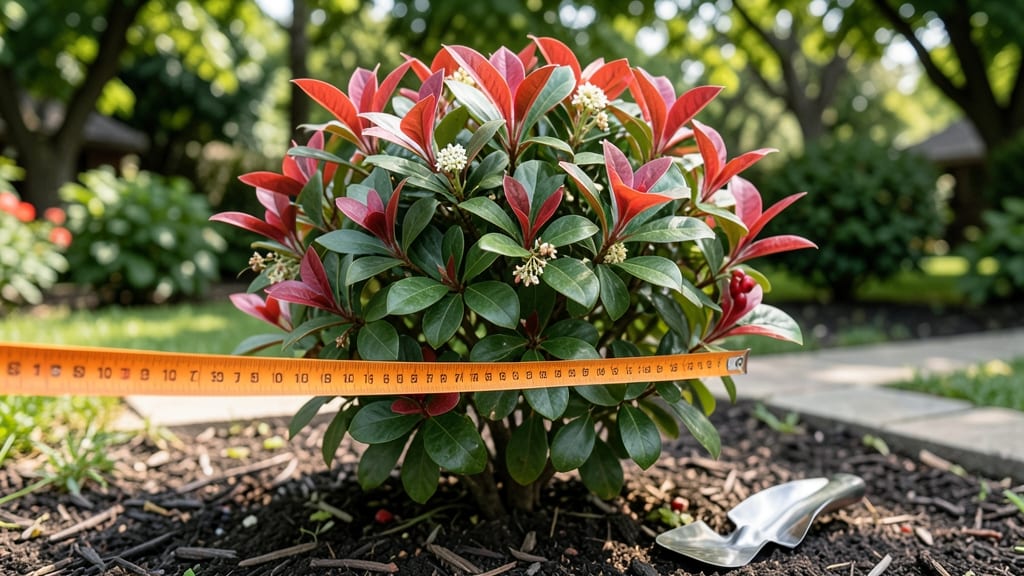
Spacing red tip photinia plants 6 to 8 feet apart is the secret to a thick, evergreen hedge that blocks wind and neighbors’ views without turning into a maintenance nightmare.
Picture this: You’ve just planted your 🌿 Red Tip Photinia hedge, eager for that vibrant red-tipped foliage to create a lush privacy screen. But if you crowd them too closely, they’ll fight for space, leaving gaps that let light—and prying eyes—through.
Or if you space them too far apart, you’ll end up with a sparse, uneven look that fails to deliver on the promise of year-round greenery.
Getting the spacing right isn’t just about aesthetics—it’s about airflow, root health, and how easily you can prune the hedge as it matures. Too little space, and you’re inviting fungal diseases like powdery mildew. Too much, and you’ll spend years waiting for the hedge to fill in.
The 6–8 foot rule balances growth, sunlight exposure, and long-term care, whether you’re aiming for a formal hedge or a natural windbreak.
In this guide, I’ll break down exactly how to space your Red Tip Photinia for maximum density, how to adjust for different hedge heights, and the simple tricks to keep your plants thriving—so you can enjoy that vibrant, impenetrable screen without the guesswork.
Optimal Red Tip Photinia spacing for full growth and privacy
When planting Red Tip Photinia for a year-round privacy screen, the spacing between plants directly impacts their growth, health, and ultimate appearance. These shrubs can reach 10–15 feet tall at maturity, so cramming them too close leads to overcrowding, stunted growth, and disease-prone conditions.
Conversely, spacing them too far apart wastes space and delays the formation of a dense hedge.
The golden rule for Red Tip Photinia spacing is 6–8 feet apart when planting. This distance allows each shrub to develop a strong root system, ensures proper air circulation to prevent fungal diseases, and gives you a lush, uniform hedge within 3–5 years.
Without this spacing, you’ll end up with leggy, sparse plants that struggle to fill in.
Here’s why 6–8 feet is the magic number: Red Tip Photinia naturally spreads 4–6 feet wide at maturity. Planting them too close forces them to compete for nutrients, water, and sunlight, while spacing them too far apart creates gaps that detract from your privacy goals.
Let’s break down the science behind this spacing and how to adjust it for different soil types or hedge heights.
Your soil type plays a huge role in determining the best spacing for your Red Tip Photinia. In well-draining soil like sandy loam, you can plant them 5–7 feet apart—their roots will spread efficiently, and they’ll grow faster.
However, if your soil is clay-heavy or compacted, increase the spacing to 8–10 feet to prevent root competition and reduce the risk of root rot or fungal diseases like powdery mildew.
Another key factor is the mature height you’re aiming for. If you want a taller hedge (12+ feet), space plants 8–10 feet apart to give them room to reach their full potential without overcrowding.
For a shorter, more compact hedge (6–8 feet), you can reduce spacing to 4–6 feet, but be prepared for more frequent pruning to maintain the desired shape.
Proper spacing also affects pruning and maintenance. When plants are spaced correctly, you’ll spend less time thinning out crowded branches and more time shaping your hedge for a polished look.
Overcrowded Red Tip Photinia plants often develop weak, leggy growth because they stretch toward sunlight, and their centers become bare. With the right spacing, each plant gets enough light to grow densely from the ground up.
One common mistake is assuming that closer spacing will make your hedge fill in faster. In reality, it does the opposite—your plants will grow taller but thinner, with more gaps between branches.
Think of it like a crowd at a concert: if everyone’s packed too tightly, no one can move, and the experience suffers. Your Photinia hedge works the same way—give them room to breathe!
For maximum privacy, aim for a spacing of 6–8 feet and plan to prune your hedge twice a year—once in late spring and again in early fall. This keeps the foliage dense and encourages bushier growth. If you
How to space Red Tip Photinia for different landscaping goals
Red Tip Photinia is a versatile shrub that can serve as a windbreak, formal hedge, or natural screen, but its spacing changes dramatically based on your goal. For a windbreak hedge, I recommend planting 4–5 feet apart to create a dense barrier that reduces wind speed.
This closer spacing encourages plants to grow taller and lean toward the wind, maximizing their protective benefits. However, if you're aiming for a formal hedge with clean lines, 6–8 feet apart is ideal for uniform growth and easier maintenance.
For a natural screen, irregular spacing—like 8–12 feet apart—creates a more organic look while still providing privacy. This approach mimics a woodland edge and reduces the need for heavy pruning.
The key is balancing density and airflow; overcrowding leads to disease risks, while over-spacing can leave gaps in your screen. Always consider your mature plant size (10–15 feet) when planning.
When planting for a windbreak, I dig holes twice as wide as the root ball but only 12–18 inches deep to encourage horizontal root growth. This helps the shrubs anchor quickly and form a tight barrier.
For formal hedges, I use a string line and stakes to ensure perfectly straight rows, which makes future pruning easier. For natural screens, I vary the spacing slightly—sometimes 10 feet, other times 12 feet—to create a more organic feel while still blocking views.
Long-term maintenance is where spacing really pays off. Windbreak hedges require annual pruning to keep them dense, while formal hedges need quarterly trims to maintain shape. Natural screens, however, thrive with minimal intervention—just occasional shaping to remove dead branches.
If you choose closer spacing for a windbreak, be prepared for higher pruning frequency and potential pest issues from crowded foliage.
Pro tip: If your soil is heavy clay, increase spacing by 1–2 feet to prevent root competition. Amend the soil with compost or sand to improve drainage, which reduces stress on the plants.
For sandy soil, you can plant slightly closer together since the roots will spread more widely. Always water deeply after planting to encourage root establishment, especially in the first 30–60 days.
For a balanced approach, I often use 7–8 feet spacing in most designs—it gives enough room for growth while still providing privacy within 3–5 years. This middle ground reduces maintenance while keeping the hedge lush and healthy.
Whether you prioritize wind protection, aesthetic appeal, or low-maintenance growth, adjusting spacing is the first step to achieving your perfect landscape.