
Planting
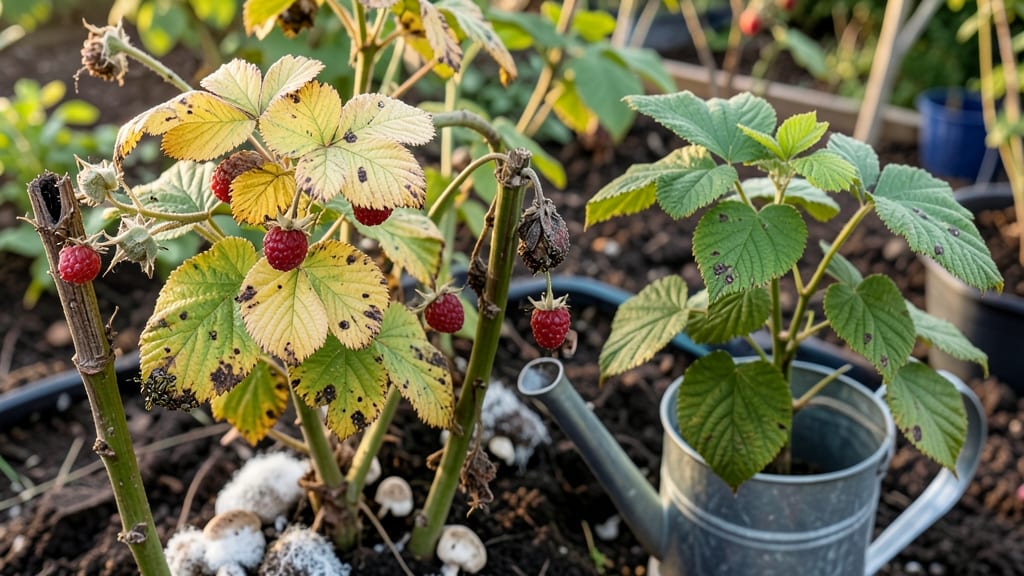
Raspberry plant problems—yellowing leaves and floppy canes—can turn your harvest dreams into a frustrating mess, but I’ve fixed every one of these issues in my own garden. 🌱 The good news? Most problems have simple fixes that work fast, whether it’s a fungal infection, hungry pests, or just plain neglect. Let’s diagnose what’s really going on with your plants before it’s too late.
Overwatering, poor drainage, or nutrient deficiencies often show up as yellow leaves first, while weak canes usually mean root stress or a pest invasion. I’ve seen spider mites drain a plant’s energy in days, and fungal spots spread like wildfire if you don’t act.
The key is catching it early—before the whole plant gives up. Most fixes take less than 30 minutes and cost almost nothing.
By the end of this, you’ll know exactly how to revive your raspberries—whether it’s pruning out dead canes, treating fungal spots with a simple spray, or adjusting your watering schedule.
Your plants will bounce back faster than you think, and you’ll spot problems before they become disasters. Let’s get those canes strong and those leaves green again.
Works for any raspberry variety, whether you’re growing in containers, raised beds, or the ground. Once you master these fixes, your berries will be bigger, sweeter, and more abundant than ever. Ready to save your plants?
Root Causes Of Raspberry Struggles
Understanding why your raspberry plants are fighting back is half the battle. These berry giants are tough, but even they can’t shrug off poor growing conditions. Let’s break down the real culprits behind yellow leaves, weak canes, and other common raspberry plant problems—so you can tackle them head-on.
Raspberries thrive in well-draining soil, but too much moisture—especially in heavy clay or compacted ground—can suffocate their roots. Here’s why it happens:
- Waterlogged roots cut off oxygen, leading to root rot (a fungal infection that turns roots mushy and brown).
- Yellowing leaves (especially older ones) signal stress, often starting at the bottom of the plant.
- Weak canes may flop or fail to produce fruit because the plant’s energy is diverted to surviving, not growing.
Why it’s sneaky: Even if your soil feels dry on top, water may pool below, trapping moisture near the roots. Container-grown raspberries are especially vulnerable if their pots lack drainage holes.
Raspberries are heavy feeders, and when they don’t get enough nutrients, they show it fast. The most common deficiencies include:
| Symptom | Likely Cause | What It Means |
|---|---|---|
| Yellow leaves (pale green veins) | Nitrogen deficiency | The plant can’t produce enough chlorophyll, stunting growth and fruit production. |
| Yellowing between veins (chlorosis) | Iron or magnesium deficiency | Poor uptake due to alkaline soil or overwatering. |
| Purple or red stems/leaves | Phosphorus deficiency | Slows root and flower development, weakening the plant. |
| Stunted growth, small leaves | Potassium deficiency | Makes plants prone to disease and poor fruit quality. |
Why it’s sneaky: Older leaves often show deficiencies first, but if the soil is too alkaline (pH > 6.5), even nutrient-rich soil won’t help—raspberries need acidic to slightly acidic soil (pH 5.5–6.5) to absorb iron and manganese.
Raspberries attract a who’s who of garden pests and pathogens, and each leaves distinct damage:
- Spider mites (tiny yellow speckles on leaves, webbing) suck sap, causing leaves to yellow and curl.
- Japanese beetles chew notches in leaves, weakening the plant’s ability to photosynthesize.
- Cane borers (larvae tunneling into canes) kill sections of wood, leading to sudden wilting or dieback.
- Fungal diseases like Botrytis (gray mold) or rust thrive in humid, shaded conditions, causing spotted or crinkled leaves and blackened fruit.
Why it’s sneaky: Many pests/diseases start small and spread fast. By the time you see yellowing or spots, the plant may already be compromised.
Raspberries are hardy but not invincible—extreme conditions stress them out:
- Too much sun (heat stress) causes scorched leaves (brown, crispy edges) and premature fruit drop.
- Too little sun (<6 hours/day) leads to leggy, weak canes and poor fruiting.
- Sudden temperature swings (especially late frosts) damage flowers, reducing yield.
- Wind exposure can desiccate leaves, making them yellow and brittle.
Why it’s sneaky: Even if your location seems ideal, microclimates (e.g., a shady corner or hot afternoon sun) can create hidden stress zones.
Raspberries have a lifespan of 5–10 years, and over time, canes woodenize (lose flexibility) and fruit production declines. But poor pruning accelerates the problem:
- Not removing dead/weak canes in winter steals energy from new growth.
- Pruning at the wrong time (e.g., cutting back summer-bearing canes after harvest) reduces next year’s crop.
- Over-pruning removes too much foliage, limiting photosynthesis and weakening the plant.
Why it’s sneaky: If you’re new to raspberries, you might prune too aggressively or miss the best timing (late winter/early spring for dormant canes).
Raspberries need loose, aerated soil to spread their roots. When soil gets compacted or roots get cramped:
- Restricted root growth limits water and nutrient uptake, causing stunted plants and yellowing leaves.
- Container-grown raspberries become root-bound if left in the same pot too long, leading to circling roots that strangle themselves.
- Heavy foot traffic or machinery can crush roots, reducing their ability to absorb moisture and nutrients.
Why it’s sneaky: Compacted soil often looks fine on the surface but becomes hard as a rock just below—test it by pushing your finger in!
Pro Tip: 💡 Diagnose like a detective—check the leaves, soil, and canes for clues. Is the yellowing bottom-up (overwatering)? Top-down (underwatering)? Spotted (disease)? Your observations will point you to the fix!
How to Fix Raspberry Plant Woes
Now that you know the why behind raspberry plant struggles, let’s roll up your sleeves and get those canes thriving again! 🌱💪 Whether your leaves are turning yellow, your berries are small, or your plants look wilted, these practical fixes will have your raspberries back on track—plus, we’ll share prevention tips to keep future problems at bay.
Yellowing leaves are a common red flag, but the solution depends on what’s triggering them.
🔥 Overwatering or Poor Drainage?
Fix it: 👨🍳 Step 1: Check the Soil – Stick your finger 2 inches into the soil. If it’s soggy, your raspberries are drowning. 🥘 Step 2: Improve Drainage – Amend heavy clay soil with compost or perlite (1 part to 3 parts soil).
For containers, ensure pots have drainage holes. ⏰ Step 3: Adjust Watering – Water deeply 1-2 times per week (more in extreme heat), but let the top 2 inches of soil dry out between sessions.
Prevent it: ✨ Pro Tip: Mulch around plants with straw or wood chips to retain moisture without suffocating roots. Avoid wet mulch!
🌡️ Too Much or Too Little Sun?
Fix it: 🔥 Step 1: Assess Light – Raspberries need 6-10 hours of sunlight daily.
If leaves are pale yellow, they’re sun-starved; if crispy, they’re sunburned. 🍳 Step 2: Relocate or Prune – - Shady spot? Trim nearby trees or move plants to a sunnier location. - Too much sun? Provide light shade (like a sheer cloth) during peak afternoon heat.
Prevent it: 🎯 Pro Tip: Plant raspberries where they’ll get morning sun + afternoon shade in hot climates. Everbearing varieties tolerate shade better than summer-bearing types.
💪 Nutrient Deficiency (Nitrogen, Iron, or Magnesium)?
Fix it: 📊 Step 1: Diagnose the Deficiency
- Pale yellow leaves? → Nitrogen (use a balanced fertilizer like 10-10-10).
- Yellow between veins? → Iron (apply chelated iron or Epsom salt—1 tbsp per gallon of water, sprayed on leaves).
- Yellow edges with green veins? → Magnesium (sprinkle Epsom salt around the base, water well).
🥗 Step 2: Feed Right
- Spring: Use a high-nitrogen fertilizer (like blood meal) to boost new growth.
- Summer: Switch to a balanced or low-nitrogen fertilizer to support fruiting.
Prevent it: 🌱 Pro Tip: Test your soil every 2-3 years (or when problems persist). A simple home test kit ($10) works great!
If your raspberries are producing tiny berries or floppy canes, they’re likely undernourished, overcrowded, or stressed.
🍳 Overcrowded Plants?
Fix it: 🔪 Step 1: Prune Aggressively –
- Summer-bearing varieties: Remove all old canes (they fruited last year) and thin new canes to 5-7 strong ones per plant.
- Everbearing varieties: Keep 2-3 of the strongest canes (prune weaker ones at the base).
🌿 Step 2: Space Them Out – Raspberries need 2-3 feet between canes and 6 feet between rows for airflow.
Prevent it: ✨ Pro Tip: Divide clumps every 3-4 years to rejuvenate plants. Dig up a section, replant, and compost the old roots.
💪 Lack of Phosphorus or Potassium? Fix it: 📊 Step 1: Fertilize for Fruit –
- Phosphorus (P): Encourages root and fruit development. Use bone meal (sprinkle 1 tbsp per plant, lightly scratch into soil).
- Potassium (K): Strengthens cane health and disease resistance.
Try wood ash (1 cup per plant) or a potassium-rich fertilizer like 0-0-50.
🥘 Step 2: Feed Mid-Season – Apply a fruit-specific fertilizer (like 5-10-10) when flowers appear.
Prevent it: 🌡️ Pro Tip: Compost tea (homemade or store-bought) gives a gentle nutrient boost without burning roots.
🌡️ Heat or Drought Stress?
Fix it: 💦 Step 1: Water Deeply – Soak the root zone once a week (more in extreme heat). Drip irrigation is best—it delivers water slowly to roots. 🌿 Step 2: Mulch Like a Pro – Cover soil with 3-4 inches of straw or shredded leaves to retain moisture and cool roots.
Prevent it: 🎯 Pro Tip: Shade cloth (30-50%) can save berries from sun scorch in scorching summers. Remove when temps drop.
If spider mites, aphids, or fungal spots are the culprits, isolate and treat immediately.
🕷️ Spider Mites or Aphids?
Fix it: 🔥 Step 1: Blast Them Off – Spray plants with a strong stream of water to dislodge pests. 🍳 Step 2: Use Natural Sprays –
- Neem oil (1 tsp + 1 tsp soap per quart of water) – repels and kills mites/aphids.
- Insecticidal soap (follow label rates) – Safe for berries (harvest in 24 hours).
Prevent it: 💡 Pro Tip: Encourage ladybugs—they devour aphids! Plant dill, fennel, or marigolds nearby as a trap crop.
🍄 Fungal Issues (Like Gray Mold or Rust)?
Fix it: 🌡️ Step 1: Remove Infected Parts – Prune yellowed or spotted leaves/canes and dispose of them (don’t compost!). 🍃 Step 2: Improve Airflow – Thin canes and space plants wider to reduce humidity. 💊 Step 3: Fungicide Treatment –
- Baking soda spray (1 tbsp baking soda + 1 tsp soap + 1 gallon water) – prevents powdery mildew.
- Copper fungicide (for rust or gray mold) – Follow label instructions.
Prevent it: 🌱 Pro Tip: Water at the base (not overhead) and avoid wetting leaves—this stops fungal spores from spreading!
Keep your plants happy with this quick maintenance guide:
| Season | Task | When |
|---|---|---|
| Spring | Prune old canes, fertilize | Early spring (before buds swell) |
| Summer | Mulch, water deeply, watch for pests | Every 1-2 weeks |
| Fall | Remove dead canes, compost leaves | After first frost |
| Winter | Protect roots (mulch heavily) | Before hard freeze |
Final Thought: 🌿 Most raspberry problems are easily fixable with the right care! Start with soil, water, and pruning, then tweak based on what your plants need. Happy growing—and enjoy those juicy berries! 🍓✨
Frequently asked questions
Why are my raspberry leaves turning yellow from the bottom up?
This is usually a sign of overwatering or poor drainage. Raspberry roots need air, and soggy soil cuts off oxygen, causing root rot. Check if the top 2 inches of soil are dry before watering again. If your soil is heavy clay, mix in compost or perlite to improve drainage.
My raspberry canes are weak and flopping—what's wrong?
Weak canes often mean nutrient deficiency, root stress, or overcrowding. Start by pruning to keep only 5-7 strong canes per plant. Test your soil for nitrogen or potassium deficiencies and fertilize accordingly. If growing in containers, check for root-bound roots that may need repotting.
How do I tell if my raspberry plant has a fungal disease?
Look for spotted leaves, powdery white growth (mildew), or blackened fruit. Fungal issues thrive in humid, shaded conditions. Remove infected leaves immediately and improve airflow by spacing plants 6 feet apart. A baking soda spray (1 tbsp baking soda + 1 tsp soap per gallon of water) helps prevent mildew.
Can I still harvest berries if my raspberry plant has pests?
If you see spider mites or aphids, harvest berries immediately after treatment with neem oil or insecticidal soap. Avoid harvesting for 24 hours after applying sprays. For Japanese beetles, handpick them early in the morning when they're sluggish. Always wash berries thoroughly before eating.
How often should I fertilize my raspberry plants?
Feed raspberries twice a year: once in early spring with a high-nitrogen fertilizer (like blood meal) for new growth, and again in late spring with a balanced fertilizer (10-10-10) as flowers appear. Avoid fertilizing in fall or winter when plants are dormant.